Lighting design is no longer limited to providing enough brightness for a space. In modern interiors, light is used to shape atmosphere, define architectural features, and create a comfortable visual experience.
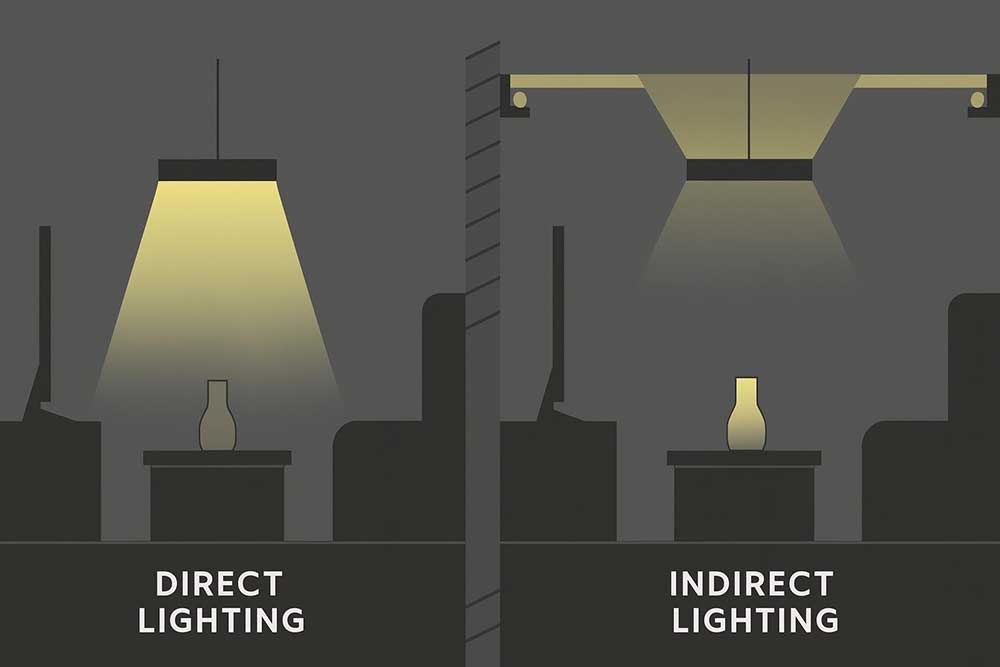
One of the biggest challenges in contemporary spaces is that a single lighting direction often creates an incomplete environment. Downward lighting can illuminate functional areas effectively, but it may leave ceilings and surrounding surfaces visually inactive.
This is where layered lighting becomes important. By combining direct and indirect illumination, designers can create a more balanced lighting environment with better depth, comfort, and visual hierarchy.
Up and down magnetic track lighting offers a flexible solution by integrating two lighting directions into one modular system — delivering focused illumination where it is needed while adding a soft ambient glow through reflected light.
Why Single-Direction Lighting Often Feels Flat
Many lighting systems are designed primarily around downward illumination.
This approach works well for basic functional requirements, but it may create several visual limitations:
- ceilings appear darker than the rest of the space;
- the lighting atmosphere lacks depth;
- bright areas and shadow areas have stronger contrast;
- the overall environment can feel less comfortable.
In architectural spaces, people do not experience light only through brightness. They also perceive how light interacts with surfaces, materials, and spatial proportions.
A well-designed lighting system considers not only where the light reaches, but also how the entire space responds to light.
The Role of Direct and Indirect Lighting
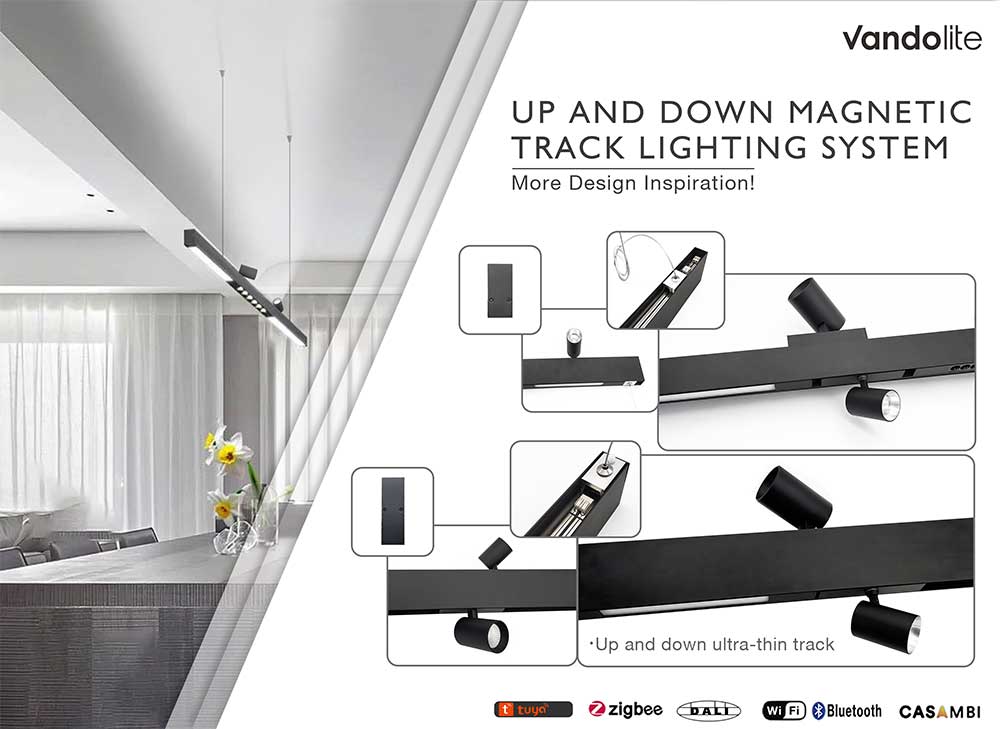
Layered lighting is based on combining different lighting functions.
Direct lighting provides focused illumination for specific areas. It helps users perform tasks, highlight objects, or create visual focus.
Indirect lighting works differently. Instead of directly illuminating objects, it uses ceilings and walls as reflective surfaces to distribute softer ambient light.
The combination creates a more complete lighting environment:
- direct light improves functionality;
- indirect light improves atmosphere;
- balanced contrast improves visual comfort.
Up and down magnetic track lighting naturally supports this approach by combining both lighting effects within one track-based system.
More Flexible Spaces
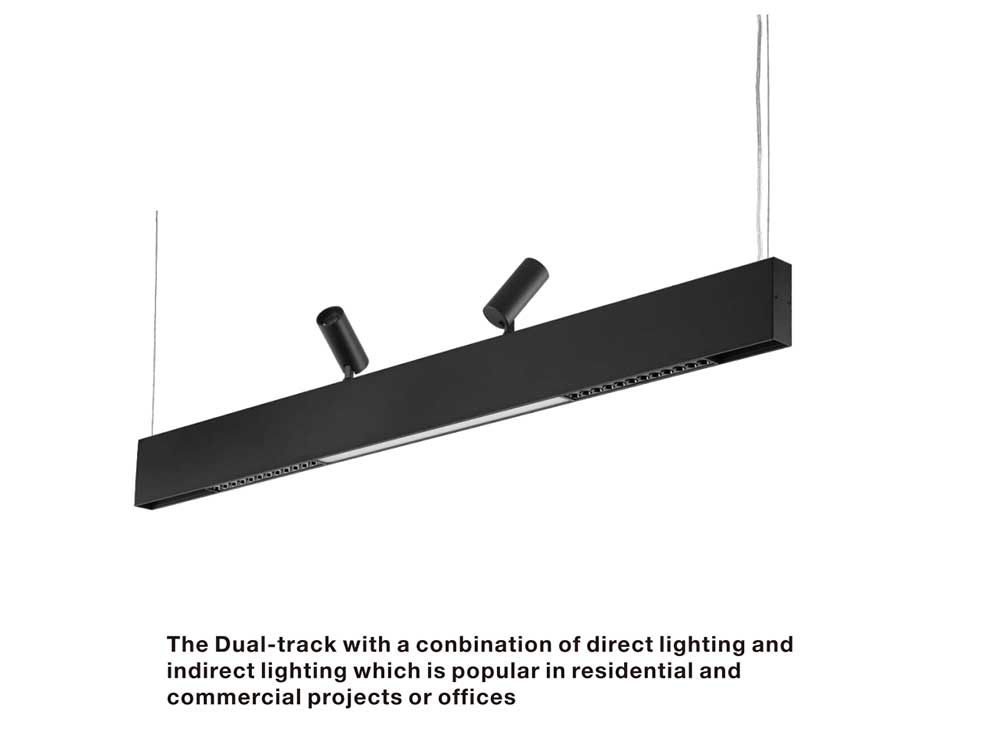
The advantage of up and down magnetic track lighting is not simply adding more light output.
Its value comes from providing more control over how a space feels.
In residential projects, downward illumination can support daily activities such as reading, dining, or working, while upward illumination creates a softer evening atmosphere.
In commercial spaces, the same principle helps designers balance functional requirements with visual experience. A showroom may need focused lighting for products while maintaining a comfortable overall environment.
This flexibility makes up and down magnetic track lighting suitable for spaces where lighting needs change throughout the day.
Where It Works Best
- Retail Stores and Showrooms
Retail lighting is not only about making products visible. It is also about creating a shopping environment that guides attention.
Downward lighting can highlight displays, products, and key areas, while upward illumination adds depth to the store environment.
Compared with traditional track lighting layouts that focus only on products, layered lighting helps create a more premium and comfortable retail experience.
- Hospitality Spaces
Hotels, restaurants, and lounges often require a balance between functionality and atmosphere.
Direct lighting provides necessary illumination, while indirect ceiling lighting helps create a relaxed and welcoming environment.
Up and down magnetic track lighting can support different scenarios, from bright daytime operation to softer evening settings.
- Offices and Workspaces
In workplaces, lighting quality directly affects comfort.
A combination of direct and indirect lighting can reduce strong contrast between illuminated work areas and surrounding spaces.
When combined with linear magnetic modules, up and down lighting can create a balanced environment that supports both productivity and visual comfort.
Design Tips for Up and Down Magnetic Track Lighting
Although up and down lighting provides more design possibilities, several factors influence the final result.
Ceiling Height
The distance between the track and ceiling affects how the upward light spreads. Higher ceilings usually allow broader indirect illumination, while lower ceilings require more precise light control.
Ceiling Material and Color
Since upward lighting relies on reflection, ceiling surfaces play an important role. Light-colored surfaces generally create stronger and softer reflected illumination.
Fixture Combination
One of the advantages of magnetic systems is modularity. Up and down modules can work together with:
- spotlights for accent lighting;
- linear lights for general illumination;
- wall washers for vertical surfaces;
- pendant lights for decorative elements.
This allows designers to create multiple lighting layers within a single system.
Up and Down Magnetic Track Lighting vs Standard Magnetic Track Lighting
| Standard Magnetic Track Lighting | Up and Down Magnetic Track Lighting | |
| Lighting direction | Mainly downward | Upward and downward |
| Main purpose | Functional illumination | Functional + ambient lighting |
| Ceiling effect | Limited | Creates reflected ceiling light |
| Space atmosphere | More focused | More layered and comfortable |
| Design flexibility | High | Higher for architectural applications |
FAQ
What is layered lighting in interior design?
Layered lighting combines different lighting functions, such as ambient lighting, task lighting, and accent lighting, to create a balanced and comfortable environment.
Why use indirect lighting in modern interiors?
Indirect lighting helps soften the space, reduce harsh contrast, and create a more comfortable visual atmosphere by reflecting light from ceilings and walls.
Is up and down magnetic track lighting brighter than standard track lighting?
Not necessarily. Its main advantage is creating a more balanced lighting environment through both direct and indirect illumination.
Where is up and down magnetic track lighting commonly used?
It is commonly used in residential interiors, retail stores, hotels, restaurants, offices, galleries, and other architectural spaces where lighting atmosphere is important.
Can up and down modules be combined with other magnetic track fixtures?
Yes. A compatible magnetic track system can combine different modules to achieve different lighting functions and design effects.