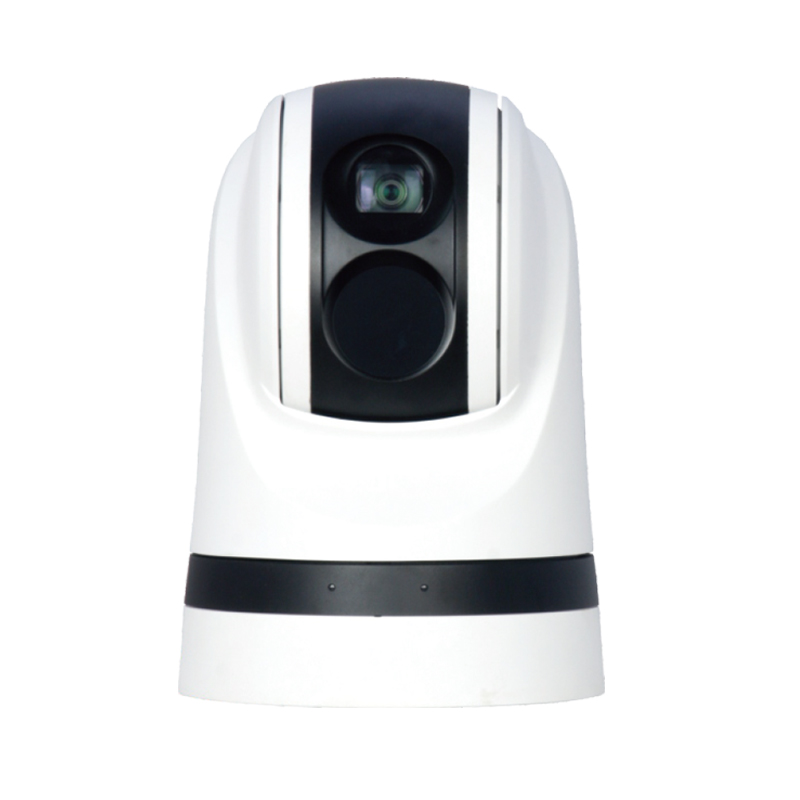
Choosing the wrong thermal ptz camera can expose your property to gaps in security. Many buyers miss critical details like thermal imaging resolution, ignore the build quality, or select features that do not fit their needs. You must understand technical factors such as sensitivity and environmental resistance.

Paying attention to these essentials helps you avoid costly errors and ensures your thermal security camera delivers reliable performance.


Key Takeaways

  • Always check the resolution and pixel count of thermal PTZ cameras. Higher resolution leads to clearer images and better detection.

  • Consider the sensitivity (NETD) and temperature range of the camera. Lower NETD values improve detection of small temperature differences.

  • Evaluate the build quality and IP ratings. A robust camera with a high IP rating ensures durability and reliable performance in harsh conditions.

  • Define your application needs before choosing a camera. Different uses, like security or wildlife monitoring, require specific features.

  • Prioritize ongoing maintenance and manufacturer support. Regular upkeep and good customer service enhance the longevity and effectiveness of your thermal camera.


Overlooking Thermal PTZ Camera Specs

Ignoring Resolution and Pixel Count

You must pay close attention to resolution and pixel count when selecting a thermal ptz camera. Higher resolution means more pixels, which leads to greater detail in thermal imaging. This detail is essential for accurate detection and analysis. For example, increasing resolution from 384×288 to 640×512 more than doubles the pixel count. The area each pixel covers decreases, so you gain sharper images and improved accuracy.

Resolution Change

Pixel Count Increase

Observation Area per Pixel Decrease

384×288 to 640×512

>100%

Proportional decrease

High resolution allows you to measure more temperature points, which enhances detailed analysis in security and industrial applications.


Missing Sensitivity (NETD) and Temperature Range

Sensitivity, measured by NETD (Noise Equivalent Temperature Difference), determines how well your thermal security camera detects small temperature differences. A lower NETD value means higher sensitivity, so you can spot minute temperature variations. This feature improves image clarity and detection, especially in challenging weather.

  • NETD measures the smallest temperature difference your camera can detect.

  • Lower NETD values boost sensitivity and detection capabilities.

  • Enhanced sensitivity leads to clearer thermal imaging and better accuracy.

Temperature range also matters. You need a camera that operates reliably in your environment. Outdoor models often work from -40°F to 140°F, while some can handle up to 158°F for desert use.


Environment

Temperature Range

Outdoor PTZ Cameras

-40°F to 140°F (-40°C to 60°C)

PTZ IP Camera Outdoor models

Up to 158°F (70°C) for desert deployments


Neglecting Refresh Rate

Refresh rate affects how smoothly your thermal imaging updates. If you choose a camera with a low refresh rate, you may miss fast-moving objects or changes. Most security applications require at least 30 Hz for smooth monitoring. Emergency responders report that 60 Hz is useful in high-mobility situations, but 30 Hz works well for most needs.

  • A 9 Hz refresh rate is acceptable for measuring static temperatures.

  • 30 Hz is the minimum for general surveillance.

  • 60 Hz provides extra clarity in dynamic environments.

Always match camera specs and features to your detection needs for reliable performance.


Ignoring Build Quality and IP Ratings
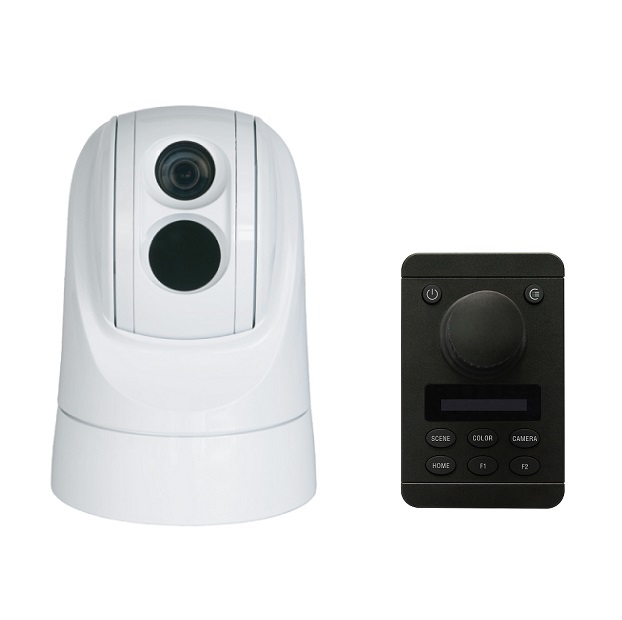
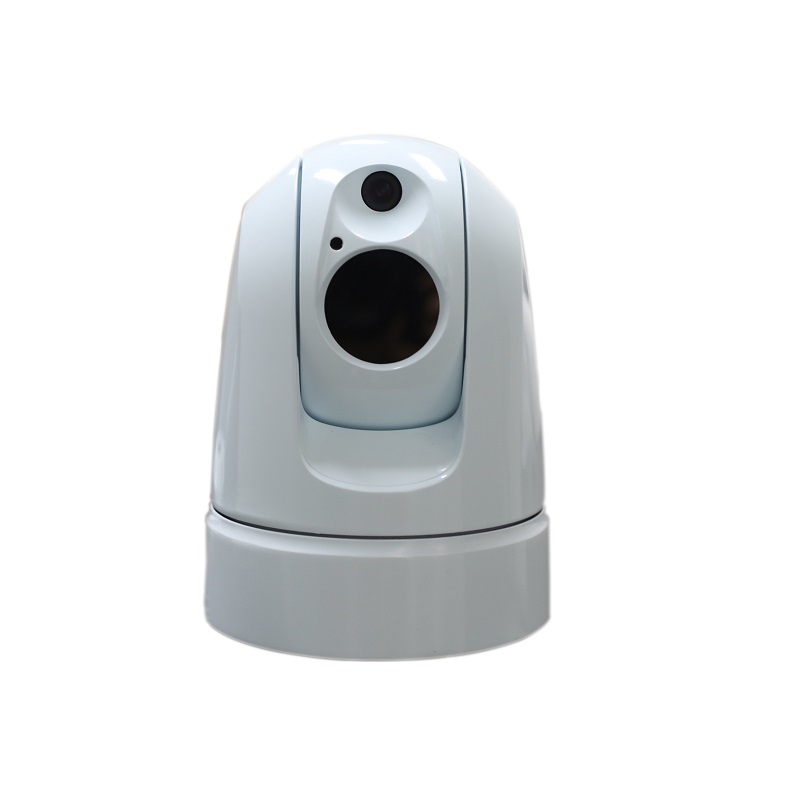
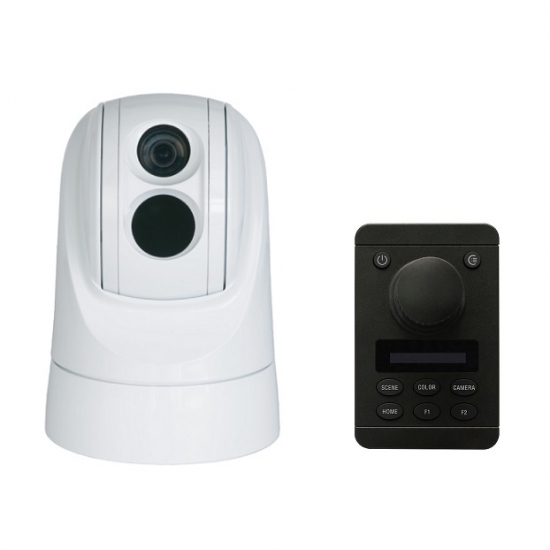
dual payload thermal ptz camrea

Underestimating Robust Construction

You should never overlook the build quality of a thermal imaging PTZ camera. Strong construction protects your investment and ensures reliable operation in tough environments. Manufacturers use materials like aluminum alloy for the housing, which resists corrosion and shields internal components. High-efficiency optical glass improves image clarity and withstands impacts. Built-in heating and heat dissipation features help the camera maintain performance during extreme temperatures. Precision engineering in pan and tilt mechanisms keeps images stable and reduces vibrations.

Feature

Description

Housing

Integral aluminum alloy housing, sealed and waterproof

Window Glass

4mm microcrystalline infrared high-efficiency transparent HLIN optical glass, transmittance > 98%

Temperature Control

Thermal balance design with built-in heating and heat dissipation components for extreme temperatures

Weather Proof

IP66 rating, ensuring water-proof and dust-proof capabilities

Mechanical Design

High-quality materials in pan and tilt mechanisms for image stability

  • Sturdy base and smooth-moving parts improve image stability.

  • High-quality materials in pan and tilt mechanisms reduce vibrations.

  • Precision engineering ensures smooth movement, preventing image distortion.

A robust camera stands up to dust, moisture, and impacts, making it a smart choice for long-term security.


Skipping Ingress Protection (IP) Ratings

You must pay attention to IP ratings when choosing a thermal PTZ camera. The IP rating shows how well the camera resists dust and water. Higher ratings mean better protection and longer lifespan in harsh conditions.

For outdoor security cameras, an IP rating of IP66 or above is considered ideal. To meet the demands of extended water submersion, a higher IP rating like IP67 or IP68 would be more suitable.

The IP weatherproof rating directly affects how long your camera lasts in exposed locations. IP66 cameras resist high-pressure water jets and dust. IP67 models survive temporary water immersion. IP68 cameras handle prolonged rain and harsh environments, making them suitable for coastal or marine installations.

  • IP66: Fully dust-tight and resistant to high-pressure water jets.

  • IP67: Survives temporary submersion up to 1m for 30 minutes.

  • IP68: Suitable for prolonged rain and harsh conditions.

Choosing a camera with the right IP rating ensures your thermal device performs reliably and protects your security system from environmental threats.


Mismatching Camera to Security Needs

Not Defining Application (Security, Industrial, Wildlife)

You need to define your application before choosing a thermal ptz camera. Security, industrial, and wildlife monitoring each demand unique capabilities. If you select a camera without considering your environment, you risk poor performance and wasted investment. Security applications often require long-range detection and high-resolution thermal imaging for accurate threat identification. Industrial sites benefit from cameras that withstand extreme temperatures and weather. Wildlife monitoring needs specialized coatings to protect lenses and high-definition images in low-visibility conditions.

Tip: Write down your main purpose—such as perimeter security, equipment monitoring, or wildlife observation—before you start comparing models.


Overlooking Feature Alignment

You must align the features of your thermal security camera with your specific needs. Not every camera suits every situation. For border monitoring, you need long-range detection—up to 40 km for vehicles and 20 km for humans. High-resolution thermal sensors provide clear imaging in all weather, which is crucial for accuracy. Weather-proof designs ensure reliability in harsh environments.

Feature

Description

Long Range Detection

Up to 40 km for vehicle detection and 20 km for human detection, ideal for border monitoring.

High-Resolution Thermal Sensor

Provides clear imaging in all weather conditions, crucial for security applications.

Weather-Proof Design

Built to withstand extreme weather, ensuring reliability in various environments.

  • Integrated systems enhance overall security capabilities.

  • Advanced analytics improve surveillance efficiency.

  • Automated analysis boosts accuracy and reduces manual monitoring.

If you overlook feature alignment, you may end up with a camera that cannot deliver the performance you expect. Always match the features to your application for the best results.


Overlooking Image Quality in Thermal Imaging

Disregarding Lens and Optics

You should never underestimate the impact of lens quality on a thermal imaging camera. The lens and optics determine how much detail you see and how far you can detect objects. High-resolution lenses give you clearer images and help you identify targets more accurately. Smaller pixel sizes, such as 12μm compared to 17μm, increase resolution and let you recognize distant objects with greater accuracy. Longer focal lengths allow you to zoom in on faraway subjects, but they also narrow your field of view.

  • Higher resolution lenses improve image clarity and target identification.

  • Smaller pixel sizes enhance resolution and help you spot distant objects.

  • Longer focal lengths let you zoom in, which is useful for long-range monitoring.

Tip: Choose a lens that matches your monitoring needs. If you need to observe large areas, select a wider field of view. For distant targets, prioritize longer focal lengths and higher resolution.


Ignoring Image Processing and Frame Rate

Image processing plays a major role in the performance of your thermal imaging camera. Advanced image processing techniques, such as local contrast enhancement, help you distinguish objects from their backgrounds, even when temperature differences are small. Video analytics can provide automatic alerts and improve your situational awareness, making your security system more efficient.

  • Local contrast enhancement improves object detection in challenging conditions.

  • Video analytics reduce false alarms and trigger security responses automatically.

  • High-quality analytics help you respond quickly and accurately to threats.

Frame rate is another critical factor. For smooth video output, you need a frame rate of at least 60 frames per second. This high frame rate helps you track fast-moving subjects and reduces motion blur. It also ensures you capture clear evidence during rapid movements or in difficult lighting.

For the best results in security and monitoring, always check the image processing features and make sure your camera supports a fast frame rate. This combination will boost your accuracy and give you reliable thermal imaging.


Forgetting Environmental Factors

Not Considering Weather Resistance

You must evaluate how weather conditions impact the performance of your thermal PTZ camera. Rain, fog, and snow can reduce image quality and make it harder to distinguish objects. Rain causes less scattering than fog, but it still lowers background contrast. Wet snow acts like rain, while dry snow behaves more like fog, increasing scattering and making detection difficult. If you ignore these factors, your security solutions may fail during critical moments.

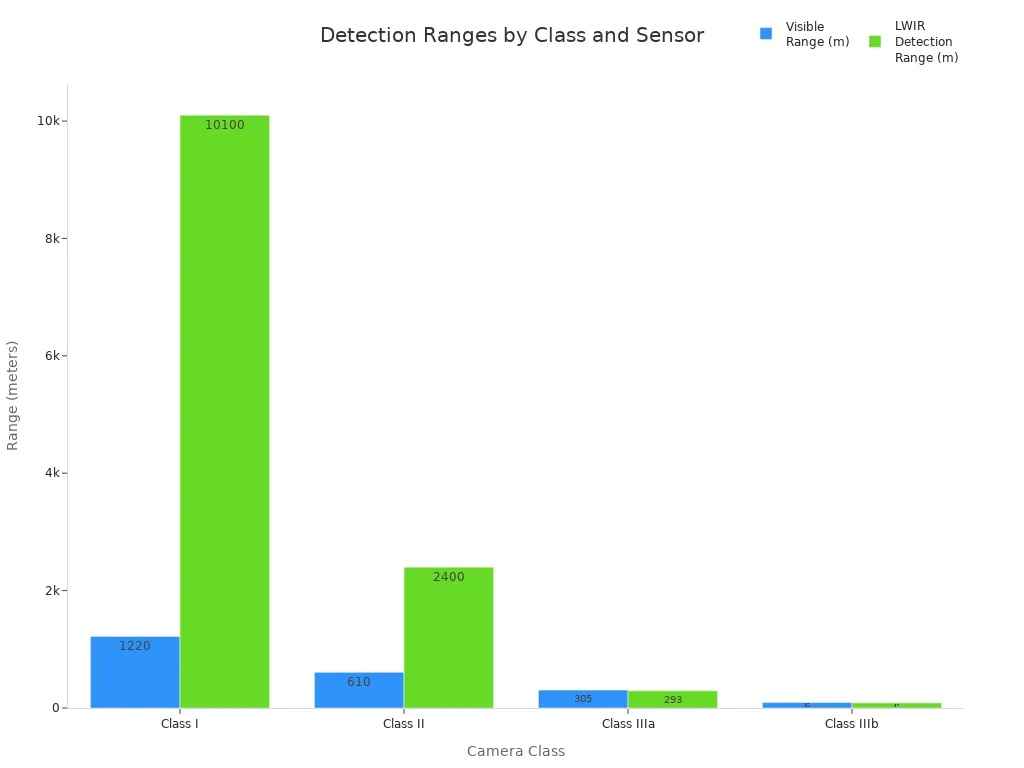
The detection range changes depending on weather conditions. The table below shows how visible and long-wave infrared (LWIR) detection ranges vary across different camera classes:


Class

Visible Range

LWIR Detection Range

I

1220 m / 4000 ft

5.9–10.1 km / 19,000–33,000 ft

II

610 m / 2000 ft

2.4 km / 7800 ft

IIIa

305 m / 1000 ft

293 m / 960 ft

IIIb

92 m / 300 ft

87 m / 280 ft


Weather resistance is essential for reliable thermal imaging and monitoring. You need to choose a camera that maintains accuracy in rain, fog, and snow.


Ignoring Temperature Extremes

You should also consider the temperature limits your camera can withstand. Outdoor environments often expose devices to extreme heat or cold. Some advanced models, like the HiTemp ETX Series, operate at temperatures up to 150°C. This high tolerance comes from thermoelectric materials that improve cooling capacity by 10% compared to traditional coolers. Most outdoor cameras function reliably up to 90°C, which covers typical security applications.

If you overlook temperature extremes, you risk performance degradation and increased maintenance needs. Always check the specifications to ensure your camera suits your monitoring environment. Selecting the right model protects your investment and guarantees consistent security.


Underestimating Maintenance and Support

Overlooking Installation and Upkeep

You might focus on features and image quality, but you should not ignore the importance of installation and regular maintenance. A thermal PTZ camera needs proper setup to deliver reliable protection. If you skip routine upkeep, you risk losing accuracy and reducing the lifespan of your security solutions.

Regular maintenance keeps your thermal imaging system working at its best. You should check for physical damage, clean the lens, and test camera functions often. Inspecting cables and weatherproof seals helps prevent failures during harsh weather or temperature changes. The table below shows a simple schedule for keeping your camera in top condition:

Frequency

Maintenance Tasks

Daily/Weekly

- Check for physical damage to camera body and housing
- Clean lens with microfiber cloth
- Verify battery levels and confirm recording status
- Test basic camera functions and check motion detection

Monthly

- Inspect camera housing for cracks and check weatherproof seals
- Inspect all cables for wear and ensure connections are secure
- Perform comprehensive PTZ testing and verify field of view

Quarterly

- Check for and install latest firmware updates
- Test backup power systems and inspect power supply connections

Annual

- Full system performance evaluation and network security assessment
- Professional cleaning services and hardware inspection
- Apply fresh waterproof seals and lubricate mechanical components

Tip: Following a regular maintenance plan helps you avoid unexpected breakdowns and ensures your security system provides reliable protection year-round.


Ignoring Manufacturer Support

You should always consider the level of support offered by the manufacturer. Good support makes a big difference when you need help with installation, troubleshooting, or firmware updates. Some brands offer detailed guides, responsive customer service, and easy access to replacement parts. Others may leave you searching for answers when problems arise.

Reliable manufacturer support ensures your thermal camera stays up-to-date and performs well in all conditions. It also helps you handle issues related to temperature extremes or technical malfunctions. When you choose a camera, look for a company with a strong reputation for customer care and technical assistance. This choice gives you peace of mind and keeps your security running smoothly.

Note: Manufacturer support is a key part of long-term protection and accuracy in thermal imaging systems.


Focusing Only on Price

Sacrificing Key Features

You might feel tempted to select a rugged thermal PTZ camera based only on price. This decision often leads to sacrificing essential features that impact your security and protection. Lower-priced models usually limit resolution, which reduces detail recognition and measurement accuracy. You may also encounter temperature range restrictions, with budget cameras often capped between 150°C and 400°C. These limits can prevent you from using the camera for demanding industrial applications.

Advanced features, such as trend analysis tools and robust measurement functions, are frequently missing in cheaper models. You may notice basic thermal imaging capabilities but lack the ability to perform detailed analysis. Build quality also suffers. Cameras with lower IP ratings and less durable construction struggle in harsh environments, which affects the reliability of your security solutions.

  • Resolution constraints reduce detail and accuracy.

  • Temperature range restrictions limit industrial use.

  • Lack of advanced features hinders analysis.

  • Lower build quality impacts durability and protection.

Tip: Always compare features before making a purchase. A camera with strong build quality and advanced features will provide better long-term security.


Ignoring Total Cost of Ownership

Focusing only on the initial price can cause you to overlook the total cost of ownership. You may face issues with certification, which can lead to legal and safety compliance problems. Incorrect installation increases the risk of equipment failure and safety hazards. Budget models often make it difficult to source replacement parts or firmware updates, which complicates maintenance and reduces reliability.

You might regret choosing uncertified alternatives if your camera fails inspections. The table below shows common risks associated with low-cost thermal cameras:

Risk

Impact

Certification issues

Legal and safety compliance problems

Incorrect installation

Equipment failure, safety hazards

Replacement part difficulty

Complicates maintenance, reduces reliability

Uncertified alternatives

May not pass inspections

Note: Consider the long-term costs, including maintenance, support, and upgrades. Investing in a quality thermal imaging camera ensures reliable security solutions and consistent protection.

You can avoid costly mistakes by carefully matching your thermal ptz camera to your surveillance needs. Always consider factors like mounting height, field of view, and temperature range to ensure your thermal security camera performs well in darkness. Use a checklist to compare features such as resolution, lens, and integration.

Consulting experts helps you make informed decisions and ensures your thermal imaging system delivers reliable security, even in total darkness.

  • Review installation plans to prevent blind spots.

  • Prioritize operational use cases over just camera specs.

  • Invest in ongoing surveillance excellence for long-term value.


FAQ

What makes a thermal ptz camera ideal for 24/7 surveillance?

You get reliable protection with a thermal ptz camera. It provides visibility in darkness and complete darkness. The camera uses advanced features for improved detection. You can trust it for 24/7 surveillance in high-security environments and for monitoring critical infrastructure.

Why is calibration important for thermal cameras in high-security environments?

Calibration ensures accurate readings. You need proper calibration for reliable performance. High-security environments demand solutions that deliver accurate readings in complete darkness. Regular calibration helps you maintain the effectiveness of your security system.

How does proper calibration improve monitoring in complete darkness?

Proper calibration gives you accurate readings. You achieve improved detection and reliable performance. In complete darkness, calibration allows your thermal camera to deliver solutions that support custom security solution needs and high-security environments.

What features should you look for to ensure reliable protection in complete darkness?

You should check for advanced features like automatic calibration, high sensitivity, and robust construction. These features help you get accurate readings and solutions for high-security environments. They also support monitoring and security in complete darkness.

Can thermal cameras provide solutions for monitoring critical infrastructure in complete darkness?

Yes, thermal cameras offer solutions for monitoring critical infrastructure. They deliver accurate readings and reliable protection in complete darkness. You can use them in high-security environments where visibility in darkness is essential for security and monitoring.
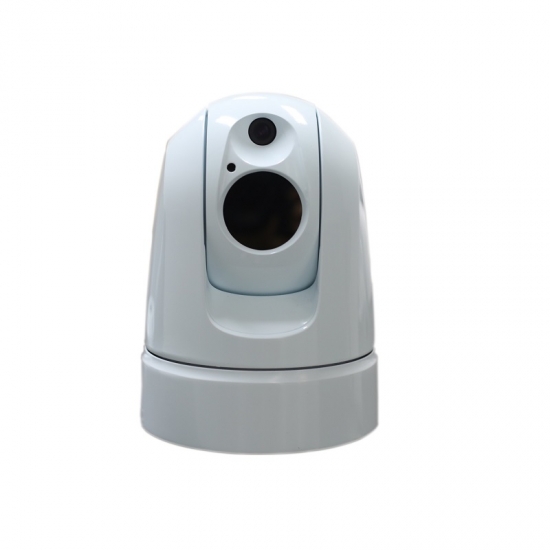
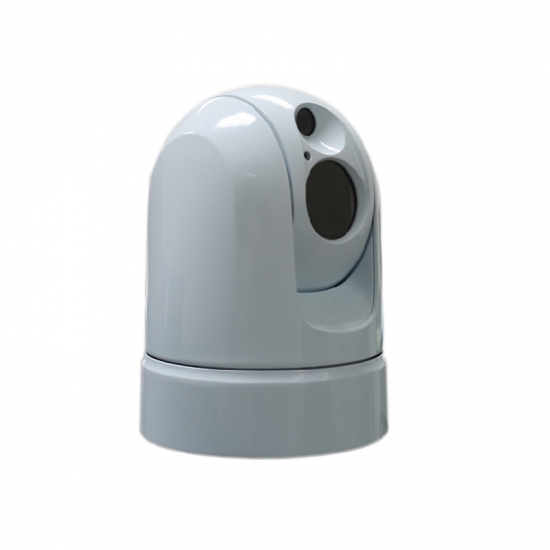
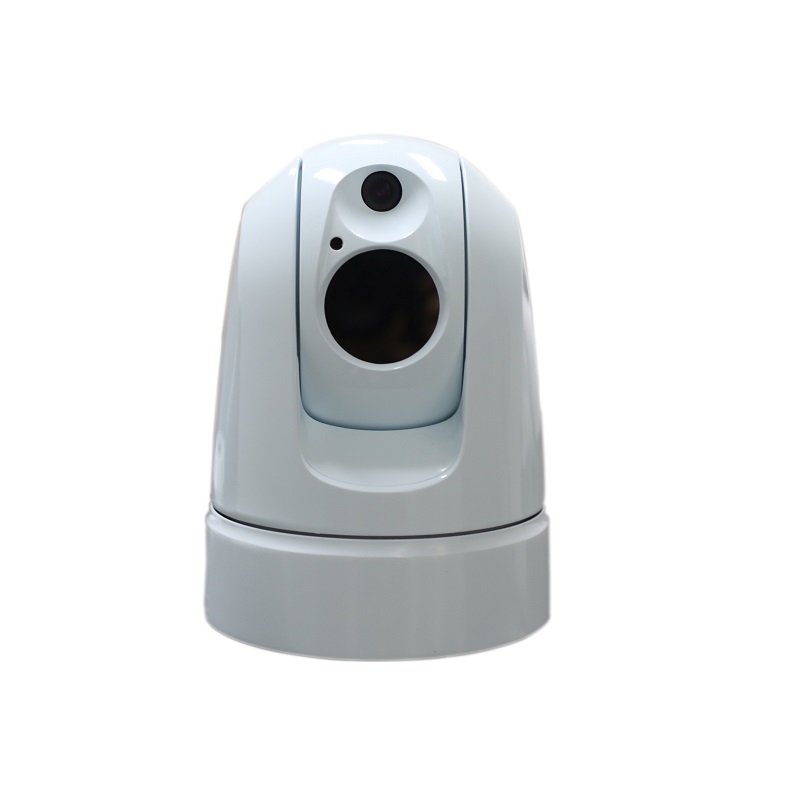
You will find a thermal PTZ camera can serve as a powerful tool for surveillance in challenging environments. These cameras help you detect hidden threats, avoid glare or shadows, and offer customizable alarms that support quick response. You benefit from energy efficiency and seamless integration with larger security systems. However, you must consider potential blind spots, since these cameras only capture what they focus on at any moment. Assess your site and requirements carefully to balance these strengths and limitations.


Key Takeaways

  • Thermal PTZ cameras excel in low-light and harsh weather conditions, providing reliable surveillance when traditional cameras fail.

  • These cameras offer advanced features like pan-tilt-zoom control and heat signature detection, enhancing monitoring capabilities across large areas.

  • While thermal PTZ cameras reduce false alarms by focusing on heat rather than motion, they may struggle with fine detail identification.

  • Consider the higher initial costs and potential integration challenges when choosing thermal PTZ cameras for your security needs.

  • Combining thermal PTZ cameras with fixed cameras can minimize blind spots and ensure comprehensive coverage.


What is a Thermal PTZ Camera?

Key Features

A thermal PTZ camera combines advanced technologies to deliver versatile surveillance capabilities. At its core, it includes pan-tilt control, which lets you rotate the camera 360° horizontally and tilt it vertically from -90° to +90°. This flexibility allows you to monitor wide areas without blind spots. The camera also features high-precision zoom, enabling you to focus on distant objects with clarity. Thermal imaging technology plays a crucial role by detecting heat signatures, making the camera effective in total darkness or harsh weather. Many models include intelligent functions like automatic tracking and alarm systems, which help you respond quickly to potential threats.

Here is a quick overview of the main components:

  • Pan-Tilt Control: Enables comprehensive horizontal and vertical movement.

  • Zoom Capabilities: Offers dual-spectrum zoom for both visible light and thermal imaging.

  • Thermal Imaging Technology: Uses sensitive detectors to capture heat patterns.

  • Intelligent Features: Includes automatic tracking and alarms for enhanced security.


How Thermal Imaging Works

Thermal imaging detects infrared radiation, a form of heat emitted by all objects. Unlike traditional cameras that rely on visible light, thermal cameras convert this infrared energy into visual images. These images display temperature differences, allowing you to see heat patterns even in complete darkness or through smoke and fog. This ability makes thermal imaging invaluable for surveillance, as it reveals hidden objects or people based on their heat signatures rather than relying on ambient light.

 Thermal Imaging HD SDI PTZ Cameras

PTZ Functionality

The pan-tilt-zoom (PTZ) feature significantly improves your surveillance coverage and flexibility. You can pan the camera to scan large areas horizontally, tilt it to adjust vertical viewing angles, and zoom in to examine details closely. This real-time control helps you track moving targets effectively and respond to dynamic situations. PTZ systems often integrate with intelligent video analytics, improving identification accuracy. When combined with thermal imaging, PTZ cameras provide reliable monitoring in environments where traditional cameras might fail.

Note: Some thermal PTZ cameras offer dual imaging capabilities, combining visible light and thermal sensors. This feature gives you the best of both worlds—clear visual details and heat-based detection.


Thermal PTZ Camera Advantages

Night Vision and Low-Light Performance

Thermal PTZ cameras excel in night vision and low-light surveillance. Unlike traditional security cameras that depend on ambient light, these cameras use infrared technology to detect heat signatures. This capability allows you to monitor areas in complete darkness, fog, or smoke without losing clarity. You can identify intruders hiding in shadows or dense foliage, which visible-light cameras often miss. The infrared thermal imaging technology works independently of light sources, making it ideal for long-range and extreme environment surveillance.

Key benefits include:

  • Operates effectively day and night without additional lighting.

  • Detects body heat, revealing hidden threats in total darkness.

  • Provides high-contrast images that enhance video analytics and target recognition.


Extreme Weather Reliability

Thermal PTZ cameras maintain performance in harsh weather conditions where standard cameras struggle. They rely on infrared radiation to create images, allowing you to see through fog, smoke, rain, and dust. This makes them invaluable for outdoor surveillance in unpredictable climates. Additionally, these cameras often feature rugged designs with high durability ratings, enabling them to function reliably across wide temperature ranges. You can trust these devices to deliver consistent monitoring even in extreme cold or heat.

Advantages include:

  • Infrared imaging penetrates obscurants that block visible light.

  • Durable construction withstands severe environmental conditions.

  • Reliable operation ensures continuous security coverage regardless of weather.


Heat Signature Detection

One of the most significant benefits of ptz cameras with thermal imaging lies in their ability to detect heat signatures at impressive distances. This feature allows you to spot humans, animals, and vehicles based on their emitted infrared radiation. For example, industrial-grade thermal imaging cameras can detect targets hundreds of meters to several kilometers away. Some advanced models, like Raythink’s PC4 dual-spectrum thermal ptz camera, identify humans at 4.2 kilometers and vehicles at 12.8 kilometers. This long-range detection capability supports perimeter defense and early threat identification.

Device Type

Typical Detection Range

Applications

Consumer-Grade Thermal Camera

Tens to hundreds of meters

Home inspections, appliance diagnostics, outdoor exploration

Industrial-Grade Thermal Imaging Camera

Hundreds of meters to tens of kilometers

Perimeter security, forest fire prevention, wildlife research


Dual Imaging Versatility

Many thermal PTZ cameras combine infrared and visible-light sensors, offering dual imaging capabilities. This combination provides you with the benefits of both thermal detection and clear visual details. You can switch between thermal and optical views or overlay them for enhanced situational awareness. This versatility improves identification accuracy and helps confirm threats before triggering alarms. Dual imaging also supports better evidence collection, as you capture both heat signatures and recognizable images.

Benefits of dual imaging include:

  • Enhanced target verification through combined thermal and visual data.

  • Improved situational awareness in diverse lighting conditions.

  • Greater flexibility for various surveillance scenarios.


Reduced False Alarms

Thermal PTZ cameras help reduce false alarms significantly compared to conventional security cameras. They detect heat signatures rather than relying on motion or light changes, which often trigger false alerts. Thermal imaging ignores irrelevant stimuli such as shadows, reflections, or moving foliage. Combining thermal cameras with radar or intelligent analytics further increases detection accuracy and lowers false alarm rates. This reduction saves time and resources by focusing your attention on real threats.

Source

Evidence

FLIR

Combining thermal cameras with radar increases detection probability and reduces false alarms.

Sunell Security

Thermal imaging ignores non-threatening stimuli like shadows and reflections, leading to lower false alarm rates.

Hillary Kiprono’s Post

Thermal signatures confirm the presence of real threats, reducing false alarms.

Note: While thermal PTZ cameras offer many benefits, keep in mind the downside of potential blind spots during pan-tilt-zoom movements. Careful system design can mitigate this issue.


Thermal PTZ Camera Disadvantages

High Cost

You will notice that the initial investment for a thermal PTZ camera is significantly higher than for standard surveillance equipment. The advanced sensors, rugged construction, and intelligent features drive up the price. You must also consider ongoing costs, such as specialized maintenance and potential software updates. For many organizations, this high cost can become a barrier, especially when deploying multiple units across a large site.

  • Upfront purchase price exceeds that of visible-light cameras.

  • Maintenance and calibration require specialized skills.

  • Budget constraints may limit the number of cameras you can install.


Limited Detail and Identification

Thermal imaging technology excels at detecting heat signatures, but it cannot capture fine details. You will find it difficult to identify specific features, such as a person’s clothing color or a vehicle’s license plate. This limitation can hinder investigations that require positive identification.

  • Visible-light cameras allow you to recognize clothing color and vehicle make, which is essential for detailed identification.

  • Thermal cameras help you detect shapes and potential threats in challenging conditions, but they struggle with individual identification.

  • For tasks that demand performance in low-light or adverse weather, thermal imaging reduces false alarms but sacrifices detail.


Blind Spots from PTZ Movement

A primary downside of ptz cameras is the potential for blind spots during operation. When you pan, tilt, or zoom the camera to focus on a specific area, other regions remain unmonitored. This creates windows of vulnerability that intruders can exploit.

  • Wide-area monitoring becomes challenging, as the camera only observes one direction at a time.

  • Fixed cameras often leave blind spots in large spaces, but ptz camera models can miss activity while repositioning.

  • Tracking moving targets in complex environments can be difficult, leading to target loss.

Tip: You can reduce blind spots by integrating thermal PTZ cameras with fixed cameras for comprehensive coverage.


Material Limitations (Water, Glass)

Thermal imaging cannot penetrate certain materials, which impacts surveillance effectiveness. You will encounter issues when monitoring through glass or water, as these substances block or distort infrared radiation.

Limitation

Description

Cannot see through glass

Glass reflects and absorbs long-wave infrared (LWIR) radiation.

Obscured by water

Water can obscure thermal signatures, hindering detection.

You should avoid placing thermal PTZ cameras behind windows or in areas where water may obstruct the field of view.


Integration Challenges

Integrating a thermal PTZ camera into an existing security system can present challenges. Compatibility issues may arise with legacy hardware or software platforms. You may need to invest in additional infrastructure or specialized training for your team.

  • Integration with older systems may require custom solutions.

  • Staff must learn to interpret thermal images and manage advanced features.

  • Upgrades and ongoing support can increase operational complexity.

Note: Careful planning and consultation with experienced professionals can help you overcome these integration challenges.


Comparison with Traditional Cameras

Visual vs. Thermal Imaging

You will notice that thermal PTZ cameras differ significantly from traditional visible-light security cameras. Thermal cameras detect heat radiation, allowing you to monitor areas regardless of lighting conditions. They function independently of visible light, so you can rely on them during nighttime or in complete darkness without additional illumination. Traditional cameras depend on ambient light or artificial sources, which limits their effectiveness in low-light or no-light environments. While visible-light cameras capture detailed images with colors and textures, thermal cameras focus on temperature differences, which helps you detect hidden threats early rather than just collecting evidence after an incident.


Performance in Different Conditions

Thermal PTZ cameras outperform traditional cameras in challenging weather and environmental conditions. Fog, smoke, light rain, and dust often obscure visible-light cameras, causing blurred or blocked views. Thermal imaging uses long-wave infrared radiation, which penetrates these obscurants better than visible light. This ability allows you to maintain reliable surveillance when traditional cameras fail. You can trust thermal cameras to deliver consistent detection through fog or smoke and in total darkness. This makes them ideal for monitoring large areas where weather conditions frequently change.

Thermal imaging remains effective in complete darkness and through atmospheric obscurants, ensuring continuous security camera operation when visible-light systems struggle.


Application Scenarios

You should consider thermal PTZ cameras for scenarios where lighting is poor or weather conditions are harsh. They excel in perimeter security, border monitoring, and critical infrastructure protection. Their ability to detect heat signatures makes them valuable for covert surveillance and early threat detection. Here are some common use cases where thermal cameras outperform traditional ones:

  1. Reliable identification in darkness

  2. Effective operation in harsh weather

  3. Detection based on heat radiation, not visible light

You can also combine thermal PTZ cameras with fixed cameras to cover blind spots and enhance overall surveillance. This combination of PTZ and fixed cameras provides comprehensive monitoring, balancing detailed visual information with thermal detection. Using both types together helps you achieve better security outcomes across diverse environments.

 Thermal Imaging PTZ Cameras

Choosing a Thermal PTZ Camera

Cost-Benefit Analysis

When you evaluate a thermal PTZ camera, you should weigh both the upfront investment and the long-term value. The initial cost may seem high, but the benefits often justify the expense, especially for critical applications. These cameras offer versatility for perimeter protection and critical infrastructure. Integration with your existing systems can improve operational efficiency and reduce the need for additional equipment.

Factor

Description

Thermal Imaging and Image Quality

Essential for detecting objects in low visibility conditions.

Field of View and Lens Options

Determines the area covered and the detail captured by the camera.

Video Analytics Integration

Enhances surveillance capabilities through automated analysis.

Ruggedized Design

Ensures durability in various environmental conditions.

Compliance and Compatibility

Important for integration with existing security systems.

Overall Cost-Effectiveness

Evaluates the camera's value compared to other security measures.

Tip: Consider how the camera’s features align with your security goals and whether the long-term savings outweigh the initial investment.


Installation and Maintenance

Proper installation ensures you get the most from your pan-tilt-zoom camera. Position the camera at the right height and angle to maximize coverage. Avoid obstructions in the field of view and do not place the camera facing direct light sources. For outdoor use, select weatherproof enclosures and secure mounting to prevent tampering. You should perform regular inspections, clean the lens, and keep firmware updated. Always check power and connectivity to maintain reliable operation.


Best Use Cases

Thermal PTZ cameras excel in demanding environments. You can use them for:

  1. Perimeter security at sensitive sites

  2. Border surveillance and illegal crossing detection

  3. Wildlife monitoring and research

  4. Search and rescue in low-visibility conditions

  5. Maritime and port security

  6. Industrial facility monitoring

  7. Fire detection and early warning

  8. Traffic management and accident identification

These cameras also support event security, military operations, and smart city initiatives.


Privacy and Legal Factors

You must comply with privacy laws and regulations when deploying surveillance solutions. Familiarize yourself with local rules regarding thermal camera usage. Implement masking techniques to protect personal data and conduct a legal review before installation. Establish clear policies for surveillance use and obtain necessary consents from stakeholders.

Note: Responsible use of thermal PTZ cameras protects both your organization and the privacy of individuals.

You gain powerful advantages with thermal PTZ cameras, such as enhanced visibility in darkness and early detection of heat anomalies. However, you must also consider higher costs and lower image resolution. The table below highlights the main points:

Pros

Cons

Enhanced visibility in darkness

Higher cost

Ability to see through obstructions

Lower image resolution

Early detection of heat anomalies

Limited color information

Superior security monitoring

Complex installation and use

You should evaluate these factors carefully for your surveillance system. Informed choices help you achieve reliable surveillance tailored to your needs. Consider consulting experts or researching new technologies for optimal results.


FAQ

What environments benefit most from thermal PTZ cameras?

You gain the most value in areas with low light, heavy fog, or extreme weather. These cameras excel in perimeter security, border monitoring, and critical infrastructure protection.

Can thermal PTZ cameras identify people or vehicles?

You can detect people and vehicles by their heat signatures. However, you cannot capture fine details like facial recognition and license plate tags. Use these cameras for detection, not for positive identification.

How do you reduce blind spots with PTZ cameras?

You should combine thermal PTZ cameras with fixed cameras. This approach ensures continuous coverage and minimizes unmonitored areas during pan, tilt, or zoom movements.

Are thermal PTZ cameras difficult to install?

You may find installation more complex than standard cameras. Proper placement, secure mounting, and integration with existing systems require careful planning and technical expertise.

Do thermal PTZ cameras work through glass?

You cannot use thermal PTZ cameras through glass. Glass blocks infrared radiation, which prevents the camera from detecting heat signatures accurately.


You should choose a single payload Maritime PTZ Camera if you need basic monitoring and want to keep costs low. If you operate in areas with poor visibility or need both daylight and thermal imaging for safety, a dual payload camera offers advanced features. Consider your vessel’s size, typical weather, and the level of surveillance you require. The right camera will help you maintain clear vision and improve safety on board.


Key Takeaways

  • Choose a single payload Maritime PTZ Camera for basic monitoring and cost savings. It suits small to medium vessels needing reliable video without advanced features.
  • Opt for a dual payload Maritime PTZ Camera if you operate in challenging conditions. This camera provides both thermal and daylight imaging for maximum visibility and safety.
  • Consider your vessel's size and typical weather when selecting a camera. The right choice enhances navigation and security, ensuring clear vision at sea.
  • Evaluate your operational needs. Different scenarios, like search and rescue or security, require specific camera features for effective monitoring.
  • Plan your budget wisely. Look for cameras that offer long-term value and upgrade options to adapt to future technological changes.

Single Payload Maritime PTZ Camera

Key Features

You will find that a single payload Maritime PTZ Camera focuses on delivering clear, high-definition video in a compact and reliable package. These cameras use advanced CMOS sensors to capture crisp images, even in low-light conditions. Many models, such as the Iris ATOM A118 and A418, offer full HD resolution, long-range optical zoom, and powerful infrared lamps for night vision. The following table highlights the technical specifications you can expect:

Specification Iris ATOM A118 / A418
Camera Resolution 1920 x 1080P (HD)
Sensor 1/2.8” High-Performance Low Illumination CMOS
Focal Length 4.7mm - 141mm
IR Range Up to 100m (328ft)
Power Requirements +12vDC / 2000mA Max / 24W Max
Environmental Rating IP66
Weight 2Kg
Dimensions 206mm x 160mmø

These features ensure you get reliable performance for everyday monitoring tasks.


Typical Uses

You can use a single payload Maritime PTZ Camera for a wide range of applications. These cameras support navigation, safety, and general surveillance on both commercial and recreational vessels. For example, the FLIR M300C model provides long-range optical zoom and image stabilization, which helps you recognize targets and monitor your surroundings in turbulent conditions. The table below summarizes common uses:

Application Area Description
Navigation Enhances visibility and safety during travel
Security Monitors decks and perimeters for unauthorized access
Law Enforcement Supports patrol and incident documentation
Recreational Use Provides peace of mind for yacht and boat owners

Who Should Choose Single Payload

You should consider a single payload Maritime PTZ Camera if you operate a small to medium-sized vessel and need reliable video monitoring without advanced thermal imaging. This option suits you if you want to keep costs manageable while still benefiting from high-definition surveillance. Single payload cameras work well for routine navigation, basic security, and general observation. If your vessel rarely operates in extreme weather or low-visibility conditions, this camera type will meet your needs.


Dual Payload Maritime PTZ Camera

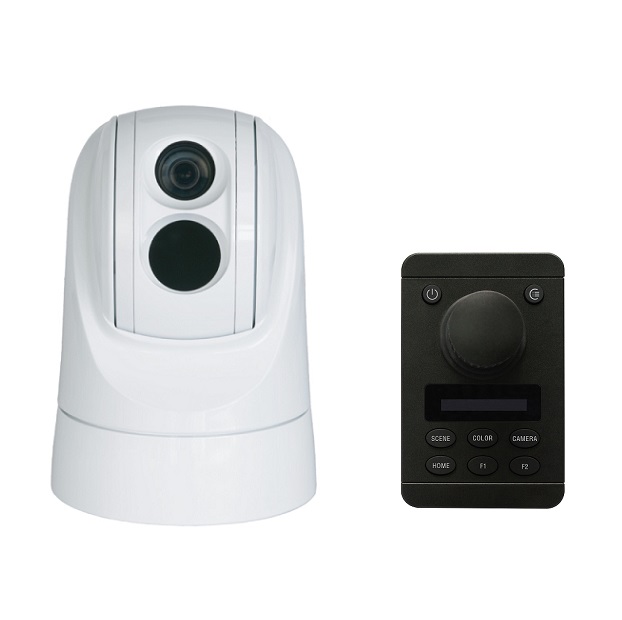
dual payload Maritime PTZ Camera


Key Features

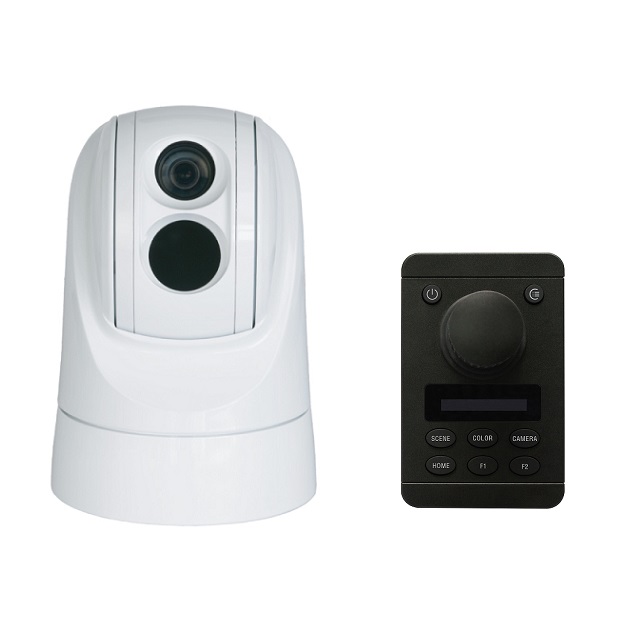
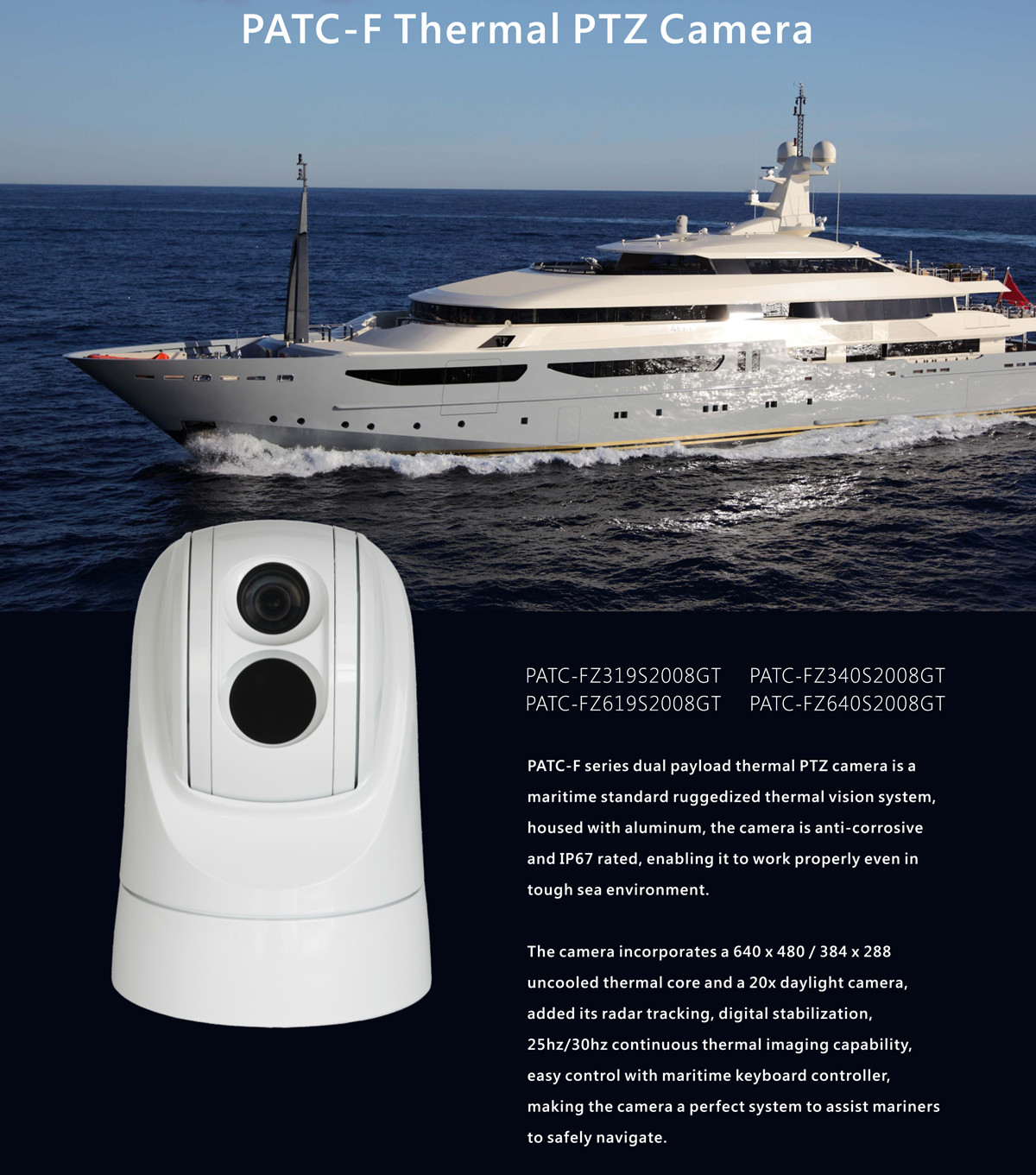
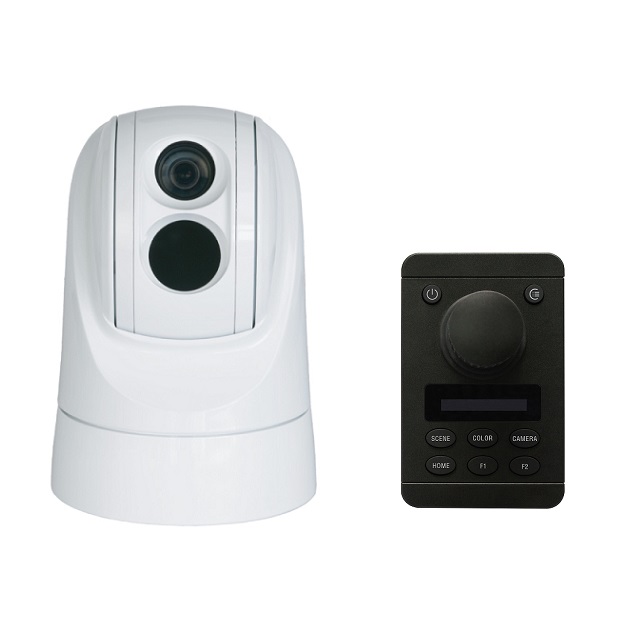
A dual payload Maritime PTZ Camera gives you both thermal and daylight imaging in one device. This combination lets you see clearly in total darkness, fog, or bright sunlight. You get a high-resolution thermal core, such as 640x480 or 384x288, paired with a 30x optical zoom daylight camera. Many models, like those from winsafecctv, use ruggedized aluminum housing with an IP67 rating to withstand harsh marine environments. You can control these cameras easily with a Marine Control Keyboard, making it simple to switch between thermal and visible modes or track targets. Some systems, like a Marine Thermal Imaging System, offer radar and video tracking for advanced navigation and security.

Feature Description
Thermal Core 640x480/384x288 uncooled thermal core
Daylight Camera 30x optical zoom, 2MP resolution
Build Material Ruggedized aluminum, anti-corrosive, IP67 rated
Tracking Capabilities Radar tracking, video tracking
Imaging Capability 25hz/30hz continuous thermal imaging
Control Method Marine Control Keyboard for easy operation
Zoom Capability Up to 500x combined zoom
Image Modes Monochrome and color for situational awareness

Typical Uses

You can use a Maritime Dual PTZ Camera for many demanding tasks at sea. These cameras help you navigate safely in low visibility, monitor for security threats, and support search and rescue operations. The dual imaging system lets you spot obstacles, vessels, or people in the water, even at night or in fog. Law enforcement and commercial vessels rely on these cameras for perimeter security and incident documentation. The compact design and waterproof housing make them suitable for yachts, patrol boats, and large ships. Many users choose a Thermal PTZ Camera for outdoor monitoring and vessel protection.

Application Area Description
Navigation Safe travel in darkness, fog, or harsh weather
Security Detects intruders and monitors perimeters
Search & Rescue Locates people or objects in the water at night
Law Enforcement Supports patrols and evidence gathering
Commercial Use Monitors cargo and vessel operations

Tip: Dual payload cameras from brands like winsafecctv offer advanced features for marine professionals who need reliable performance in all conditions.


Who Should Choose Dual Payload

You should choose a dual payload Maritime PTZ Camera if you operate in challenging environments or need maximum situational awareness. This camera type fits large yachts, commercial ships, and patrol vessels that require both thermal and visible imaging. If you often navigate at night, in fog, or in busy ports, a Maritime Dual PTZ Camera gives you a clear advantage. You also benefit from advanced tracking and control features, especially when using a Marine Control Keyboard. If your operations demand the highest level of safety and security, or if you want to future-proof your vessel with a Marine Thermal Imaging System, dual payload is the right choice.


Dual lens IP PATC Thermal Imaging HD SDI PTZ Cameras

Pros and Cons Comparison

Single Payload: Pros & Cons

When you consider a single payload Maritime PTZ Camera, you gain several advantages. These cameras offer a straightforward setup and easy operation. You can expect lower costs, which helps if you have a limited budget. Maintenance stays simple because you only manage one imaging system. Most single payload models provide high-definition video and reliable performance for daily monitoring.

Pros:

  • Lower purchase price and operating costs
  • Simple installation and maintenance
  • Compact and lightweight design
  • Effective for basic navigation and security

Cons:

  • No thermal imaging capability
  • Limited performance in fog, darkness, or harsh weather
  • Fewer advanced features for tracking or detection

Note: If you only need standard video monitoring and rarely face poor visibility, a single payload camera meets your needs.


Dual Payload: Pros & Cons

A dual payload camera, such as a Maritime Dual PTZ Camera, brings advanced features to your vessel. You get both visible and thermal imaging, which means you can see in total darkness or through fog. Many models, like those from winsafecctv, include a Marine Control Keyboard for easy operation. You can use a Thermal PTZ Camera for search and rescue or security tasks. Some systems, like a Marine Thermal Imagging System, add radar tracking for even more safety.

Pros:

  • Combines daylight and thermal imaging for all-weather visibility
  • Supports advanced tracking and detection
  • Improves safety during night operations or emergencies
  • Suitable for commercial, law enforcement, and large vessels

Cons:

  • Higher initial cost and more complex installation
  • Requires more training to operate advanced features
  • Larger and heavier than single payload models

Tip: Choose a dual payload camera if you need maximum situational awareness and operate in challenging environments.


Side-by-Side Comparison Table

When you compare single and dual payload cameras, you see clear differences in features, performance, and value. The right choice depends on your vessel’s needs and your expectations for safety and visibility.

Below is a table that gives you a direct comparison between single and dual payload Maritime PTZ Cameras. This table covers the most important aspects, including imaging types, night vision, installation, and best use cases.

Feature / Aspect Single Payload Camera Dual Payload Camera
Imaging Types Optical only Optical and Thermal
Night Vision Infrared lamps, limited range Thermal imaging, full darkness
Low-Light Performance Limited Enhanced
Dynamic Range Standard 128 times improvement
Surveillance Capability Basic monitoring Advanced detection and tracking
Installation Complexity Varies Easy plug and play
Cost Lower Higher
Size & Weight Compact, lightweight Larger, more robust
Best Use Cases Small boats, basic security Commercial ships, search & rescue
Example Brands/Models Iris ATOM, FLIR M300C winsafecctv, Thermal PTZ Camera

If you operate in areas with frequent fog or darkness, you gain a major advantage with a dual payload camera. You get both optical and thermal imaging, which means you can spot hazards or people in the water even when you cannot see with your eyes alone.

You should choose a single payload camera if you want simple, reliable video for navigation and basic security. This option works well for small vessels and recreational use. You save on cost and keep installation easy.

You should choose a dual payload camera if you need maximum awareness and safety. These cameras, like the Maritime Dual PTZ Camera or models from winsafecctv, combine thermal and daylight imaging. You can control them with a Marine Control Keyboard and even add features like radar tracking with a Marine Thermal Imagging System. This setup fits commercial ships, patrol boats, and anyone who needs to operate in tough conditions.

Tip: Always match your camera choice to your vessel’s mission. Advanced features help you stay safe, but you should not pay for capabilities you will not use.


Choosing the Right Maritime PTZ Camera

By Vessel Type

Selecting the right camera depends on your vessel’s size and operational demands. You need a system that can handle harsh marine conditions, including saltwater, extreme temperatures, and constant vibration. Here are some recommendations for different vessel types:

  • Small Boats: Choose compact and rugged cameras like the PSOS-3Z30-XI68. This model offers 4MP IP color imaging, advanced low-light performance, and high-resolution video. Its DNV GL Type Approval ensures reliability in tough environments.
  • Yachts: Consider the Marine HD Camera or Marine One. Both provide full HD video, enhanced light sensitivity, and corrosion resistance. These cameras require minimal maintenance and deliver excellent outdoor surveillance.
  • Commercial Ships: Opt for heavy-duty options such as Marine One Thermal or the PATC-F Series. These models combine day/night color imaging with thermal capabilities, making them ideal for all-weather surveillance and navigation. The PSOS-3Z30-XI68 also integrates seamlessly with other onboard systems, supporting complex operations.

Tip: Always select a camera that matches your vessel’s exposure to salt, temperature extremes, and vibration. This ensures long-term reliability and safety.


By Use Case

Your operational needs should guide your camera choice. Different scenarios require specific features:

  • Navigation: Advanced cameras with AI and thermal imaging help you avoid collisions and navigate safely, even in darkness or fog. Models with radar tracking and digital stabilization, like the PATC-F Series, enhance situational awareness.
  • Security: Real-time tracking and high-definition video are essential for monitoring unauthorized access. Cameras such as Marine One and Marine HD Camera provide robust surveillance for decks and perimeters.
  • Night Operations: Traditional cameras struggle with “dark ships.” Dual payload models like Marine One Thermal offer both daylight and thermal imaging, ensuring visibility in total darkness.
  • Search and Rescue: Rapid detection is critical. Cameras with AI and thermal sensors, such as the PATC-F Series, help you locate people or objects in the water quickly, improving rescue outcomes.

You can also use these cameras for vessel traffic monitoring and coastal surveillance. They help you manage fleet operations and identify illegal activities.


Budget & Upgrade Tips

When planning your investment, consider both initial costs and long-term value. The following table summarizes cost-effective strategies for upgrading your camera system:

Camera Type Cost Range Maintenance Level Benefits
PTZ Cameras $800 to $2,500 Medium Reduces blind spots, improves incident response, saves time and resources.
Upgraded Systems N/A N/A Enhances security, operational efficiency, and long-term cost savings.

You can future-proof your investment by choosing cameras with AI integration and modular designs. These features let you adapt to new technologies and changing security needs. Modern systems often support multi-functionality, so you can customize and expand your setup as your requirements evolve.

Note: Look for cameras that offer modular upgrades and AI features. This approach helps you stay ahead of technological changes and ensures your system remains effective for years.

A Maritime PTZ Camera with advanced features and robust construction will serve you well, whether you operate a small boat or a commercial ship. By matching your choice to your vessel type, operational needs, and budget, you ensure reliable performance and safety at sea.


You should select a single payload camera for basic monitoring on small boats or yachts. Choose a Maritime Dual PTZ Camera or Thermal PTZ Camera for advanced surveillance on commercial ships or in harsh conditions. Review this checklist before making your decision:

  • Corrosion resistance and weatherproof design
  • Wide viewing angles and high resolution
  • PTZ functionality for dynamic monitoring
  • Reliable connectivity for remote access
  • Motion detection and real-time alerts

Consult maritime technology experts for tailored advice. Consider your surveillance needs, budget, and future upgrades. Brands like winsafecctv offer robust options with Marine Control Keyboard and Marine Thermal Imagging System features.


FAQ

What is the main difference between a single and dual payload Maritime PTZ Camera?

You get only optical imaging with a single payload camera. A dual payload camera gives you both optical and thermal imaging. This means you can see in darkness, fog, or bright sunlight.

Do I need a Marine Control Keyboard for my camera system?

You should use a Marine Control Keyboard if you want easy camera control. It lets you switch between thermal and daylight views, zoom, and track targets quickly. This tool improves your response time on the water.

How does a Thermal PTZ Camera help in search and rescue?

A Thermal PTZ Camera detects heat signatures. You can spot people or objects in the water, even at night or in fog. This feature speeds up rescue operations and increases safety for your crew.

Are winsafecctv cameras suitable for harsh marine environments?

Yes. winsafecctv cameras use ruggedized aluminum and have IP67 ratings. You can trust them to resist corrosion, saltwater, and extreme weather. These cameras work well on commercial ships and patrol vessels.

Can I upgrade my system with a Marine Thermal Imagging System later?

You can upgrade most modern camera systems. Look for modular designs and compatibility with Marine Thermal Imagging Systems. This approach lets you add advanced features as your needs grow.

Nighttime maritime security needs the best tools. You deal with darkness, bad weather, and sudden dangers. Thermal PTZ cameras often work better than optical cameras. They find heat, see in total darkness, and handle tough conditions. Recent reports show more nighttime problems:

  • Global piracy cases went up by 50% in early 2025.
  • The Singapore Strait had over 70 cases in 2025.
  • Crew kidnappings in the Gulf of Guinea were 87% of all cases.

You need good surveillance. A Maritime Thermal PTZ Camera uses infrared to find heat. Optical cameras use visible light. When picking a camera, think about detection range, image quality, weather resistance, price, and your needs.

Feature Thermal PTZ Cameras Optical Cameras
Light Requirement Work in low-light or no-light Need light
Detection Capability Find heat, work in total darkness Lighting affects them
Weather Adaptability Not bothered by glare or fog Poor visibility affects them


PATC F Series Dual Payload Thermal Maritime Standard Rugged PTZ Camera with Martime Keyboard Control


Key Takeaways

Thermal PTZ cameras work very well in complete darkness. This makes them great for nighttime maritime security. These cameras find heat, so they can see through fog, rain, and smoke. This helps them give good surveillance even in bad weather. Optical cameras are best when it is bright. They give clear pictures but have trouble in low light or darkness. For the best coverage, use both thermal and optical cameras together. This helps you get better detection and more details. Think about your needs, your budget, and the weather before you pick a camera for your maritime security.


Best Choice for Nighttime Maritime Security

Summary and Justification

You want a camera that works well at night on the water. Most of the time, a Maritime Thermal PTZ Camera is the best pick. This camera uses infrared to find heat, so it works even when it is very dark. You do not have to worry about bad weather or no light. The camera can see through fog, rain, and smoke. It finds people or things by their heat, not by how they look. This helps you spot danger or problems faster and with fewer mistakes.

  • Thermal PTZ cameras work in low light and total darkness.
  • They use infrared to make pictures, so you can see when it is dark.
  • These cameras keep working in fog, smoke, and rain.
  • Thermal imaging shows heat, so you can find hidden people or things.
  • You get fewer false alarms because the camera looks for heat, not just movement or light changes.

People who work in maritime security trust these cameras at night and in tough weather. Optical cameras can help sometimes, but they need light to work well. If you want clear pictures in darkness or storms, a Maritime Thermal PTZ Camera is usually better.


When Each Camera Excels

It is important to know when to use each camera. Both types are good, but they work best in different ways.

  • Use a Maritime Thermal PTZ Camera when you need to see in total darkness. This camera helps you find people in the water, even if they are far away. It works well in fog, rain, and smoke. You can use it for search and rescue or to spot danger at night.
  • Pick an optical camera if you work where there is a lot of light. Optical cameras give you sharp, colorful pictures when it is bright. They help you see faces, read numbers, and spot small details during the day or in bright places.

Here is a simple chart to help you choose:

Feature Maritime Thermal PTZ Camera Optical Camera
Visibility in Darkness Works in total darkness Needs some light
Weather Resistance Unaffected by fog, rain, or smoke Loses clarity in bad weather
Clarity in Low Light Shows clear heat signatures Image quality drops in low light
Detail in Good Light Less detail than optical High detail in good lighting
Search and Rescue Finds people by heat in water or fog Hard to see in darkness or glare

You get the best results when you pick the right camera for your needs. For most nighttime jobs on the water, a Maritime Thermal PTZ Camera gives you an advantage. If you work in a bright port, an optical camera can help you see details. Many people use both cameras together for the best coverage.


Camera Technologies Overview

How Thermal PTZ Cameras Work

You can rely on a Maritime Thermal PTZ Camera to see in the dark. This camera does not need light to work. It uses special sensors to detect heat from objects, people, or vessels. Every object gives off some heat, even at night. The camera picks up this heat and turns it into a picture you can see.

  • Infrared sensor: Finds heat from objects.
  • Optics and lens: Focus the heat onto the sensor for a clear image.
  • Image processor: Changes the heat data into a picture that shows temperature differences.
  • Thermal imaging sensor: Turns the heat into signals the camera can use.

You get a clear view, even in total darkness, fog, or smoke. The camera does not care if it is sunny or stormy. You can spot people in the water or small boats far away. This technology helps you keep watch all night and in bad weather.

Tip: You do not need extra lights for a Maritime Thermal PTZ Camera. It works by finding heat, not by using visible light.


How Optical Cameras Work

Optical cameras use visible light to make pictures. You see what the camera sees, just like your eyes. These cameras work best when there is plenty of light, such as during the day or in well-lit areas. They show colors and fine details, which helps you identify faces, read numbers, or spot small objects.

Component/Function Description
Extreme Long-Range Imaging Lets you see far with lots of detail in good conditions.
Environmental Design Protects the camera from rain, salt, and harsh weather.
VTMS Integration Connects with vessel tracking systems for better monitoring.
Slew-to-cue & Auto Tracking Follows moving targets automatically using radar data.
Gyro Stabilization Keeps the image steady, even if the ship moves.
360-degree PTZ Capability Lets you look all around with no blind spots.
Special Imaging Options Offers different modes for different weather and lighting.

You get the best results from optical cameras in bright light. At night or in fog, these cameras may not see as well. You can use them to check details during the day or in ports with good lighting.


Maritime Thermal PTZ Camera Advantages

Nighttime Detection Range

It is important to see threats at night on the water. A Maritime Thermal PTZ Camera helps you do this well. You do not need extra lights for it to work. You can watch your area all day and night. The camera finds body heat, so you can spot hidden dangers in the dark. The pictures have strong contrast, which makes it easier to see targets and use video tools.

Here is a table that shows the main advantages:

Advantage Description
Operates effectively day and night Works without extra lights, so it is good for nighttime watching.
Detects body heat Finds hidden dangers in total darkness, which helps in low-visibility.
High-contrast images Makes video tools and target spotting better, which is important for watching.
Extreme weather reliability Keeps working in tough weather like fog, smoke, and rain, so you always have coverage.
Long-range heat signature detection Spots things far away, which helps protect your area and find threats early.

Note: You can trust a Maritime Thermal PTZ Camera to find people or boats far from your ship. This helps you keep your area safe and act fast if there is a problem.


Performance in Adverse Weather

Weather at sea can be hard to deal with. Fog, rain, and smoke make it tough for normal cameras to see. A Maritime Thermal PTZ Camera uses heat, so light does not bother it. You can still see things when it is hard to see. The camera works best when objects are much warmer or cooler than the background. Fog does not block thermal radiation, but it can change what the camera sees. You get the best results when the temperature difference is big.

Thermal PTZ cameras give you good coverage in bad weather. You can watch your area even when other cameras cannot see well. This helps you keep your crew and things safe, no matter what the weather is like.


Optical Camera Strengths and Limitations

Image Clarity and Detail

When you watch a ship or port, you want to see everything. Optical cameras give you bright and clear pictures. These cameras help you see faces and read numbers. You can also notice small things that change around you. You can zoom in to see things far away or close up. This helps you follow boats or people as they move.

Here is a table that shows how optical cameras help you see better:

Feature Description
Continuous Zoom Capability Lets you capture clear images of both distant and nearby targets.
High-Definition Imaging Quality Gives you stable, sharp images even in busy marine environments.
Fog Penetration Function Keeps images clear during foggy or bad weather, which is important for accurate monitoring.

These features help you keep your area safe. If you use a Marine Control Keyboard, you can move the camera easily and change views fast. Some brands like winsafecctv make cameras with these special features for ships and ports.


Low-Light and Night Vision Capabilities

Optical cameras have some problems at night or in low light. These cameras need at least a little bit of light to work. If it is very dark, you might not see much. Bright lights from ships or ports can also make it hard to see.

Thermal imaging cameras can see in total darkness and through light fog, light rain, and snow. But regular night-vision cameras need some light to make a picture, which is hard when there are bright lights everywhere.

Some optical cameras have special night vision features. These features help you see better at night, but they still need some light. If you want to see in total darkness, you should use a Thermal PTZ Camera or a Maritime Dual PTZ Camera with both thermal and optical sensors. You get the best results when you use both types together in a Marine Thermal Imagging System.

Tip: For the best view at night, use both optical cameras and thermal imaging. This way, you get clear details and strong detection in all kinds of weather.


Cost and Maintenance Factors

Initial Investment

When picking a camera for ship safety, you should think about cost. Thermal PTZ Cameras usually cost more than optical cameras at first. They are more expensive because they use special sensors and new technology. But you get more value since thermal cameras work in total darkness. You do not need to buy extra lights, so you save money on power.

Thermal imaging works without needing extra lights. You do not have to worry about glare. This makes it easier to set up and can lower your setup costs. You also get better long-range detection, which helps keep your ship or port safe.

Here is a quick comparison:

Feature Thermal PTZ Cameras Optical Cameras
Performance in Low Light Excellent performance in low light and poor visibility Limited performance in low light
Detection Capability Can detect human activity through visual camouflage Struggles with camouflage
Installation Needs Reduced installation requirements More complex installation
False Alarm Reduction Bundled with smart sensors to reduce false alarms Typically higher false alarm rates

Some thermal cameras, like those from winsafecctv, have smart features. These features help stop false alarms and save you money.

Tip: If you want both types of cameras, try a Maritime Dual PTZ Camera. This camera uses both thermal and optical sensors for full coverage.


Maintenance and Lifespan

You want your cameras to last a long time at sea. Thermal PTZ Cameras often last 5 to 10 years if you take care of them. Some models, like the M9, use strong materials and special coolers. These parts help the camera fight off saltwater and strong shaking from rough seas.

  • Thermal PTZ Cameras:

    • Last 5 to 10 years with good care
    • Strong materials handle tough sea weather
    • No need for extra lights means fewer things to fix
  • Optical Cameras:

    • May need more cleaning and repairs
    • Sensitive to salt, water, and weather changes

If you use a Marine Control Keyboard or a Marine Thermal Imagging System, you can control your cameras easily. Regular checks and cleaning help both types of cameras last longer and work better.

Note: Buying good cameras and taking care of them keeps your ship safe and your cameras working well.


Real-World Maritime Use Cases

Thermal PTZ Camera Applications

A Maritime Thermal PTZ Camera is useful for many jobs at sea. It helps you find small boats and stop illegal things from happening near the coast. The M11 camera is good for watching the coast. It can spot things more than 20 km away and tell what they are at over 5 km. Gyro-stabilization keeps the picture steady, even if the water is rough. Wipers clean off saltwater and dirt from the lens. You can link the camera to radar or AIS to see more. Many ports and coastlines use these cameras to keep their waters safe.

  • Find small boats and stop illegal actions
  • Keep the view clear with wipers and gyro-stabilization
  • Connect with radar or AIS for better watching
  • Spot targets far away


Optical Camera Applications

Optical cameras help you see details and know what kind of ship you see. You can use deep learning to make coastal watching better. These cameras work best when it is bright and help you read numbers or see faces. The table below shows how people use them:

Application Description
Ship Classification Uses optical cameras and deep learning for coastal surveillance
FLIR Maritime Imaging Gives you a view in darkness, glare, fog, and smoke for navigation
SCCI Maritime Video Uses AI for real-time data collection to boost security
FLIR Ocean Scout Pro II A thermal monocular for law enforcement in marine environments

You can use a Marine Control Keyboard to move the camera and change what you see fast. Brands like winsafecctv make these tools for ports and ships.


Combining Both Technologies

You get the best results when you use both thermal PTZ and optical cameras together. A Maritime Dual PTZ Camera has both sensors in one device. You can watch big areas, even when it is hard to see. The thermal camera finds people or cars up to 30 km away. You can watch ship traffic and keep port areas safe. A Marine Thermal Imaging System lets you control and see both camera types at the same time. This setup helps you find danger in the dark and see details when it is bright. You make your security better and have fewer blind spots.

Tip: Using both camera types helps you find threats and see details in any weather or light.


You get the best nighttime security with a Thermal PTZ Camera. This camera finds heat, works in darkness, and handles bad weather. Optical cameras let you see details when it is bright. For full coverage, use a Maritime Dual PTZ Camera or a Marine Thermal Imagging System from winsafecctv.

  1. Think about what you need and how far you must see.
  2. Pick the sensor type that fits your budget and if you need to check pictures.
  3. Look at the weather and how the camera connects to other systems.
  4. Check the features, how to set it up, and the warranty.

Make sure you know your needs before you choose. You keep your crew and things safe when you pick the right camera.


FAQ

What is the main difference between a Thermal PTZ Camera and an optical camera?

A Thermal PTZ Camera finds heat. An optical camera sees with visible light. You can use a thermal camera when it is very dark or foggy. An optical camera needs some light to work well.

Can you use both camera types together for better security?

Yes, you can use both types together. A Maritime Dual PTZ Camera or a Marine Thermal Imagging System has both sensors. You get good detection at night and clear pictures during the day.

How do you control these cameras on a ship?

You can use a Marine Control Keyboard. This tool lets you move the camera, zoom in, and change views fast. It works with both thermal and optical cameras.

Does weather affect camera performance?

Weather can make it hard for optical cameras to see. Fog, rain, and smoke block visible light. A Thermal PTZ Camera works better in bad weather because it finds heat, not light.

Which brand offers reliable maritime security cameras?

winsafecctv makes strong cameras for ships and ports. You can get Maritime Dual PTZ Cameras, Thermal PTZ Cameras, and Marine Thermal Imagging Systems from this brand.

When you need to see well on the water, one camera is not enough. Visible light cameras help you see details during the day. A Thermal PTZ Camera helps you find things in darkness or thick fog. Good imaging is important for security, navigation, and safety on boats. Dual-sensor PTZ cameras use both thermal and optical imaging. This gives you a clear view no matter the weather or time.

  • You get better safety and awareness in busy ports or at night.
  • These cameras help when you need to see everything, like in bad weather or when it is hard to see.

Key Takeaways

  • Dual-sensor PTZ cameras use visible light and thermal imaging together. This helps you see well in any condition.
  • Visible light cameras work best during the day. They give clear and colorful pictures for safe travel.
  • Thermal PTZ cameras find heat. This makes them very useful at night, in fog, or in bad weather.
  • Using both camera types helps keep you safe. You can find dangers and people who should not be there.
  • Buying strong dual-sensor cameras saves money on repairs. It also makes sure they work well in tough marine places.

Visible Light Imaging

How Visible Light Cameras Work

Visible light cameras work a lot like your eyes. They need sunlight or other lights to show what is around your boat. The camera lens takes in the light and sends it to a sensor. The sensor changes the light into a digital picture. You can see colors, shapes, and small details in the image. This helps you know what things are, read signs, and see other boats.


Benefits in Marine Settings

Visible light cameras give you bright and colorful pictures during the day. You can use them to look for things in the water, watch what the crew is doing, and check your gear. These cameras help you spot ships, buoys, and places on the shore. You can also use them to record what happens for safety or learning. If you use a visible light camera with a Thermal PTZ Camera, you can see everything around you.

Tip: Use visible light cameras when you need to see colors, like when you read flags or look at navigation lights.


Challenges in Adverse Conditions

Visible light cameras do not work well when the weather is bad. Fog, rain, sea spray, and wet air can block what the camera sees. These things make it hard for the camera to get a clear picture. You might only see fuzzy shapes or miss important things. At night or when it is dark, visible cameras cannot show you what is ahead. You will need something more to help you see.

  • Fog spreads out the light and makes it hard to see.
  • Rain and sea spray can cover the lens and make the picture blurry.
  • Wet air can make it hard to see far.

When these problems happen, a Thermal PTZ Camera can help you see what visible light cameras cannot.


Thermal PTZ Camera Technology

How Thermal Cameras Detect Heat

A Thermal PTZ Camera lets you see heat, not just light. The camera picks up infrared energy from things around you. It turns this energy into pictures you can see. Warm things like boats, people, and engines look bright in the image. They stand out from cooler things in the background. You can find these targets even if you cannot see them with your eyes. The camera works in the daytime and at night. You always get a clear picture.

  • Thermal PTZ Cameras can spot heat from as far as 55 kilometers away.
  • They are very sensitive and work well on the water.
  • The camera can see through air and water vapor easily.

Advantages in Fog, Darkness, and Harsh Weather

There are many problems at sea, like fog, darkness, and rain. A Thermal PTZ Camera helps you see in these tough conditions. It can show warm things through smoke, light fog, and rain. You can follow boats by their engine heat or see warm trails in the water. This helps you when visible light cameras do not work well.

Note: Thermal imaging helps you find dangers and people in low visibility. You can keep your boat safe and stop accidents.

  • You see warm things against cold backgrounds.
  • You can follow moving boats even when it is hard to see.
  • You find things better than with regular cameras.

Cost-Effectiveness and Durability

You want a camera that lasts a long time and is easy to care for. Thermal PTZ Cameras are made for tough marine weather. They can handle saltwater, wind, and storms. You do not have to fix them often. The camera works for years and stays reliable.

  • You save money because you do not need many repairs.
  • The camera lasts a long time, so you do not replace it often.
  • You feel good knowing your camera works in hard conditions.

Visible vs. Thermal Imaging

Daylight and Clear Weather Performance

You see best when the sun is out and skies are clear. Visible light cameras show sharp, colorful pictures. You can spot boats, buoys, and signs easily. These cameras show what your eyes would see. Thermal imaging also works well during the day. It does not need sunlight to make clear images. You get good pictures even if the sun is bright or low.

Here is a table that shows how visible light and thermal imaging work in daylight and clear weather:

Technology Daylight Performance Night Performance
Visible Light Gives clear images, like what people see. Does not work well in low light.
Thermal Imaging Daylight does not affect it; images stay clear. Works at night with strong contrast.

Visible light cameras give you great pictures in clear weather. Thermal imaging gives you steady, clear images no matter the weather. Using both helps you see best during the day.


Low Visibility and Nighttime Effectiveness

When fog comes or it gets dark, your eyes and visible light cameras have trouble. You need something to help you see in darkness or mist. Visible light cameras need some light to work. If it is totally dark, these cameras cannot help you. Bright lights can cause glare and make things hard to see.

Thermal imaging works well when you cannot see. It finds heat, not light. You can spot people, boats, and dangers even in darkness or fog. You do not have to worry about glare or low light. A Thermal PTZ Camera lets you see heat shapes, so you find things when visible light does not work.

  • Night vision cameras make light brighter, but do not work in total darkness.
  • Visible light cameras need light and have trouble with glare.
  • Thermal imaging works in darkness and bad weather.
  • You see things by their heat, not by light.

Tip: Use thermal imaging to see through fog, rain, or at night. It helps you stay safe and aware.


Detecting Hazards and Intruders

You want to keep your boat safe and avoid danger in the water. Visible light cameras help you see floating things, other boats, and signs during the day. At night or in bad weather, these cameras might miss dangers.

Thermal imaging finds heat. You can see floating things, boat wakes, and people in the water, even in the dark. You can spot helpful markers and dangers. You use thermal cameras to help dock and for fishing. They help you find engine problems and oil spills. The Galician Coast Guard uses thermal cameras all day and night. They watch for boats and people, even in bad weather.

  • Thermal cameras find dangers and intruders in any condition.
  • You can see people and things in the water, no matter the light.
  • You spot engine problems and oil spills fast.

Note: Using both visible light and thermal imaging helps you find dangers and intruders best. You keep your boat and crew safe with both.


Dual-Sensor PTZ Cameras

Combining Visible and Thermal Imaging

You see best on the water when you use both types of imaging. Dual-sensor PTZ cameras put both technologies in one camera. You see details in the day and spot heat at night or in fog. This helps you know what is around you and make fast choices.

  • Thermal imaging finds heat, so you can spot boats, people, or debris even in darkness or thick fog.
  • Visible imaging lets you see colors and shapes when things are close.
  • You get 360° awareness, which helps with search and rescue, anti-piracy, and safe navigation.

A Maritime Dual PTZ Camera covers everything in any weather. You can move the camera easily with a Marine Control Keyboard. This setup lets you change views quickly and follow moving things. The Marine Thermal Imagging System from winsafecctv works well for coastal security and navy ships. You stay ready for anything that happens.


Maritime Dual PTZ Camera


Overcoming Individual Limitations

Each camera has things it cannot do. Visible light cameras work well in the day but have trouble in the dark or bad weather. Thermal cameras see heat, so they work in darkness and fog, but they do not show colors or small details. Dual-sensor PTZ cameras fix these problems by using both types together.

  • Visible light cameras do not work well when it is dark.
  • Thermal cameras find heat no matter the light.
  • Dual-sensor PTZ cameras help you watch everything in all places.

You use a Thermal PTZ Camera to find dangers in fog or at night. You switch to visible imaging to check what you see. This helps you stop accidents and find people who should not be there. You keep your boat and crew safer.


Enhanced Imaging with MSX Technology

FLIR's MSX technology mixes visible and thermal images for clearer pictures. You see sharp lines and more details in every image. This helps you find dangers faster and know what is around you.

Feature Description
MSX Technology Blends visible and thermal imagery for enhanced clarity.
Hazard Identification Improves the ability to spot dangers in marine environments.

The FLIR MD 625 uses MSX technology to put visible details on thermal images. You see things clearly, even when it is hard to see. This helps you dock safely, avoid things in the water, and find unlit channel markers. Dual-sensor PTZ cameras with MSX help you feel sure in every situation.

Tip: Use a Maritime Dual PTZ Camera with MSX technology for the best results in marine environments. You get clear imaging, fast hazard detection, and reliable performance from brands like winsafecctv.

Application Description
Collision Detection Improves detection for nighttime sailing, fog, or bad weather.
Marine Grade Specifications Designed to withstand harsh marine conditions on vessels.

You can trust dual-sensor PTZ cameras for search and rescue, navigation, and security. You find floating debris and unlit channel markers in total darkness or thick fog. You keep your boat and crew safe.


Marine Applications

Security and Intrusion Detection

You need good security on your boat. This is true for big ships and yachts. Dual-sensor PTZ cameras help you watch for intruders. They protect your crew from harm. These cameras use both thermal imaging and visible light. You can see threats even when it is very dark. You spot people or objects from far away. Fog or rain does not stop you from seeing. This technology helps you know what is happening around you. You can act fast if someone tries to get on your boat. A Maritime Dual PTZ Camera keeps your vessel safe all day and night.


Maritime Dual PTZ Camera


Navigation and Collision Avoidance

Safe navigation is important in busy waters. You must avoid other boats and obstacles. This is hard when you cannot see well. Dual-sensor PTZ cameras help you stay safe. Many ports use these cameras with radar. The Windsor Port Authority uses them to watch river traffic. Here is how these cameras help you:

  • You get views in every direction to watch all sides.
  • Thermal detection lets you see boats and objects in darkness.
  • Visual checks help you confirm what radar finds.
  • The Harbor Master makes better choices and avoids crashes.

You can use a Marine Control Keyboard to move the camera. You check different areas quickly. This setup helps you stay alert and avoid accidents.


Search and Rescue

When someone falls overboard, time matters. If a boat is in trouble, you must act fast. Dual-sensor PTZ cameras make search and rescue easier. You use a Thermal PTZ Camera to find heat from people or boats. It works in low light or fog. These cameras help with cruise ship man overboard detection. They use smart tools to find people quickly. This reduces false alarms.

  • Long-range thermal imaging works in darkness and bad weather.
  • You can see through smoke, dust, and light fog.
  • The Sentry model uses both thermal and visible imaging for better results.

Standards like Audubon, MEDIN, and ISO19115 cover some needs for marine imaging. The Planetary Data System (PDS4) is best for remote sensing data at sea.

You can trust brands like winsafecctv for Marine Thermal Imagging Systems. They help you save lives and keep your vessel safe.


You get the best results on the water with a dual-sensor PTZ camera. This camera gives you clear pictures in any weather or time. It helps you keep your crew safe and makes navigation easier. Security is better when you use this technology. Many cameras, like the Maritime Dual PTZ Camera from winsafecctv, have features that help you every day.

Feature Description
Two-Axis Gyro Stabilization Keeps images steady in rough seas.
Marine Video Analytics (MVA) Finds objects and alerts you to danger.
Seamless Helm Integration Easy to install and use with your Marine Control Keyboard.

You can pick the M232 for small boats. The M400 is good for bigger boats or work boats. Think about what you need before you choose a Marine Thermal Imagging System for your boat.


FAQ

What is a Maritime Dual PTZ Camera?

A Maritime Dual PTZ Camera uses both visible and thermal imaging. You get clear views in all weather and lighting. This camera helps you stay safe on the water and spot hazards quickly.

How does a Thermal PTZ Camera help in fog or darkness?

A Thermal PTZ Camera detects heat, not light. You can see boats, people, or obstacles even in thick fog or at night. This keeps you aware and helps prevent accidents.

Can I control these cameras easily?

Yes! You can use a Marine Control Keyboard. This tool lets you move the camera, zoom in, and switch views fast. You get full control, even in rough seas.

Why choose a Marine Thermal Imagging System from winsafecctv?

winsafecctv offers reliable Marine Thermal Imagging Systems. You get strong performance, long-lasting hardware, and easy integration. These systems work well for security, navigation, and rescue.

Do I need both visible and thermal imaging on my boat?

Yes. Visible imaging shows details and colors during the day. Thermal imaging finds heat in darkness or bad weather. Using both gives you the best safety and awareness.


You need both visible light and thermal imaging to keep your boat safe. Visible light cameras give you clear color pictures. They help you see navigation lights or buoys.


Feature Visible Light Camera Thermal PTZ Camera
Image Type Color Thermal
Resolution 1280×1024 320×240
Detail Recognition High Low

Nightwave’s technology gives you bright color pictures even in very dark places.

A Thermal PTZ Camera helps you see heat in fog, smoke, or darkness. You can find people, boats, or animals in the water when you cannot see them. One camera often misses hidden dangers. Dual PTZ camera systems help you notice more and act faster in emergencies.


PATC F Series Maritime Dual PTZ Camera


Key Takeaways

  • Use both visible light and thermal cameras for full safety on the water. This mix helps you see in any weather, day or night.
  • Thermal PTZ cameras work well in darkness and fog. They let you see heat from boats, people, and things that visible light cameras might not show.
  • Buying a dual PTZ camera system makes you more aware of what is around you. You can always watch your area and stay away from danger.
  • A marine control keyboard helps you act faster. It lets you change views and zoom in on key spots during emergencies.
  • Regular care is very important for camera systems. Keep them safe from saltwater and bad weather so they work well for a long time.

Visible Light Camera Limitations

Lighting Dependency

Visible light cameras need light to take pictures. They work best when there is sunlight or bright lights. On boats, the light changes a lot. At night or during storms, cameras have trouble showing clear images. Even Nightwave cameras cannot see in total darkness or thick fog.

Lights on boats can change how fish and sea animals act. Some studies say different colors of light make fish swim away. This makes it harder to see them with your camera. Even red light can make fish leave the area.

  • Visible light cameras need light around them, so they do not work well in darkness, fog, heavy rain, or smoke.
  • These cameras cannot show things that look like their background.
  • Fast movement in low light can make the picture blink or freeze.


Night and Fog Challenges

At night or in thick fog, visible light cameras lose their power. They cannot see through fog or darkness because they need light to make pictures. Near-infrared cameras help a little, but they still have limits. You may only see black and white pictures, and the distance is short. In these times, a Thermal PTZ Camera can see heat from boats, people, or things. It gives you a clear view when visible cameras cannot.


Cost and Integration

Adding visible light cameras to your boat costs money. Basic models cost a few hundred dollars. Advanced systems with pan, tilt, and zoom can cost tens of thousands. You also need extra equipment, like a marine control keyboard, to use the cameras easily.

Camera Model Price Features
Sionyx Nightwave Digital (IP/PoE model) ~$2,995 Internal encoder hardware, PoE interface
FLIR M232 (thermal pan/tilt) $3,095 Pan and tilt, joystick control pad extra
FLIR M300C (low-light 1080p with zoom, pan/tilt) ~$6,995 High-end features
Raymarine CAM300 mini camera ~$500–$600 Part of AR package
Garmin GC 200 (older IP cam) ~$399 Basic features
Garmin Surround View 6-cam system ~$20,000 Factory install only

Bar chart comparing prices of various marine camera models

You also face problems when adding cameras. Saltwater can make metal parts rust. Waves can let water get inside the camera. Extreme heat or cold and movement can make cameras shake. Many systems use strong designs and parts that can be changed. This helps cameras work in tough places, but you still need to plan for these problems.


Thermal PTZ Camera Advantages

Visibility in Darkness

You need to see well at night to stay safe. Winsafecctv Thermal PTZ Camera uses infrared to find heat from things. This helps you see people, boats, and objects when it is dark. The camera shows warm things as bright shapes on cooler backgrounds. You can spot boats and people even in total darkness. The M1-D marine infrared camera uses a FLIR thermal sensor. It gives you clear pictures at night and helps you steer safely. This technology helps you know what is around you and lowers risks at night.


Performance in Fog and Haze

Fog and haze make visible light cameras hard to use. A Thermal PTZ Camera keeps your view clear in these conditions. Fog does not block thermal radiation like it blocks light. You can see through fog better with thermal imaging. The camera works well in haze because weather changes do not affect it much. You can spot objects and boats even when fog is thick. How well it works depends on fog thickness and temperature differences, but you still see more than with regular cameras.

  • Thermal PTZ Camera keeps your view clear in fog and haze.
  • You can find things that visible light cameras miss.
  • The system helps you avoid crashes and keeps your boat safe.


Heat Detection for Rescue

You must move fast in emergencies. A Thermal PTZ Camera helps you find people in water or on land by seeing their heat. In 2020, firefighters in California used this camera to find a lost hiker in thick fog. The camera can spot people, animals, and boats that are hard to see with other cameras. Augmented Reality makes things easier by showing AIS info and color-coding boats. You can spot dangers like fishing floats, icebergs, and containers that radar or AIS may miss. This makes rescue work better and fills blind spots in your marine thermal imaging system.

Tip: Use your Thermal PTZ Camera with a marine control keyboard for quick changes and better control during rescue missions.


PATC IP HD SDI Dual Lens Thermal Imaging PTZ Cameras

Dual PTZ Camera Benefits

24/7 Situational Awareness

You always need to see what is around your boat. A dual PTZ camera system helps you do this. It gives you both visible light and thermal images. This means you can see in the day and at night. The cameras can turn all the way around. You will not have any blind spots. You can watch for other boats, things floating, or people in the water.

Here is how a dual PTZ camera system helps you stay alert:

Feature Description
Continuous Rotation You can turn the camera and see everywhere.
Stabilization The camera keeps pictures clear, even if the boat moves.
Harsh Weather Operation The system works in rain, fog, or storms.
Long-range Detection You can see things far away, even over 50 kilometers.
MIL-SPEC Standards The cameras are strong and last a long time.
Day/Night Capability You can see well in sunlight or darkness.
Integration You can use the system on any kind of boat.

You can trust your marine thermal imaging system in tough weather. You will not miss important things at night or in storms.


Enhanced Safety

You want everyone on your boat to be safe. A dual PTZ camera system helps you do this. You can spot dangers before they cause trouble. You can see small boats, logs, or people in the water. The thermal PTZ camera shows heat, so you find things regular cameras miss.

If you use a marine control keyboard, you can move the cameras fast. You can zoom in or switch between camera views. This helps you act quickly in emergencies. If someone falls in the water at night, you can find them faster. You can also avoid crashes because you see more around you.

Tip: Use both cameras together for the best results. The visible camera shows color. The thermal camera shows heat.


Operational Effectiveness

You need your equipment to work well and help you. A dual PTZ camera system makes your job easier. You get better tracking and faster response times.

Some systems, like the DS-180, have 30x zoom, 3-axis stabilization, and radar tracking. You can follow moving things and keep the picture steady. The GS200 has HD or 4K video, a strong case, and can show virtual reality overlays. These features help you see more and make smart choices.

With a dual system, you can:

  • Track boats or objects very well.
  • Record video to watch later.
  • Add radar or GPS data to your screen.
  • Use the system in any weather or light.

You get a full view of what is around you. You can solve problems faster and keep your boat safe. A marine thermal imaging system helps you see what single cameras cannot.


Marine Applications

Navigation in Adverse Conditions

Steering your boat in bad weather is hard. Fog, haze, and darkness make it tough to see. A dual PTZ camera system helps you handle these problems. The FLIR thermal sensor lets you see even when it is very dark. Thermal PTZ cameras show heat from boats, people, or things. Near-infrared technology helps you see through fog and haze. Infrared illumination, like ZLID™ technology, lets you see farther and clearer in low light. You get a full view all around your boat, which keeps you safer. You can dock your boat easily because you see clear video of everything nearby.

  • Thermal PTZ cameras find heat, so you can steer safely at night.
  • Near-infrared makes fog and haze less of a problem.
  • Marine thermal imaging systems help you avoid crashes and find safe paths.

Tip: Use your marine control keyboard to change views fast and move your cameras for better navigation.


Security and Monitoring

You need to keep your boat and area safe. Dual PTZ camera systems help you watch ports, coastlines, and borders. You can protect important places and keep an eye on your boat. These cameras let you spot trouble before it gets close. You can use them to guard the edge of your area and watch the shore.

Application Type Description
Port Security Watching and guarding ports
Coastal Security Checking coastlines for problems
Border Security Stopping people from crossing borders
Perimeter Security Protecting the edge of important places
Shoreline Security Watching the shore for safety
Maritime Security Keeping marine areas safe
Marine Security Guarding boats and marine places

You can record video and follow movements. This helps you act quickly in emergencies and keeps your boat safe.


Crew and Passenger Safety

You want everyone on your boat to be safe. Dual PTZ camera systems help stop crime by giving strong surveillance. You can watch what is happening and make sure rules are followed. Real-time video lets you see crew and visitors, so you know what is going on. You can use the video later if you need to check something.

  • You lower risks by watching work and safety rules.
  • You make the boat safer for everyone.
  • You reduce problems and make safety better.

Note: A marine thermal imaging system gives extra safety. You can see dangers that regular cameras miss and act fast to protect your crew and passengers.


You need a maritime dual PTZ camera system to keep your boat safe. When you use both visible light and thermal PTZ cameras, you fix many problems at sea:

  • You can see heat and color in darkness, fog, or smoke.
  • You find dangers faster and have fewer blind spots.
  • You get clear pictures for search and rescue jobs.
  • You use a marine control keyboard to move cameras quickly.
  • You save power and trust your marine thermal imaging system in any weather.

Buying dual PTZ cameras helps you protect your crew and make your boat safer for the future.


FAQ

What is a maritime dual PTZ camera?

A maritime dual PTZ camera gives you both visible and thermal views. You can see color images and heat signatures. This camera helps you spot dangers in any weather or light.

How does a thermal PTZ camera help at night?

A thermal PTZ camera detects heat from boats, people, or objects. You can see in total darkness. This camera keeps you safe when your eyes or regular cameras cannot.

Why should you use a marine control keyboard?

You use a marine control keyboard to move your cameras quickly. You can zoom, pan, or switch views fast. This tool helps you respond to emergencies and track moving objects.

What makes a marine thermal imaging system important?

A marine thermal imaging system lets you see through fog, smoke, or darkness. You find hidden dangers and rescue people faster. This system gives you better safety and awareness on the water.


You demand reliable technology to secure your vessel and navigate unpredictable waters. The PATC F Series thermal ptz camera stands out as your premier solution. You benefit from its dual payload system, which delivers clear visuals in any lighting. Its rugged design resists corrosion and extreme weather. Advanced tracking and stabilization features ensure that you maintain control and situational awareness, even during the roughest sea conditions.


Key Takeaways

  • The PATC F Series thermal PTZ camera offers high-resolution thermal imaging, ensuring clear visuals in darkness, fog, or heavy rain.

  • Its dual payload system allows seamless switching between thermal and optical views, enhancing navigation and security in all conditions.

  • Advanced radar integration and target tracking provide real-time data, improving situational awareness and threat detection at sea.

  • The rugged design, featuring anti-corrosive aluminum housing and IP67 weatherproof protection, ensures durability in harsh marine environments.

  • Digital stabilization technology keeps images steady, allowing for accurate monitoring even in rough sea conditions.


Thermal PTZ Camera Imaging Performance


PATC F Series Thermal PTZ Camera

High-Resolution Thermal Sensors

You rely on clear visuals to make critical decisions at sea. The PATC F Series thermal ptz camera uses advanced thermal imaging technology to deliver unmatched clarity, even in the most challenging conditions. You benefit from high-resolution sensors that capture detailed images in darkness, fog, or heavy rain. The camera’s uncooled thermal core ensures you receive continuous thermal images at a fast frame rate, so you never miss important details.


Here is a summary of the technical specifications that set this system apart:

Feature

Specification

Sensor Type

Uncooled thermal core

Resolution

640x480 / 384x288

Frame Rate

25Hz / 30Hz

Additional Features

Clear and continuous thermal images

Zoom Module

Integrated HAD 28X zoom module

PTZ Precision

±0.05

Weatherproof Rating

IP67

Operating Temperature Range

-45°C to 55°C

You gain a significant advantage from the camera’s high thermal sensitivity. This feature allows you to detect subtle temperature differences, which is essential for identifying vessels, obstacles, or people in the water. The detection range of the thermal imaging cameras ensures you can monitor wide areas and respond quickly to any situation. You can trust this security camera to deliver reliable performance, no matter the weather or time of day.


Dual Payload for Day and Night

You face unpredictable lighting and visibility at sea. The dual payload system in the PATC F Series combines thermal and daylight imaging, giving you the flexibility to adapt to any situation. You can switch seamlessly between thermal and optical views, which enhances your ability to navigate and maintain security around the clock.

Tip: Use the dual payload feature to maximize your detection range during night operations or in foggy conditions.


You experience several key benefits with this dual payload system:

  • You achieve all-weather visibility by combining daylight and thermal imaging technology.

  • You support advanced tracking and detection, which improves your situational awareness.

  • You enhance safety during night operations or emergencies, when visibility is limited.

  • You gain a versatile solution suitable for commercial, law enforcement, and large vessels.

The dual payload system proves its value in demanding maritime tasks. You can navigate safely in low visibility, monitor for security threats, and support search and rescue operations. The thermal ptz camera enables you to detect obstacles, vessels, or individuals in the water, even when darkness or fog would defeat standard cameras. You maintain control and confidence, knowing your ptz system delivers continuous, high-quality imaging in every condition.

 Dual Payload Thermal Maritime

PTZ Tracking and Control

Radar Integration and Target Tracking

You need more than just clear visuals at sea. You require a system that actively tracks and identifies potential threats. The PATC F Series ptz camera delivers this advantage through advanced radar integration and target tracking. You connect the camera to your vessel’s radar using the NMEA0183 protocol. This integration allows the ptz system to receive real-time data and automatically track moving targets based on your current position.


You gain a comprehensive operational picture by combining radar with thermal imaging cameras. This fusion of sensor data, satellite imagery, and open-source intelligence gives you a structured understanding of your maritime environment. AI-driven analytics expose hidden activities, so you can make informed decisions quickly. With radar tracking, you achieve:


  • Situational awareness: You understand current conditions at sea.

  • Threat awareness: You identify potential risks before they escalate.

  • Response awareness: You determine the best actions for each situation.


You benefit from rapid collection and dissemination of information about emerging threats. The layered approach to monitoring and protecting your vessel supports effective and dynamic responses. You rely on the ptz system’s powerful target recognition and thermal sensitivity to detect vessels, obstacles, or people, even in low visibility. This capability extends your detection range and enhances your security camera’s effectiveness.


Pan-Tilt-Zoom Precision

You demand precise control when monitoring wide maritime areas. The PATC F Series ptz camera provides fast and accurate pan-tilt-zoom movement. You can sweep large sectors or focus on specific targets with ease. The system supports both coarse and fine control, allowing you to adjust quickly or make subtle corrections as needed.

Movement Type

Range

Control Type

Pan

540°

Coarse & Fine Control

Tilt

260°

Coarse & Fine Control

You experience seamless operation, whether you use the optional maritime keyboard controller or the intuitive on-screen display menus. These user-friendly controls simplify navigation and management of complex ptz systems. You improve operational efficiency, as the interface allows you to log data and receive real-time feedback. This optimization helps you reduce fuel consumption and streamline your workflow.


You rely on the ptz camera’s thermal imaging technology and advanced pan-tilt-zoom features to maintain continuous surveillance. The system’s detection range and thermal imaging cameras ensure you never lose sight of important details. You stay in control, even in rough seas or during night operations.

Tip: Use the pan-tilt-zoom controls to scan large areas quickly, then zoom in for detailed inspection when you spot a potential threat.

You trust the PATC F Series ptz system to deliver reliable performance and unmatched clarity. The combination of radar integration, powerful target recognition, and user-friendly controls makes this thermal ptz camera an essential tool for maritime professionals.


Rugged Marine Design

Anti-Corrosive Aluminum Housing

You operate in an environment where saltwater, humidity, and harsh chemicals constantly threaten your equipment. The PATC F Series uses an anti-corrosive aluminum housing that stands up to these challenges. Unlike standard metals, this housing resists pitting and surface breakdown, which often compromise traditional marine camera housings. You benefit from a design that prevents seal fatigue and galvanic corrosion, extending the lifespan of your investment.

  • Engineered plastics, FRP/GRP composites, and coated metals provide superior resistance to harsh marine conditions compared to standard metals.

  • Stainless steel can corrode in chloride-rich environments, especially at seams and fasteners, but the PATC F Series avoids these weaknesses.

  • Corrosion-resistant housings can last for years or even decades, outlasting many aluminum or stainless steel options.

You can trust your thermal imaging cameras to deliver reliable performance, even after years of exposure to the sea. This robust construction ensures your system remains operational when you need it most.


IP67 Weatherproof Protection

You face unpredictable weather at sea. The PATC F Series offers IP67 weatherproof protection, which means your camera withstands heavy rain, salt spray, and even temporary submersion. You do not have to worry about water ingress or dust affecting your thermal imaging cameras. This level of protection ensures your equipment operates in extreme weather, from freezing cold to intense heat.


Your thermal ptz camera maintains its detection range and image quality, regardless of the conditions. The rugged design supports thermal imaging technology that keeps you aware of your surroundings. You can rely on your thermal imaging cameras to provide a consistent detection range, whether you encounter storms, fog, or rough seas.

Note: The combination of anti-corrosive housing and IP67 protection gives you peace of mind during every voyage.


Image Stabilization and Clarity


Thermal PTZ Camera


Digital Stabilization Technology

You operate in unpredictable sea conditions where vessel movement can disrupt your view. The PATC F Series ptz camera uses advanced digital stabilization technology to keep your images steady. This system works through a series of steps that ensure you receive clear visuals, even when your vessel rocks or pitches.

  • The digital stabilization process starts with motion estimation. The ptz camera analyzes changes between frames using models such as translation, affine, and similarity.

  • Next, motion smoothing comes into play. Filters like the Kalman filter or Gaussian low-pass filter reduce unintended motion, so your ptz system delivers a smooth video feed.

  • Finally, image warping adjusts the image plane, producing a stabilized output that you can rely on for accurate monitoring.

  • IMU sensors, which combine accelerometers and gyroscopes, enhance the ptz camera’s ability to track and compensate for movement.

You benefit from reliable stabilization that ensures crisp, clear imaging in any sea conditions. This feature is essential for high-performance vessels, emergency responders, and commercial shipping. You gain safer and more effective navigation, as your ptz system maintains a consistent detection range regardless of the weather.


Image Freeze and Enhancement

You often face fog, rain, or night conditions that challenge your ability to see details. The PATC F Series ptz camera offers image freeze and enhancement features that help you analyze critical moments. When you activate image freeze, you can pause both thermal and optical views, allowing you to inspect specific details without losing situational awareness.


Low-light image enhancement technology improves image quality in poorly lit environments. This technology reduces noise, restores detail, and increases contrast, making it easier for you to recognize objects and people. The ptz system’s enhancement algorithms outperform traditional methods, especially in foggy or hazy conditions.

Method

Performance in Fog/Rain/Night

Observations

DDCGAN

Poor

Produces fuzzy and dark outputs.

IFCNN

Limited

Black spot artifacts compromise image quality.

STDFusion

Limited

Shows limited effectiveness in haze removal.

PSFusion

Better

Maintains brightness and detail but falls short compared to our method.

Proposed Method

Superior

Extracts detail and enhances image quality in low-light and foggy conditions.

You rely on the ptz camera’s image freeze and enhancement features to extend your detection range and maintain clarity. These capabilities ensure that your thermal imaging cameras deliver the performance you need for maritime operations, no matter the environment.

You gain a powerful advantage with the PATC F Series. This long range thermal camera delivers advanced imaging, precise PTZ tracking, and marine-grade durability. You improve your vessel’s security, surveillance, and navigation in the harshest sea conditions. Trust this system to provide reliable performance and safety on every voyage. Consider the PATC F Series as your essential tool for challenging maritime environments.


FAQ

What makes the PATC F Series ptz camera suitable for marine environments?

You get a ptz camera with anti-corrosive aluminum housing and IP67 weatherproof protection. This design resists saltwater, rain, and extreme temperatures. You can rely on your ptz system for consistent performance during every voyage.

How does the ptz camera improve navigation in low visibility?

You use high-performance thermal imaging and a powerful ptz system to see through darkness, fog, and rain. The dual payload lets you switch between thermal and optical views. You maintain awareness and safety, even when visibility drops.

Can you control the ptz camera remotely?

You operate the ptz camera using an optional maritime keyboard controller or intuitive on-screen menus. You can pan, tilt, and zoom with precision. You adjust your ptz system quickly to track targets or scan wide areas.

Does the ptz camera integrate with vessel radar systems?

You connect the ptz camera to your vessel’s radar using the NMEA0183 protocol. This integration allows your ptz system to receive real-time data and track moving targets automatically. You enhance your situational awareness on the water.

What features help stabilize the ptz camera image at sea?

You benefit from digital stabilization technology built into the ptz camera. This system compensates for vessel movement and rough conditions. You receive steady, clear images for accurate monitoring and decision-making.


You can revolutionize your security system with thermal PTZ cameras. These advanced devices detect threats using heat signatures, even when darkness or harsh weather hides them from traditional cameras. WINSAFE leads the industry with cutting-edge thermal security cameras that minimize false alarms and monitor wide areas.

  • Thermal cameras operate in all light conditions and integrate with analytics software to reduce false alarms.

  • They differentiate between threats and non-threats, streamlining your response and improving efficiency.


Key Takeaways

  • Thermal PTZ cameras provide 24/7 visibility, detecting heat signatures in total darkness and harsh weather, ensuring reliable security at all times.

  • These cameras significantly reduce false alarms by distinguishing between real threats and common distractions, allowing for more efficient responses.

  • With pan, tilt, and zoom capabilities, thermal PTZ cameras offer flexible monitoring of large areas, enhancing situational awareness and response times.

  • WINSAFE thermal cameras integrate seamlessly with existing security systems, providing advanced features without the need for a complete overhaul.

  • Investing in thermal PTZ cameras enhances security for critical infrastructure, industrial sites, and public spaces, leading to improved safety and operational efficiency.


How Thermal PTZ Cameras Work


Heat Signature Detection

You need a security solution that works in every condition. Thermal PTZ cameras use thermal imaging to detect heat signatures, making them powerful tools for identifying threats that traditional cameras miss. Every object emits infrared radiation, even in total darkness. Thermal security cameras capture this invisible energy and convert it into clear images that show temperature differences. This process allows you to spot intruders, vehicles, or equipment issues without relying on visible light.

Principle

Explanation

Thermal Radiation

All objects emit thermal radiation in the infrared spectrum, invisible to you.

Image Conversion

The camera converts this radiation into images that display temperature data.

Non-contact Measurement

You get real-time monitoring without needing any light source.

Thermal PTZ cameras excel in low-light and harsh weather. You can trust them to provide reliable detection, even when fog, rain, or camouflage would defeat a standard camera.


PTZ Functionality

You want complete control over your surveillance. PTZ stands for pan, tilt, and zoom. This means your camera can move horizontally, tilt vertically, and zoom in on distant objects. With these features, you can:

  • Sweep large areas with a single camera.

  • Focus on specific details or moving targets.

  • Track suspicious activity in real time.

Thermal security cameras with PTZ functionality let you monitor wide perimeters and respond quickly to changing situations. You gain flexibility and precision, especially in environments where visibility is poor.


WINSAFE Features

WINSAFE sets the standard for reliability and performance. Their thermal PTZ cameras combine robust design with advanced technology. You benefit from:

Feature

Description

Robust & Weatherproof Design

IP67 rating and operation from -30°C to 60°C for harsh environments.

High-Definition Imaging

30x optical zoom and 1080P video for detailed inspections over 200 meters.

Enhanced Night Vision

Four infrared lamps provide up to 80 meters of night vision.

Precise Control

360° rotation and 255 preset positions for full coverage.

AI Integration

Real-time anomaly detection and video transmission to command centers.

Successful Field Trials

Proven ability to read gauges and spot thermal anomalies during inspections.

You can rely on WINSAFE thermal PTZ cameras for critical infrastructure, industrial sites, and perimeter security. Their infrared technology and advanced features ensure you never miss important detection opportunities.


Benefits of Thermal Security Cameras

24/7 Visibility

You want your security system to work around the clock. Thermal security cameras give you true 24/7 operation, no matter the lighting or weather. Unlike standard cameras, they detect heat signatures in the infrared spectrum, so you get clear images even in total darkness. You do not have to worry about glare, fog, rain, or shadows blocking your view. This means you can rely on your camera for nighttime monitoring and all-weather monitoring, ensuring comprehensive security for your property.

  • Thermal security cameras monitor perimeters in zero-light conditions.

  • They track intruders through fog, rain, or dense foliage.

  • You get reliable detection for wide areas like parking lots, airports, and industrial sites.

With thermal PTZ cameras, you gain confidence that your system will not miss threats, even in high-risk scenarios. You can trust these cameras to deliver early detection and prevention, keeping your site protected day and night.

Tip: For critical sites, combine thermal security cameras with PTZ thermal imaging cameras to maximize coverage and flexibility.


Fewer False Alarms

You need a security solution that focuses on real threats, not distractions. Thermal security cameras excel at reducing false alarms. They detect heat differences, so they ignore shadows, moving branches, or headlights that often trigger standard cameras. This accuracy means you spend less time responding to nuisance alerts and more time focusing on true risks.

  • Thermal security cameras distinguish between people, animals, and vehicles based on their unique heat signatures.

  • Integration with video analytics allows for automated alerts, further reducing false alarms.

  • You get fewer blind spots, as the camera does not depend on visible light.

When you use long range PTZ thermal imaging cameras, you extend this accuracy over greater distances. This is essential for perimeter protection at large facilities or remote locations. You improve your response efficiency and reduce wasted resources.


Enhanced Situational Awareness

You want to see the whole picture, especially in high-risk scenarios. Thermal security cameras provide unmatched situational awareness. They reveal heat signatures of individuals hiding in shadows or behind obstacles, giving you an edge in detecting threats before they escalate.

  • You gain visibility in darkness and adverse weather, supporting effective nighttime monitoring.

  • The camera enables early detection of unauthorized entries, even when intruders try to blend into complex backgrounds.

  • Integration with analytics software delivers real-time alerts, so you can act quickly.

Thermal PTZ cameras and PTZ thermal imaging cameras help you monitor wide perimeters and critical infrastructure. You get comprehensive security coverage and the ability to respond to incidents before they become emergencies.

Note: Regular maintenance, such as cleaning the lens and updating firmware, ensures your infrared camera continues to deliver peak performance.

By choosing thermal security cameras, you invest in a security solution that works when you need it most. You gain 24/7 operation, fewer false alarms, and enhanced awareness—key advantages for any modern security system.


Integration with Modern Security Systems

Seamless System Compatibility

You want your security system to work smoothly with new technology. Thermal security cameras fit easily into modern security systems because they support standard protocols like ONVIF and GB28181. These protocols let your camera connect with existing monitoring platforms without hassle. You can upgrade your system without replacing everything. This compatibility gives you flexibility and saves you money.

  • You can add thermal PTZ cameras to your current setup.

  • Your camera works with popular video management software.

  • You get reliable integration for both small and large deployments.

Thermal security cameras and PTZ thermal imaging cameras help you protect critical infrastructure and large-scale sites. You gain operational flexibility and dynamic monitoring across wide areas.


Remote Monitoring

You need to see what happens at your site from anywhere. Remote monitoring services let you control your camera and view live feeds in real time. Thermal security cameras offer powerful features for remote surveillance. You can detect threats before they cross your perimeter, even in total darkness or harsh weather. The camera reveals heat signatures through obstacles, so you never miss important activity.

Capability

Description

Early Perimeter Intrusion Detection

Detects intruders before they cross a perimeter, ideal for various locations.

Surveillance in Total Darkness

Operates without additional lighting, effective in low-visibility conditions.

Detection of Concealed Individuals

Reveals human presence through obstacles where standard cameras may fail.

Protection of Large Areas

Commonly used in expansive facilities like warehouses and solar farms.

Fire and Overheating Detection

Identifies hot spots in equipment to prevent incidents.

Integration with Electronic Security

Seamlessly connects with security systems to enhance detection and situational awareness.

Real-time Tracking

Supports tracking of threats in real-time, improving response times.

You can use long range PTZ thermal imaging cameras for border monitoring, wildlife observation, and search and rescue operations. These cameras operate in low-light and adverse weather, giving you reliable prevention and detection.


WINSAFE Integration

You want advanced features and proven reliability. WINSAFE thermal PTZ cameras deliver seamless integration with modern security systems. Their infrared technology ensures surveillance in darkness and adverse weather. Agencies like Customs and Border Protection use these cameras for continuous monitoring of remote areas. You benefit from real-time tracking and dynamic monitoring, which is vital for mission-critical applications.

  • WINSAFE cameras protect critical infrastructure and large-scale deployments.

  • You get operational flexibility and enhanced situational awareness.

  • The camera supports prevention by identifying threats early and reducing risks.

Infrared and PTZ thermal imaging cameras from WINSAFE help you secure your site with confidence. You gain the tools you need for effective surveillance and rapid response.


Real-World Applications

PAC Thermal Imaging PTZ Camera

Critical Infrastructure

You face unique challenges when protecting critical infrastructure. You need reliable detection, all-weather monitoring, and rapid prevention. Thermal security cameras and PTZ thermal imaging cameras deliver these advantages. You can monitor power plants, water treatment facilities, pipelines, and coastal installations with a single camera system. The infrared technology detects threats at significant distances, even through fog, smoke, or darkness. You gain early warning and real-time alerts, which are essential for critical infrastructure protection.

Application Area

Features

Power Generation Facilities

High sensitivity and zoom for early threat detection at long range.

Water Treatment Plants

Effective monitoring in complex environments.

Pipelines

Long-range detection of potential threats.

Coastal Installations & Ports

Tracks vessels and swimmers in fog and low-light conditions.

Power Plants & Refineries

Continuous perimeter monitoring, even through smoke and dust.

You can trust infrared cameras to provide continuous surveillance and actionable intelligence for high-risk scenarios.


Industrial & Commercial Sites

You want to secure every corner of your facility. Thermal security cameras and long range PTZ thermal imaging cameras help you oversee large commercial sites and industrial plants. You can integrate these cameras into your existing security network for seamless management. The infrared imaging gives you enhanced situational awareness, so you spot potential threats before they escalate.

  • Monitor large commercial facilities with a single camera.

  • Integrate into comprehensive security systems for better control.

  • Improve visibility for security teams, even in challenging conditions.

You benefit from all-weather monitoring and reliable detection, which reduces blind spots and strengthens your overall security posture.


Public Safety

You need fast, accurate response in public spaces. Infrared cameras and PTZ thermal imaging cameras have transformed public safety in airports, stadiums, and city centers. These systems provide real-time alerts, improve detection speed, and support rapid mobilization. You see measurable results:

Location

Effectiveness Evidence

London Heathrow Airport

PTZ systems reduced security response times by 40% during peak hours.

Times Square, New York

Crime detection rates increased by 27%; emergency response times dropped by 15 minutes.

Tokyo Stadium

AI surveillance identified 90% of safety hazards; fraud reduced by 35%.

You can rely on infrared technology for continuous surveillance and prevention. These cameras help responders act quickly, preventing minor incidents from becoming major emergencies.

Tip: Deploying thermal security cameras in government, industrial, and commercial sectors leads to significant improvements in safety and operational efficiency.

You can transform your security strategy with thermal security cameras. These devices deliver reliable detection and all-condition performance, reducing false alarms and improving response times. WINSAFE leads the way with advanced solutions that combine intelligent video analytics and robust design. Recent research highlights their ability to detect intruders, operate in harsh weather, and support versatile applications:

Feature/Advantage

Description

Thermal Imaging Technology

Identifies people and objects by heat signatures.

Performance in Adverse Conditions

Works in rain, fog, snow, and smoke.

Intruder Detection

Tracks threats in complete darkness.

You gain peace of mind and stronger protection. Upgrade your system with thermal PTZ cameras and experience a new level of security.


FAQ

What makes PTZ thermal imaging cameras better than standard cameras?

You get reliable detection in darkness, fog, or smoke. PTZ thermal imaging cameras spot threats by heat, not light. You cover more ground with fewer cameras. This technology reduces false alarms and improves your security response.

Can I use long range PTZ thermal imaging cameras for large properties?

Absolutely! Long range PTZ thermal imaging cameras monitor wide areas like airports, factories, and borders. You track movement over great distances. You protect your property with fewer blind spots.

Do thermal cameras work in bad weather?

Yes. You see through rain, fog, and dust. PTZ thermal imaging cameras detect heat signatures, so weather does not block your view. You maintain security when standard cameras fail.

Are PTZ thermal imaging cameras hard to install?

No. Most models support standard protocols like ONVIF. You integrate them with your current system easily. WINSAFE offers user-friendly options for fast setup.

How do thermal cameras reduce false alarms?

Thermal cameras ignore shadows, headlights, and moving branches. You get alerts only for real threats. This accuracy saves you time and resources.


When planning a magnetic track lighting project, price comparison is often one of the first steps for designers, contractors, and purchasing teams.

However, many buyers notice an interesting situation: different suppliers may provide completely different quotations for products that appear to have the same purpose. The track length looks similar, the number of fixtures seems close, and the technical specifications may appear almost identical, yet the final project price can vary significantly.

The reason is that magnetic track lighting is not simply a collection of LED fixtures. It is a complete lighting system designed to work with an architectural space.

The actual value of a magnetic lighting solution comes from how well it performs after installation, how easily it adapts to future changes, and how consistently it delivers the intended lighting effect throughout the project life cycle.


A Lighting Project Is Not Defined by Numbers Alone

One of the most common ways to compare lighting quotations is by looking at measurable quantities:

How many meters of track are included?

How many fixtures are provided?

What is the total wattage?

While these numbers are important, they do not fully represent the quality or suitability of a lighting system.

A professional lighting project is designed around the purpose of the space. A retail store needs lighting that highlights products and guides customer attention. A gallery requires controlled illumination to protect visual quality. A restaurant may focus on creating atmosphere and comfort. An office requires balanced lighting for daily activities.

The same quantity of magnetic track lights can create completely different results depending on how the system is planned.

For this reason, two quotations with similar quantities may actually represent two different lighting concepts.

A lower quotation may represent a simpler solution, while a higher quotation may include more design consideration, flexibility, and long-term reliability. Understanding this difference allows buyers to evaluate magnetic track lighting quotations more effectively.


The Visible Product Is Only Part of the System

When buyers compare quotations, they often focus on the visible elements: tracks and light fixtures.

However, a complete magnetic track lighting system is designed as an integrated solution. The relationship between different components determines the final performance.

For example, a lighting system may need to combine different fixture types within the same track, such as linear modules for general illumination, spotlights for accent lighting, wall washers for vertical surfaces, and pendant lights for decorative applications.

The important question is not only whether these products can be installed together, but whether they can deliver consistent lighting performance as one system.

A well-designed system considers how different modules work together visually and electrically, creating a unified lighting experience instead of a collection of individual products.


Lighting Quality Becomes Visible in Real Applications

The difference between lighting solutions often becomes clear only after installation.

A specification sheet may show similar wattage, color temperature, or fixture quantity. However, the actual experience depends on factors such as light distribution, glare control, color consistency, and visual comfort.

For commercial spaces, lighting directly affects how customers experience the environment.

In a retail store, poor lighting may make products appear less attractive. In a showroom, inconsistent illumination can weaken the presentation of materials and details. In hospitality spaces, uncomfortable lighting can affect the overall atmosphere.

This is why professional projects usually evaluate lighting quality rather than only comparing product specifications.

The purpose of a lighting system is not simply to provide brightness. It is to create the right visual environment.


Flexibility Creates Long-Term Value

One of the key advantages of magnetic track lighting is flexibility.

Modern commercial spaces rarely remain unchanged for years. Retail displays are updated, offices are redesigned, and exhibition spaces frequently change their layouts.

A flexible lighting system allows fixtures to be repositioned, replaced, or upgraded without major reconstruction work.

This creates long-term value that is difficult to measure in an initial quotation.

For example, a retail project may start with spotlight-focused lighting for product displays. Later, the same space may require more linear lighting for a different layout. With a flexible magnetic system, adjustments can often be achieved by changing modules rather than rebuilding the entire lighting structure.

The initial investment should therefore be evaluated together with future adaptability.


Initial Price Is Not Always the Final Cost

When selecting a magnetic track lighting system, the purchase price is only the first part of the overall investment.

A system that does not match the project requirements may create additional costs later. These costs may come from replacing incompatible components, modifying layouts, improving lighting quality, or upgrading control functions.

For commercial projects, maintenance and future adjustments are important considerations because lighting systems are expected to operate reliably for many years.

A slightly higher initial investment may provide better value when it reduces future replacement work and supports changing project requirements.


Why Professional Projects Need More Than a Product Quote

A magnetic track lighting quotation should not only answer the question:

“How much does the system cost?”

It should also answer:

“Does this system solve the lighting requirements of the project?”

Professional lighting projects involve many decisions, from fixture selection and lighting distribution to installation methods and future flexibility.

A supplier who understands the application can provide more value than a supplier who only provides products.

This is especially important for customized projects, where every space has different requirements.


How to Evaluate Magnetic Track Lighting Quotations

A more effective way to compare magnetic track lighting quotations is to look beyond the final number.

Consider whether the system:

Matches the design intention of the project.

Provides consistent lighting performance.

Allows future adjustments.

Includes the necessary system components.

Can be supported throughout the project process.

The goal of comparing quotations is not simply to find the lowest price. It is to select a magnetic lighting solution that provides the right balance between investment, performance, and long-term value.

Ceiling structure 

In any magnetic track lighting project, the ceiling structure is the first and most important factor that determines how the entire system will be installed, supported, and maintained in the long term. 

Concrete ceilings provide the most stable base because the track can be directly fixed using anchors or screws, which ensures strong load-bearing capacity even for long continuous lighting runs that include multiple linear modules and spot fixtures. However, in drywall ceiling environments, the situation is more complex. The surface itself cannot carry the full load, so installers usually need to add internal reinforcement structures or pre-installed mounting profiles before the track is fixed. Without this preparation, long-term stability may be compromised, especially in commercial projects where lighting systems are expected to run for many hours per day.


Suspended ceiling systems introduce another layer of coordination. In these cases, the lighting track is not simply attached to the ceiling surface but must be integrated with the metal grid structure behind it. This requires early coordination between lighting design and ceiling construction teams, because once the ceiling is closed, any adjustment becomes highly difficult and costly. In real architectural projects, this is why lighting layout is often finalized together with ceiling design rather than treated as a separate step.


Driver position

Magnetic track lighting systems operate on low-voltage power, typically 24V or 48V, which means the driver is not just an accessory but a core component of the entire lighting system architecture.


The position of the driver has a direct influence on both electrical performance and long-term reliability. When the driver is installed too far from the track, voltage drop can occur along the cable, especially in long-run systems where multiple fixtures are connected across extended distances. This often results in uneven brightness, where fixtures closer to the power source appear slightly brighter than those at the far end of the track.


Another critical issue is maintenance accessibility. In many real-world installations, drivers are fully hidden inside ceilings for aesthetic reasons, but this creates a long-term problem when maintenance or replacement is required. For this reason, professional lighting projects usually reserve a dedicated access point, such as a ceiling hatch or serviceable panel, allowing technicians to inspect or replace the driver without damaging the ceiling finish.


In commercial environments such as retail stores, showrooms, or hospitality spaces, this consideration becomes even more important because lighting systems are expected to remain stable for long operational hours and must be serviceable without interrupting the interior structure.


Track layout

Although magnetic track lighting systems are modular by nature, the layout design still needs to follow a clear lighting logic that is based on spatial function rather than ceiling geometry.

In retail environments, the layout is usually driven by product positioning. Lighting tracks are aligned to highlight key display areas, guide customer attention, and create visual hierarchy across different product zones. In showrooms, the layout becomes more narrative-driven, often guiding visitors through a sequence of lighting-focused product experiences. In residential or office applications, the design shifts toward functional zoning, where lighting supports daily activities such as working, relaxing, or circulation. 

A well-designed layout ensures that lighting is distributed evenly and purposefully across the space. Without proper planning, even high-quality magnetic fixtures may produce uneven illumination, creating overly bright areas in some zones and insufficient lighting in others. This is why layout planning is not only an aesthetic decision but also a functional requirement that directly affects lighting performance.


Connectors 

Magnetic track lighting systems are composed of multiple track segments that must be seamlessly connected both electrically and mechanically, and this is achieved through a series of specialized connectors.

Straight connectors are used when extending the track in a linear direction, ensuring continuity across longer spans. L-shaped connectors allow direction changes, making it possible to follow corners or architectural transitions. T connectors enable branching layouts, which are often used in more complex retail or exhibition spaces where lighting needs to cover multiple zones from a single power source.

Although these connectors appear simple, their installation precision is extremely important. Even minor misalignment between two track sections can lead to visible gaps in the ceiling line, which affects the visual quality of the installation. More importantly, poor contact between connectors may result in intermittent power delivery, which can cause flickering or unstable operation of fixtures along the track.

For this reason, experienced installers often treat connector alignment as one of the most sensitive steps in the entire installation process.


Fixture compatibility

As magnetic track lighting systems evolve into more advanced architectural solutions, it is common to combine multiple fixture types within a single continuous track system, including linear modules for ambient illumination, spotlights for directional accent lighting, wall wash modules for vertical surface enhancement, and pendant fixtures for decorative or focal purposes.


When different fixture types are integrated into the same system, compatibility becomes a system-level concern rather than an individual product feature. Even if each module performs correctly on its own, variations in electrical characteristics, dimming curves, or color consistency can lead to uneven lighting behavior when they are used together in one continuous track.

This is particularly important in architectural projects where lighting is expected to deliver both functional performance and visual consistency across different zones of the same space. Proper system matching ensures that all modules respond uniformly under dimming control and maintain consistent output throughout the installation.


Installation quality 

Once a magnetic track lighting system is fully installed and powered on, most structural and electrical decisions can no longer be adjusted without reopening parts of the ceiling, which is why installation quality plays a decisive role in the final outcome of the project.


Proper installation is not only about fixing the track in place but also about ensuring precise alignment, stable electrical connections, correct driver configuration, and fully tested system performance before the ceiling is closed. Any small deviation at this stage can later result in visible issues such as uneven light distribution, flickering, or difficulty in maintenance.


In well-executed projects, the magnetic track lighting system becomes almost invisible as a technical structure. It integrates seamlessly into the architectural environment and delivers consistent lighting performance without drawing attention to the system itself. This level of result can only be achieved when installation is treated as part of the design process rather than a separate construction step.