Outdoor digital signage systems—whether LED advertising displays or high-brightness outdoor LCD displays—must operate reliably in demanding environments. These displays are often installed in streets, transportation hubs, commercial districts, and roadside advertising locations where they are exposed to high temperatures, rain, humidity, dust, and continuous 24/7 operation.
When selecting outdoor digital signage equipment, buyers often focus on specifications such as brightness, screen size, or pixel pitch. However, one critical factor that is sometimes overlooked is the structural cabinet of the display system.The cabinet forms the structural foundation of the entire display. It houses internal electronic components, protects the system from external environmental factors, and plays an important role in heat dissipation, structural stability, and overall equipment lifespan.
In the outdoor digital signage industry, two cabinet materials are commonly used:
-
Aluminum structural cabinets
-
Steel or sheet-metal cabinets
Understanding the differences between these materials can help system integrators, project developers, and advertising operators choose a more reliable outdoor display solution.
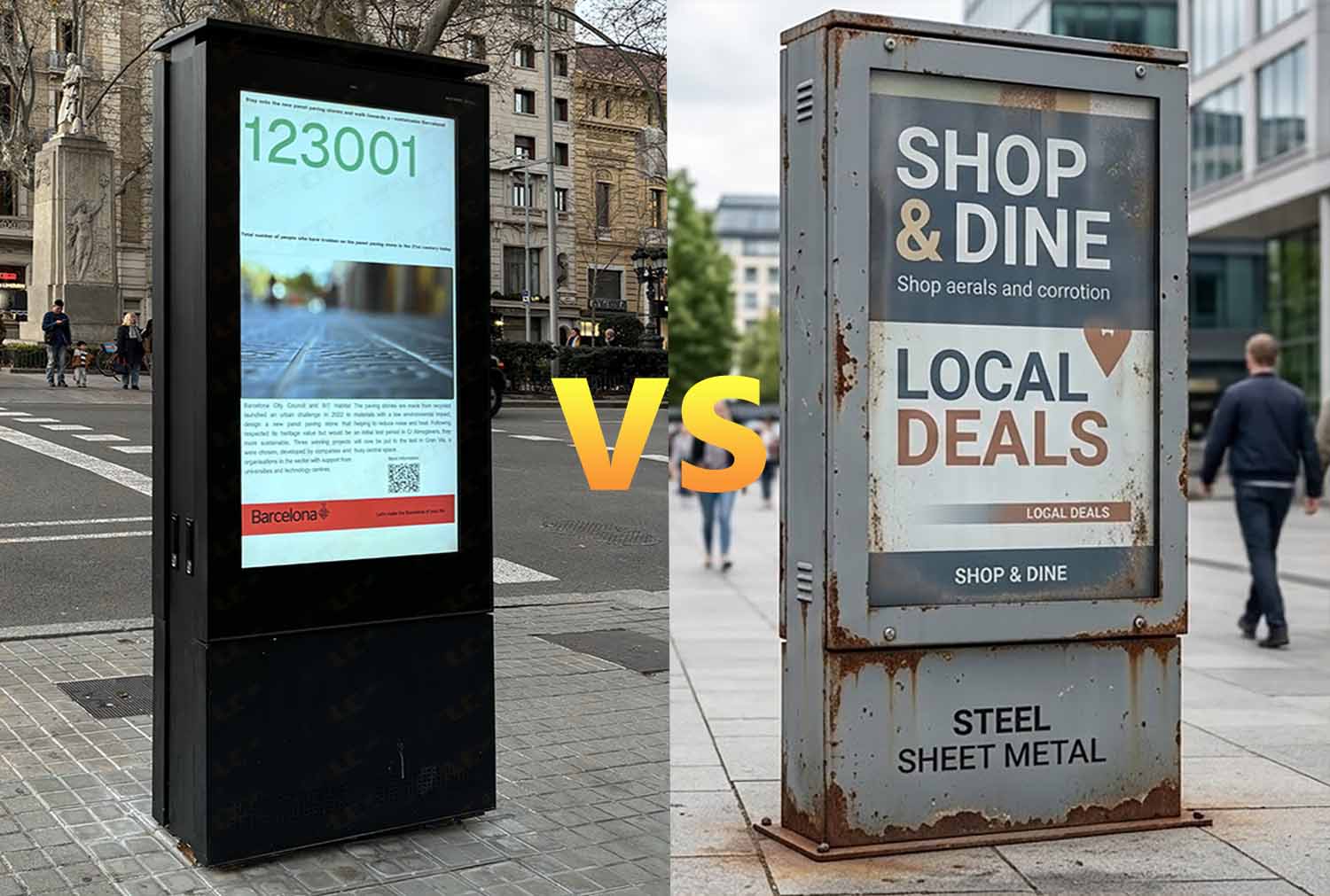
Key Differences Between Aluminum and Steel Cabinets
The cabinet material directly affects the thermal performance, corrosion resistance, installation efficiency, and long-term durability of outdoor digital signage systems.

| Factor | Aluminum Cabinet | Steel / Sheet Metal Cabinet | Practical Advantage |
| Heat Dissipation | Excellent. Thermal conductivity ≈ 237 W/(m·K) | Lower. Thermal conductivity ≈ 50 W/(m·K) | Better heat transfer helps reduce internal temperature and extend the lifespan of LED modules and LCD panels |
| Corrosion Resistance | Naturally corrosion-resistant due to protective oxide layer | Prone to rust without coating protection | Suitable for humid, rainy, or coastal environments |
| Weight | Lightweight, about 50–60% lighter than steel | Heavier structure | Easier transportation and installation |
| Processing Precision | High precision through aluminum profiles and CNC machining | Bending and welding may cause deformation | Ensures flatter installation of LED modules or LCD panels |
| Recycling Value | High recycling value | Lower recycling value | More environmentally sustainable |
| Surface Finish | Supports anodizing or premium coatings | Standard paint coating that may age over time | More suitable for high-end commercial applications |
Because of these advantages, aluminum cabinet structures are increasingly becoming the preferred choice for high-end outdoor digital signage equipment.
Why Outdoor Displays Require Aluminum Structures
Compared with indoor displays, outdoor digital signage must operate under much harsher environmental conditions.
Typical challenges include:
-
High ambient temperatures
-
Long periods of direct sunlight
-
Rain and humidity
-
Dust and air pollution
-
Salt corrosion in coastal areas
-
Continuous 24/7 operation
If the cabinet material cannot effectively dissipate heat or resist corrosion, internal electronic components may experience overheating, shortened lifespan, or unstable system performance.
Thanks to its high thermal conductivity, lightweight structure, and excellent corrosion resistance, aluminum performs significantly better in outdoor environments. As a result, aluminum cabinets are increasingly used in modern outdoor digital signage systems.
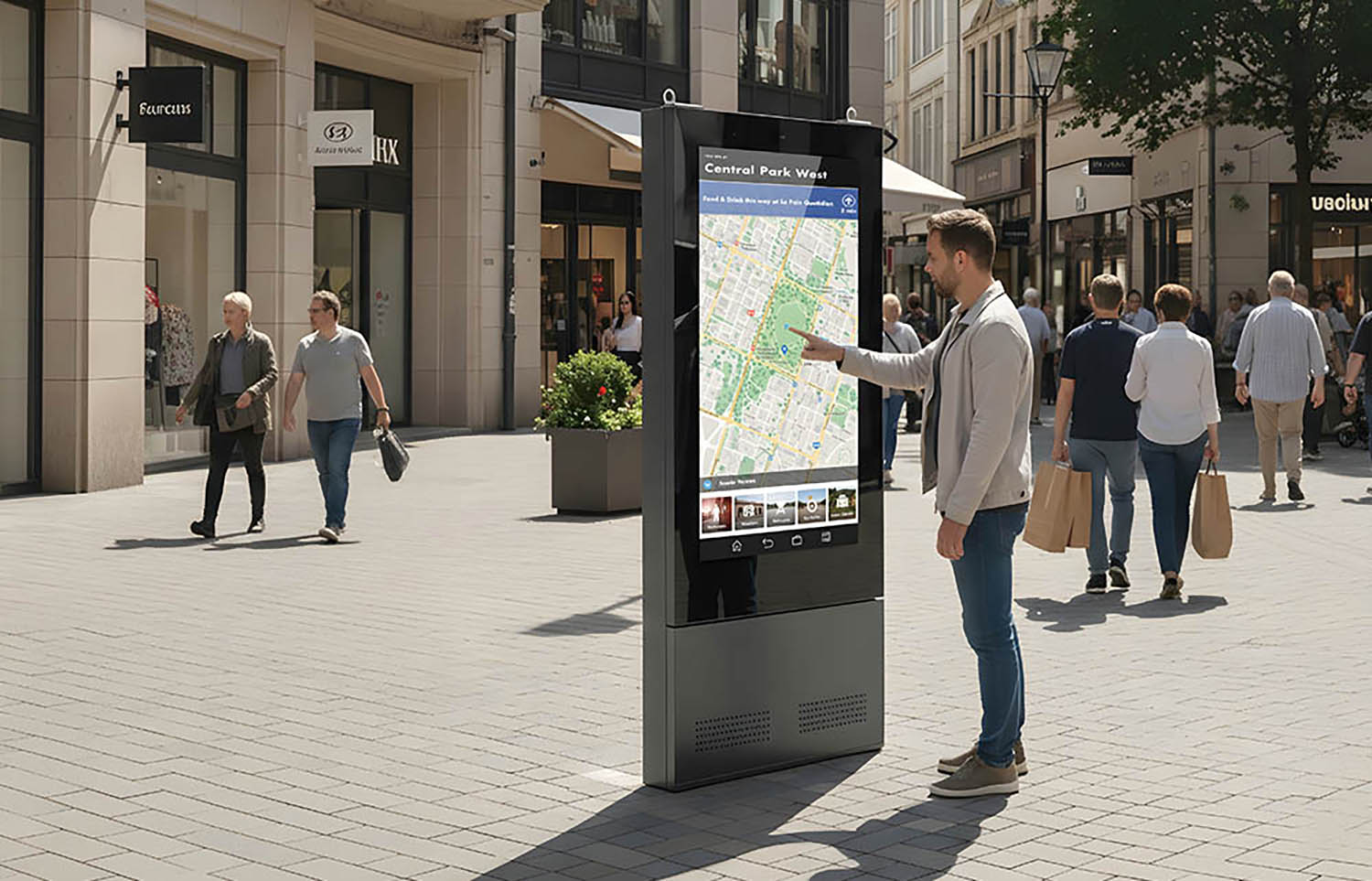
Aluminum Cabinets in Outdoor LED and LCD Displays
Both outdoor LED displays and high-brightness outdoor LCD digital signage generate significant heat during operation while also being exposed to solar radiation and environmental temperature changes.
Using an aluminum cabinet structure can improve the overall performance of the display system. Because aluminum conducts heat efficiently, it can transfer and release internal heat more quickly, helping LED modules or LCD panels maintain stable operating temperatures.
This structural approach improves system reliability and helps reduce problems caused by overheating, such as brightness degradation, color shifts, or component damage, ultimately extending the overall lifespan of the display equipment.
CNLC Aluminum Cabinet Design for Outdoor Digital Signage
CNLC has more than 19 years of experience in outdoor digital signage development and manufacturing, focusing on reliable structural solutions for demanding outdoor environments.
To address challenges such as high temperatures, humidity, corrosion, and long-term operation, CNLC adopts aluminum cabinet structures in many of its outdoor display products.
Key structural features include:
-
Aluminum cabinet construction with strong corrosion resistance
-
CNC precision machining for improved structural accuracy
-
Optimized internal airflow design to enhance thermal management
-
Lightweight cabinet structure that reduces transportation and installation costs
-
Industrial-grade structural strength for long-term outdoor deployment
Through these engineering approaches, CNLC outdoor display systems are designed to maintain stable and reliable performance in complex outdoor environments.
If you are looking for reliable outdoor LED displays or outdoor LCD digital signage solutions, the CNLC team can provide customized products tailored to different installation environments and project requirements.
FAQ: Outdoor Digital Signage Cabinet Materials
What is the best cabinet material for outdoor digital signage?
Aluminum cabinets are widely considered one of the best structural materials for outdoor digital signage because they provide excellent heat dissipation, corrosion resistance, and lightweight structural advantages compared with traditional steel cabinets.
Why is heat dissipation important for outdoor displays?
Outdoor LED displays and high-brightness LCD panels generate significant heat during operation. Efficient heat dissipation helps maintain stable operating temperatures and prevents brightness degradation, color shifts, or component failure.
Are aluminum cabinets more durable than steel cabinets?
Yes. Aluminum naturally forms a protective oxide layer that resists corrosion, making it more suitable for humid, rainy, or coastal environments where steel structures may rust over time.
Do aluminum cabinets reduce installation costs?
Because aluminum structures are significantly lighter than steel, they simplify transportation and installation. This can help reduce overall project costs, especially for large outdoor display installations.