Yes — a high-quality outdoor LCD display can withstand direct sunlight if it passes standardized IR radiation testing, such as 800 W/m² exposure for 8 hours under IEC 60068-2-5.
Displays that meet this standard can operate reliably even in harsh outdoor environments like deserts and high-temperature urban areas.
1. Why Outdoor LCD Displays Fail Under Direct Sunlight
Outdoor environments are far more demanding than indoor conditions. The primary challenge is not brightness, but heat buildup caused by infrared (IR) radiation.
Under prolonged sun exposure, low-quality displays may experience:
- Black screen or system shutdown
- LCD panel yellowing
- Accelerated aging of internal components
- Structural deformation due to heat
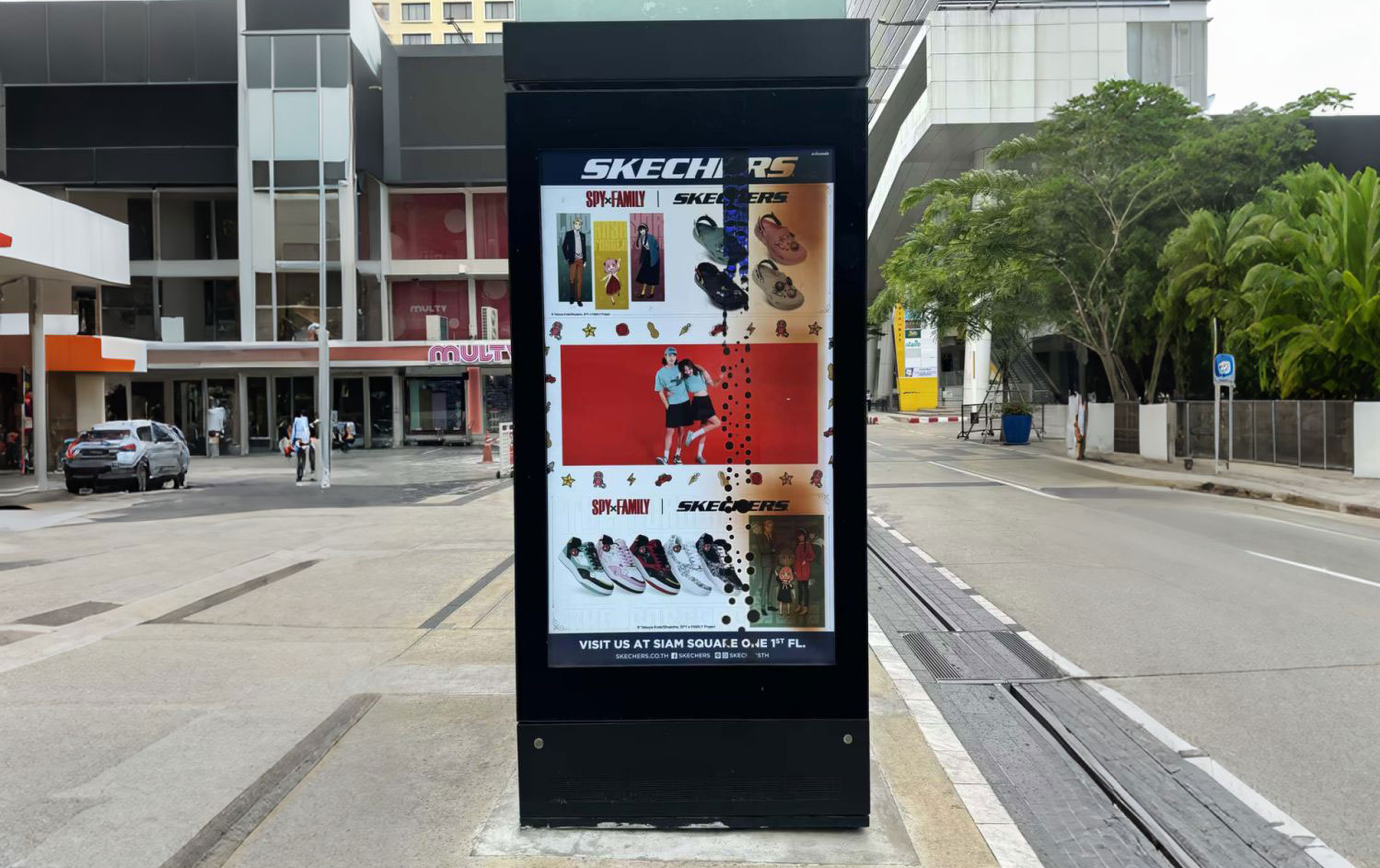
Test Objective:
This test aims to validate the ability of a 55-inch high-brightness LCD display to withstand intense solar radiation and ensure long-term stable operation.
2. What Causes Overheating? Understanding IR Radiation in Sunlight
According to the IEC 60068-2-5:2018 standard, the solar spectrum at ground level is distributed as follows:
| Spectrum Band | Wavelength (nm) | Energy Share | Impact |
| UVB | 300–320 | 0.4% | Material aging |
| UVA | 320–400 | 6.4% | Panel degradation |
| Visible Light (VL) | 400–800 | 55.4% | Brightness |
| Infrared (IR) | 800–2450 | 37.8% | Heat buildup |
Key Insight:
Infrared radiation accounts for nearly 38% of total solar energy, making it the primary cause of overheating in outdoor displays.
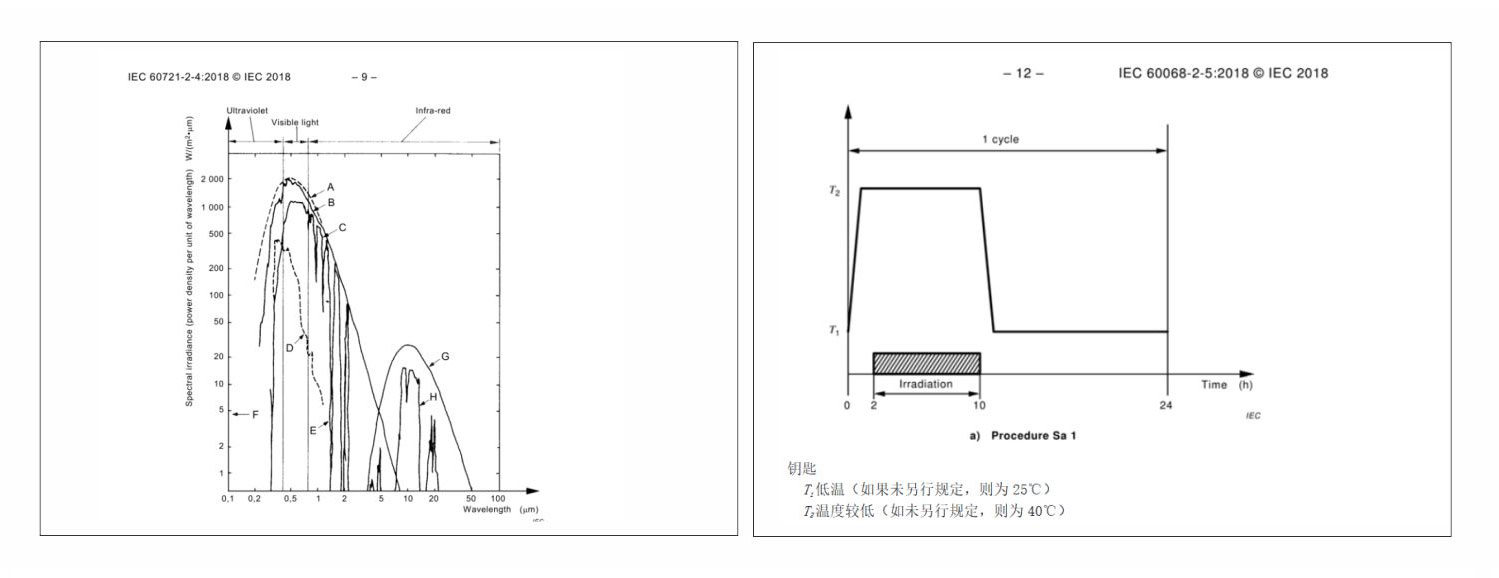
Typical Solar Radiation Levels (Clear Sky)
| Environment | Solar Radiation (W/m²) |
| Urban areas | 700–1050 |
| Flat terrain | 750–1120 |
| Desert / high altitude | up to 1180 |
The test condition of 800 W/m² represents a realistic and rigorous simulation covering most global outdoor environments.
3. How We Simulated Real Sunlight: 800 W/m² IR Test Setup
Core Equipment
| Equipment | Description | Specification |
| IR Radiation Chamber | Infrared oven | Size: 2.4m × 2m × 2.4m, IR1400nm source, stable 800±10% W/m² output |
| IR Power Meter | Linshang LS122 | Range: 0–40000 W/m², accuracy ±10% |
| Temperature Monitoring | Uxcell K-type thermocouples (6 channels) | Accuracy ±0.1°C, multi-point measurement |
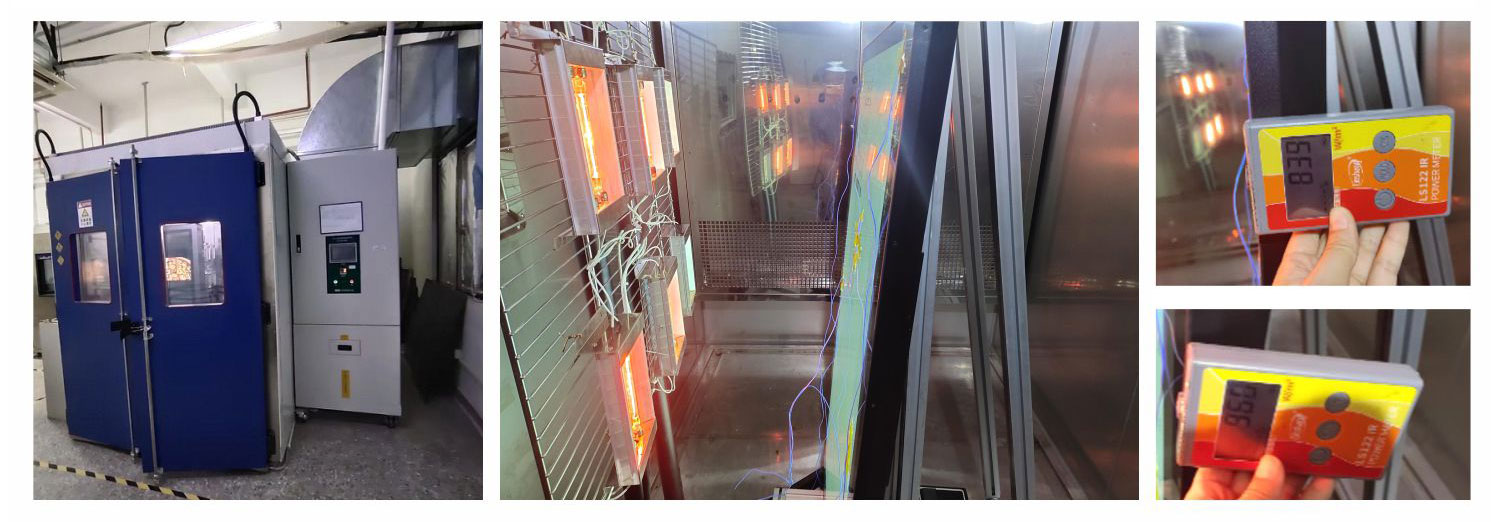
Temperature Profile
- 0–4 hours → 40°C (normal sunlight simulation)
- 5–8 hours → 50°C (accelerated aging test)
Sample Description
The tested unit was randomly selected from mass production, and the results are representative of the overall product performance.
4. Thermal Performance Results: No Overheating or Hotspots
Temperature data from six monitoring points show:
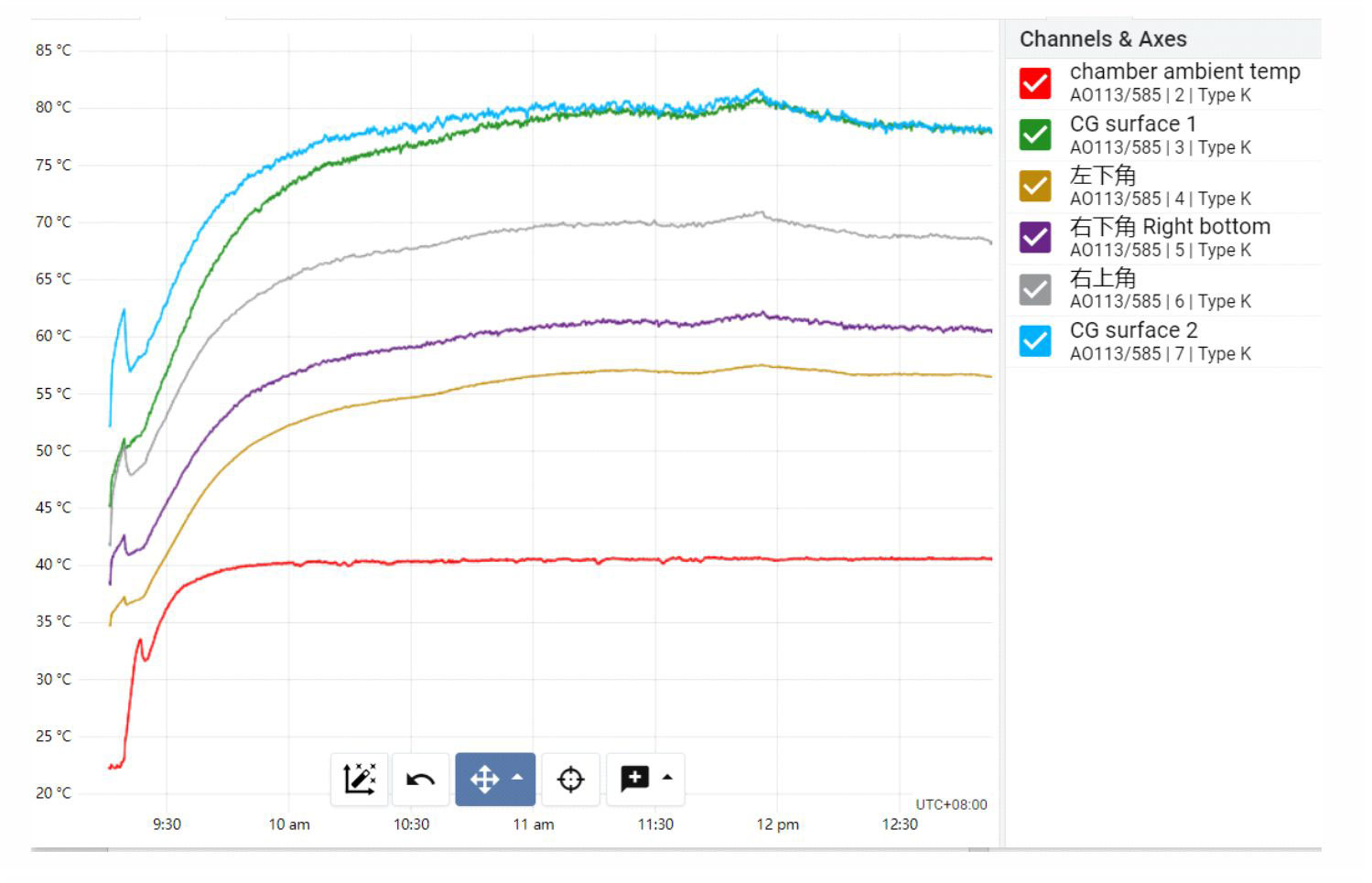
A natural temperature gradient from center to edges is observed, with no localized overheating, confirming an effective thermal management design.
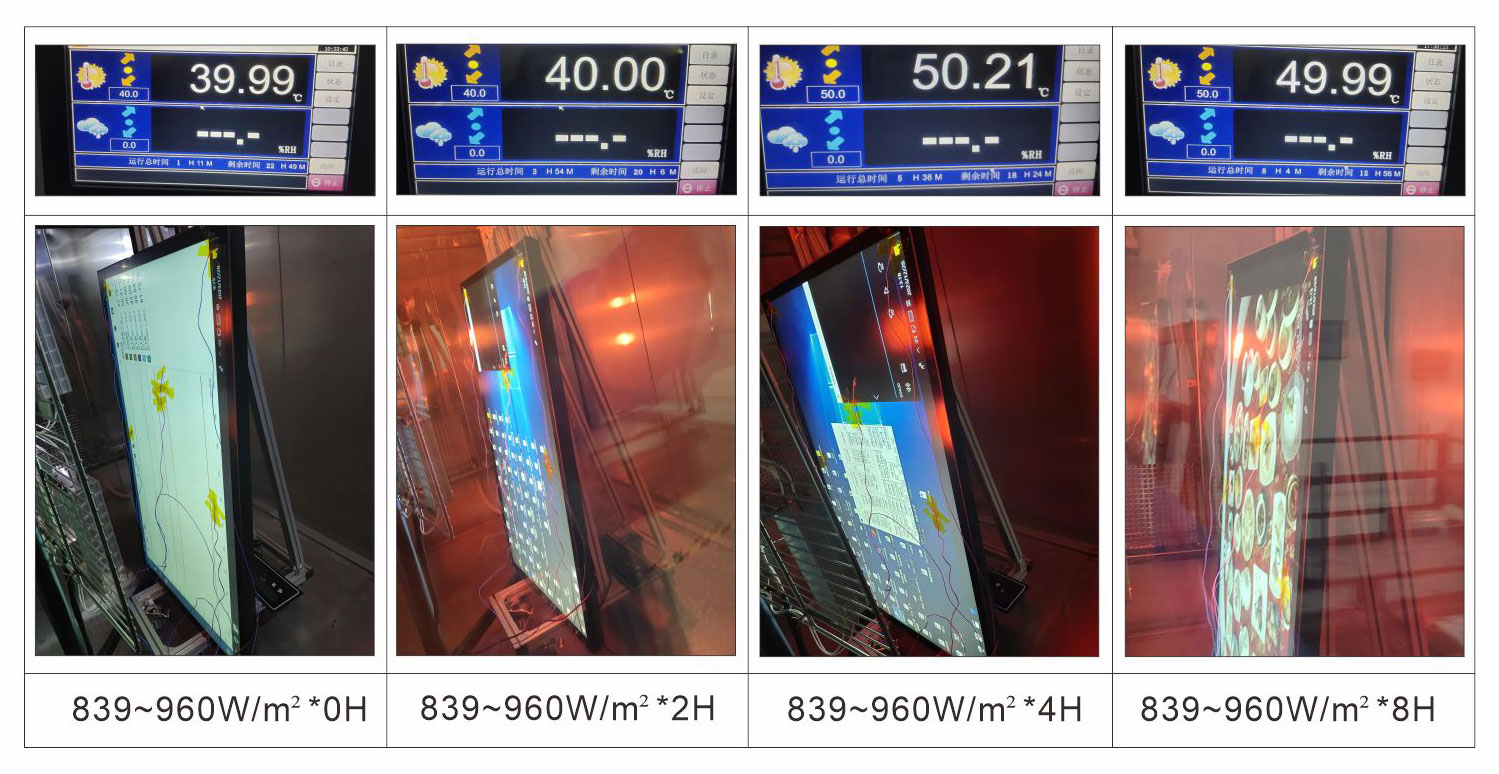
5. 8-Hour Sunlight Exposure Test: Stable Performance Proven
| Time | Ambient Temp | IR Intensity | Display Status |
| 0h | 40°C | 839–960 W/m² | Normal, no defects |
| 2h | 40°C | 839–960 W/m² | Stable, no yellowing |
| 4h | 40°C | 839–960 W/m² | No heat concentration |
| 8h | 50°C | 839–960 W/m² | Fully stable, no damage |
The peak radiation reached 960 W/m², exceeding the standard requirement, yet the display remained fully operational.
This demonstrates a strong thermal safety margin in the product design.
6. What This Means for Your Project: Lifespan, Reliability, and ROI
- Long lifespan: Estimated 5+ years based on accelerated aging
- Low maintenance cost: Reduced failure risk
- Environmental adaptability: Suitable for subtropical, desert, and high-temperature urban environments
Typical Applications:
- Outdoor billboards
- Bus shelter displays
- Street furniture advertising
- Drive-thru menu boards
7. How to Choose a Sunlight-Readable Outdoor LCD Display
When selecting an outdoor LCD display, ensure:
- Verified IR radiation testing (≥800 W/m²)
- Compliance with IEC 60068-2-5
- High brightness (≥2500–3000 nits)
- Effective thermal management system
- Anti-glare or optical bonding technology
Without these, “outdoor display” may be just a marketing claim.
8. Why CNLC Outdoor Displays Perform Better in Real Sunlight
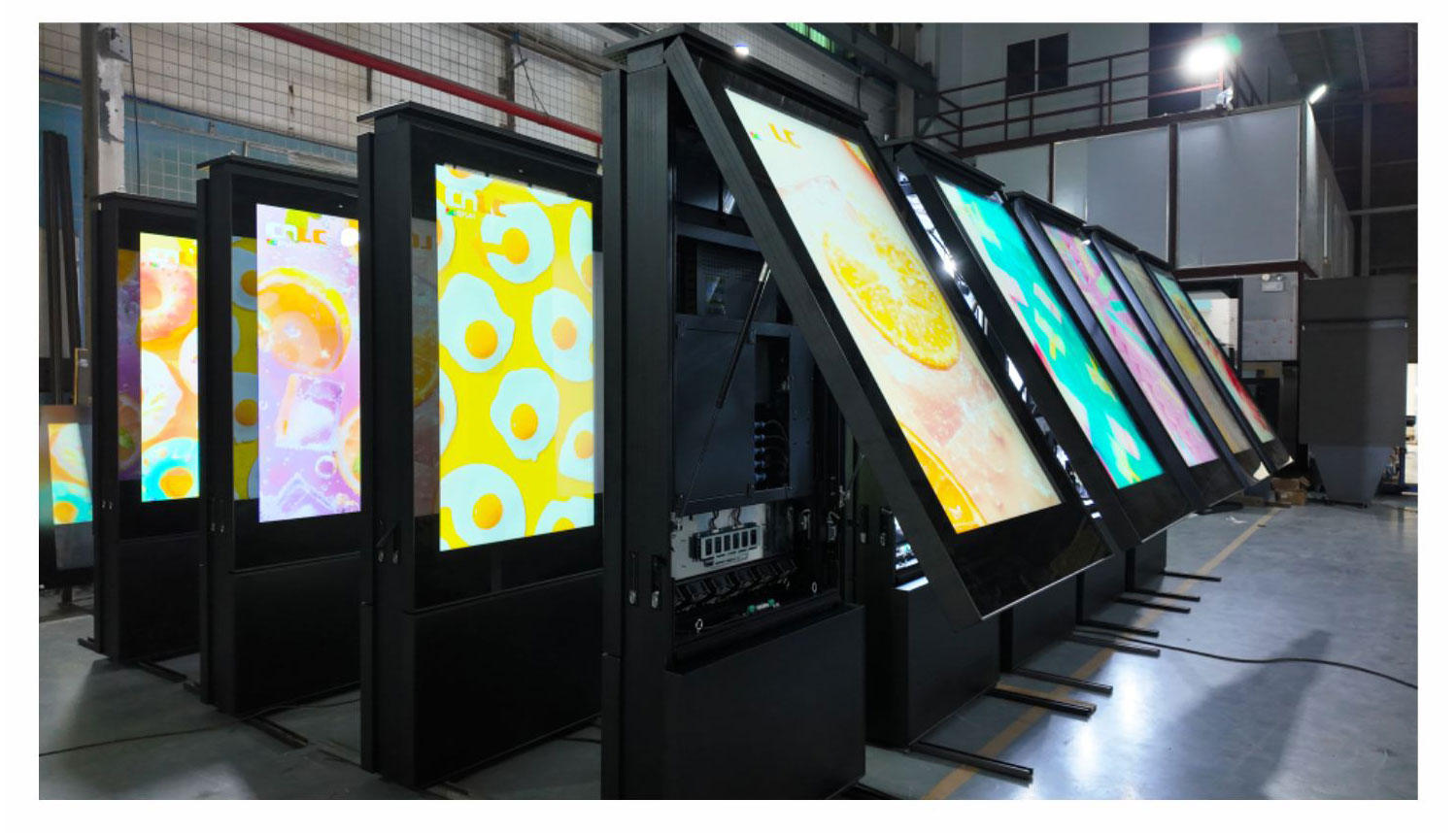
CNLC outdoor displays are engineered for real-world environments:
- Sunlight-readable high-brightness LCD
- Verified IR radiation resistance
- Aluminum structure for efficient heat dissipation
- Advanced thermal management system
- 19+ years of manufacturing experience
Reliable Outdoor Display Solutions
Explore CNLC outdoor LCD displays
https://www.cnlcdisplay.com/
Contact us for project consultation and quotation.
FAQ
Can LCD displays be used in direct sunlight?
Yes, but only if they are specifically designed for outdoor use and pass IR radiation testing such as 800 W/m² exposure.
What does 800 W/m² mean?
It represents solar radiation intensity and is considered a realistic and demanding outdoor condition.
Why do outdoor displays fail under sunlight?
Primarily due to heat buildup caused by infrared radiation.
How do outdoor displays prevent overheating?
Through thermal management systems, aluminum structures, and optimized heat dissipation design.