When Outdoor Digital Signage Becomes Hard to Read
When installing an outdoor digital signage display, many projects face the same challenge:
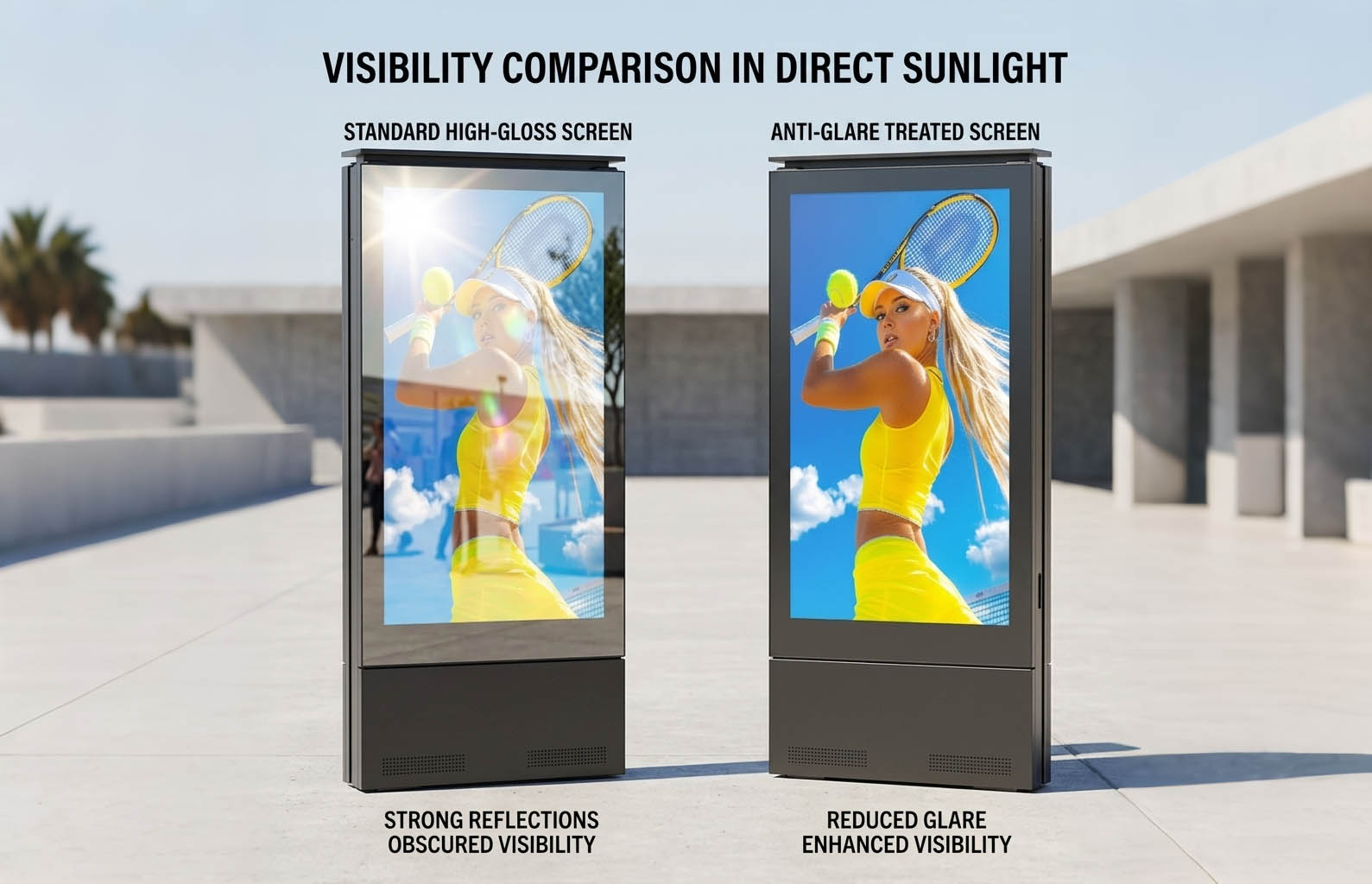
👉 The screen looks clear indoors — but becomes difficult to read under direct sunlight.
In many cases, the issue isn’t the display panel itself, but the protective glass used in outdoor LCD displays and outdoor LED displays.
This is where AG (anti-glare) glass plays a critical role in achieving sunlight readable displays. However, not all anti-glare glass is suitable for demanding outdoor environments.
In this article, we’ll explore how outdoor display glass is engineered, and why it directly impacts the performance of outdoor digital signage, outdoor kiosks, and smart city display systems.
What Is Outdoor-Grade AG Glass?
Compared with standard anti-glare glass, outdoor display glass for digital signage must achieve a balance between multiple key properties:
- Anti-glare performance
- High light transmittance
- Mechanical strength
- Long-term environmental stability

If these factors are not properly optimized, common issues include:
- Poor visibility under sunlight
- Reduced contrast and image haze
- Shortened lifespan of outdoor display systems
Core Technology: AG Surface Treatment for Sunlight Readability
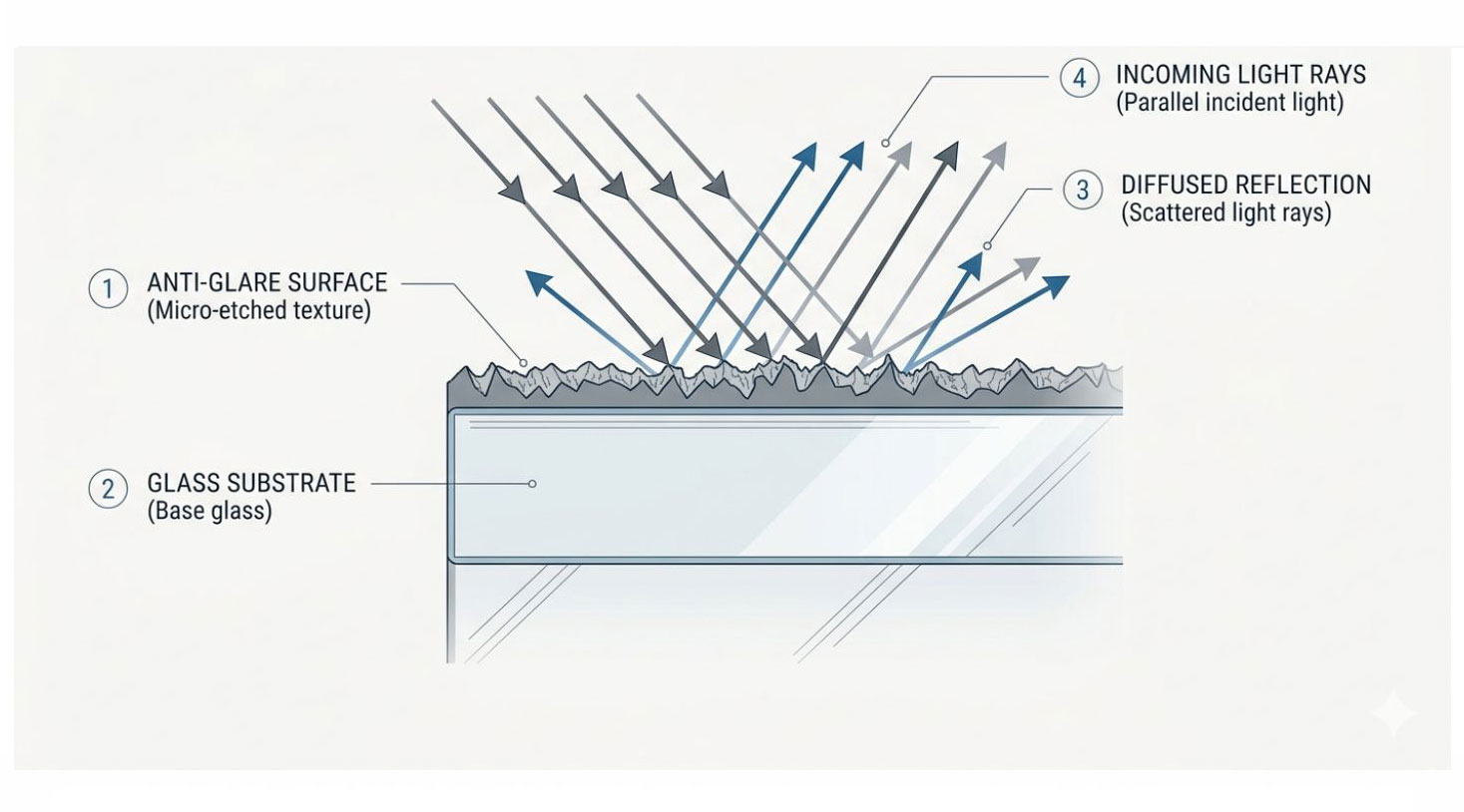
The key to anti-glare glass for outdoor displays lies in its surface structure.
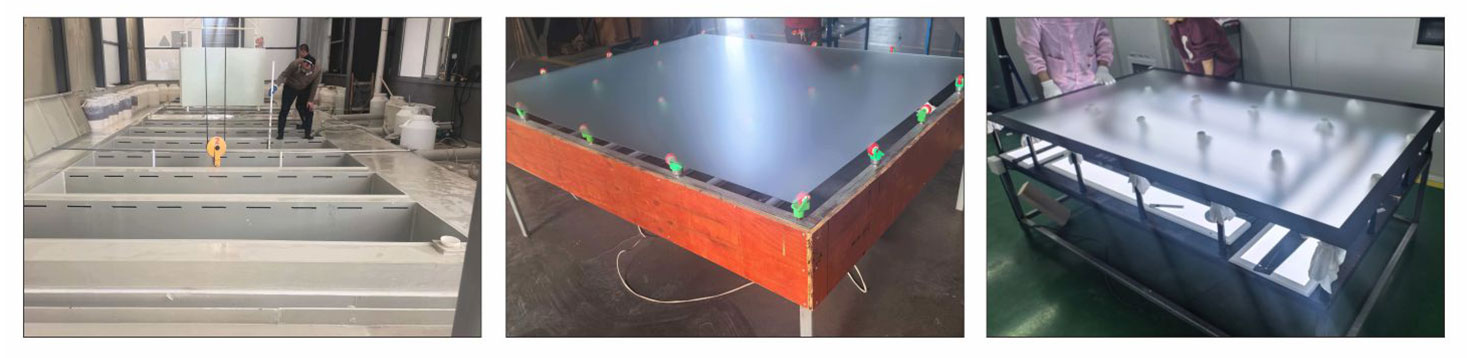
Through controlled chemical etching or coating processes, a micro-diffused surface layer is created, which:
- Reduces direct reflection
- Eliminates mirror-like glare
- Maintains clear image visibility
For high-brightness outdoor LCD displays and outdoor LED displays, this step is essential to achieve sunlight readable display performance under strong sunlight.
High Transmittance with Optical Control
In outdoor environments, optical performance directly affects brightness, energy efficiency, and thermal behavior of the display enclosure.
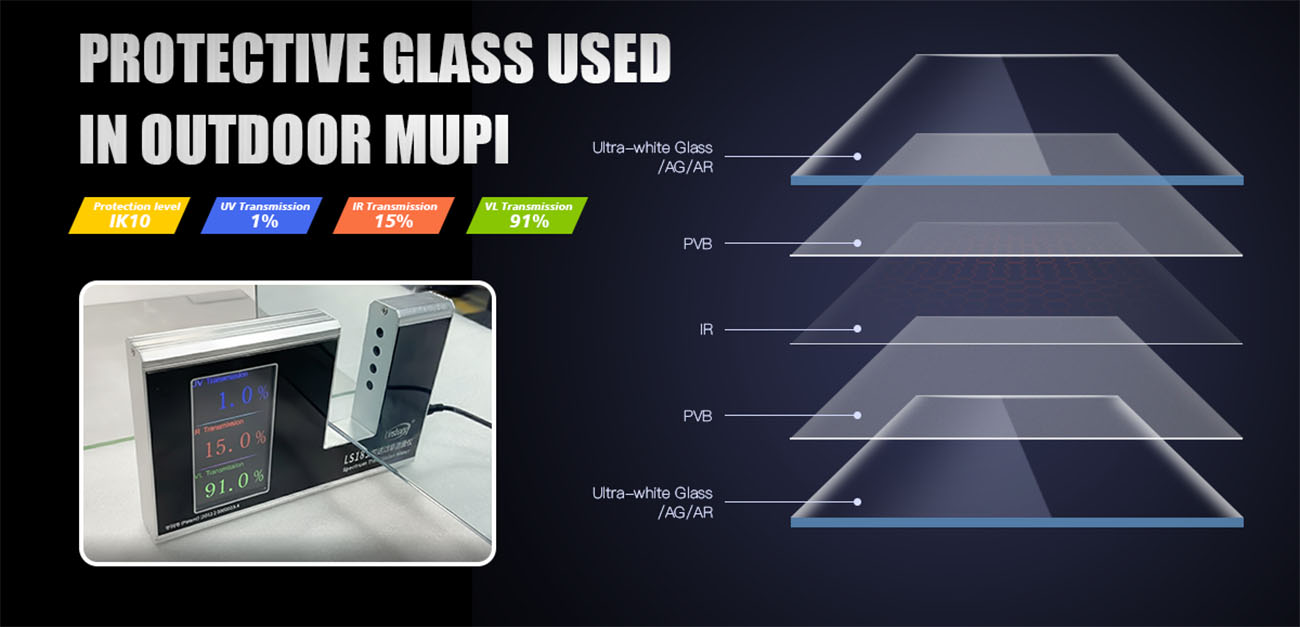
High-performance outdoor display glass typically achieves:
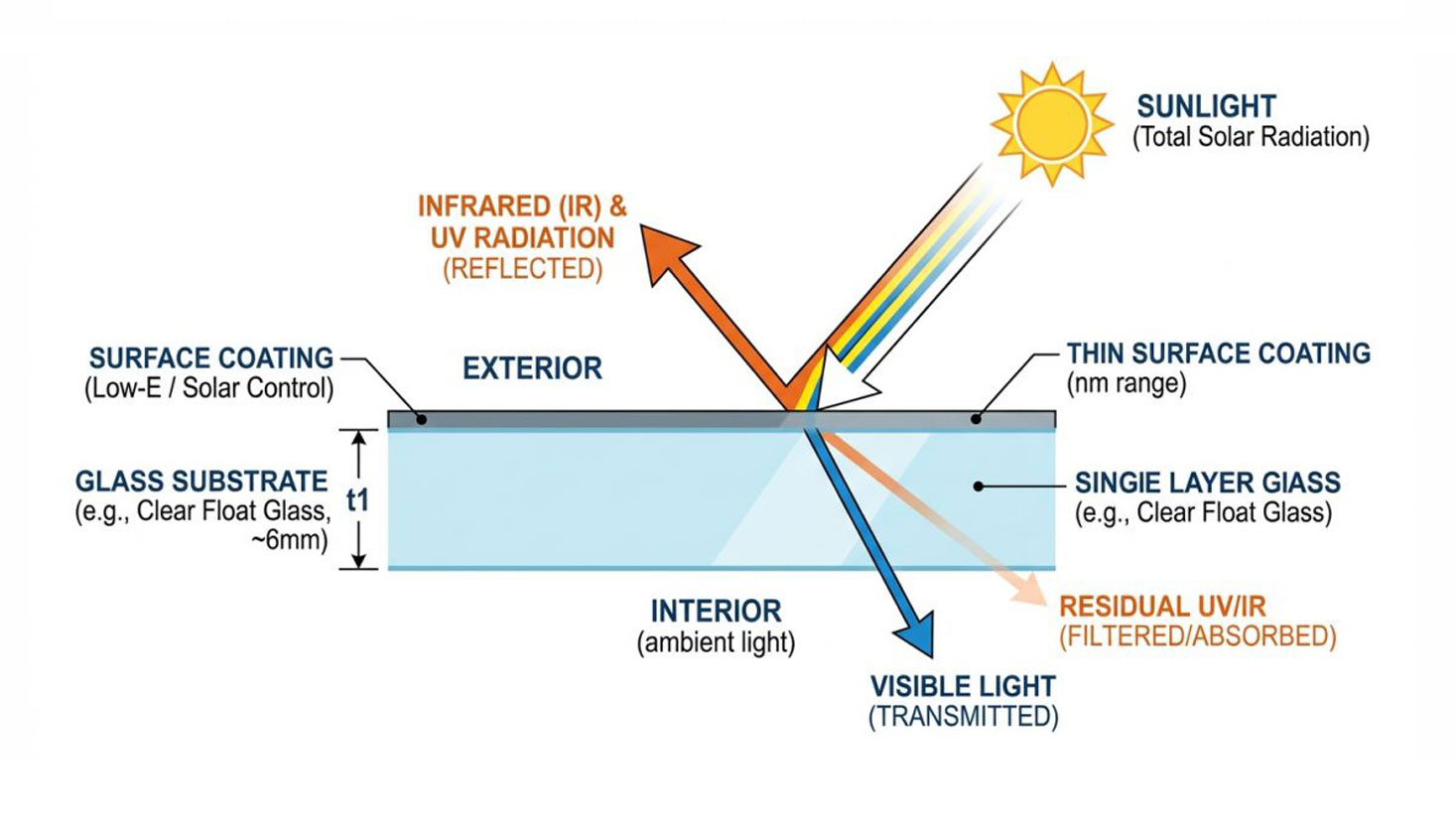
- >91% light transmittance – Ensures maximum brightness output for outdoor LCD displays
- IR transmission ≤15% – Reduces heat buildup, improving thermal management
- UV transmission ≤1% – Minimizes long-term degradation of internal display components
Strength & Safety: Tempering and IK10 Impact Resistance
After surface treatment, the glass must undergo a tempering process to meet outdoor durability requirements.
Tempered glass, combined with structural design, provides enhanced performance for vandal-resistant outdoor digital signage displays.
This significantly improves:
- Impact resistance
- Structural stability
- Operational safety
Enhanced Solutions for Harsh Outdoor Environments
In demanding outdoor environments, single-layer tempered AG glass may not be sufficient. Additional enhancements are often required for outdoor digital signage systems.
Laminated Glass: Improved Safety & Anti-Vandal Protection
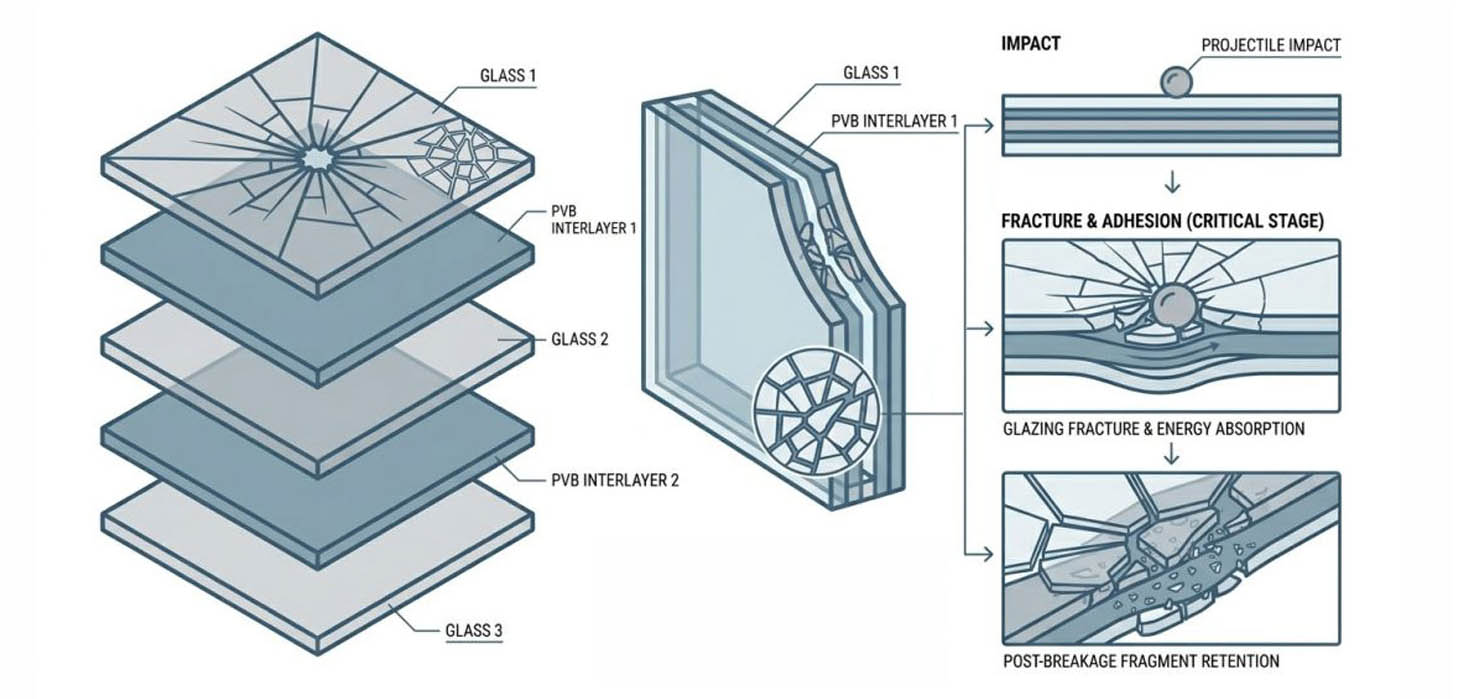
Laminated glass consists of multiple glass layers bonded with a PVB interlayer.
Even when broken, fragments remain attached, making it ideal for vandal-resistant outdoor displays.
This structure provides:
- Enhanced safety (anti-shatter protection)
- Higher impact resistance
- Anti-vandalism performance
Functional Coatings: Weather Resistance & Long-Term Stability
Functional coatings further enhance the performance of outdoor display glass:
- UV resistance – protects internal LCD/LED components
- Weather resistance – improves durability under heat and humidity
- Surface stability – maintains optical clarity over time
These coatings are essential for high-brightness outdoor digital signage operating 24/7.
Behind the Performance: Controlled Manufacturing Process
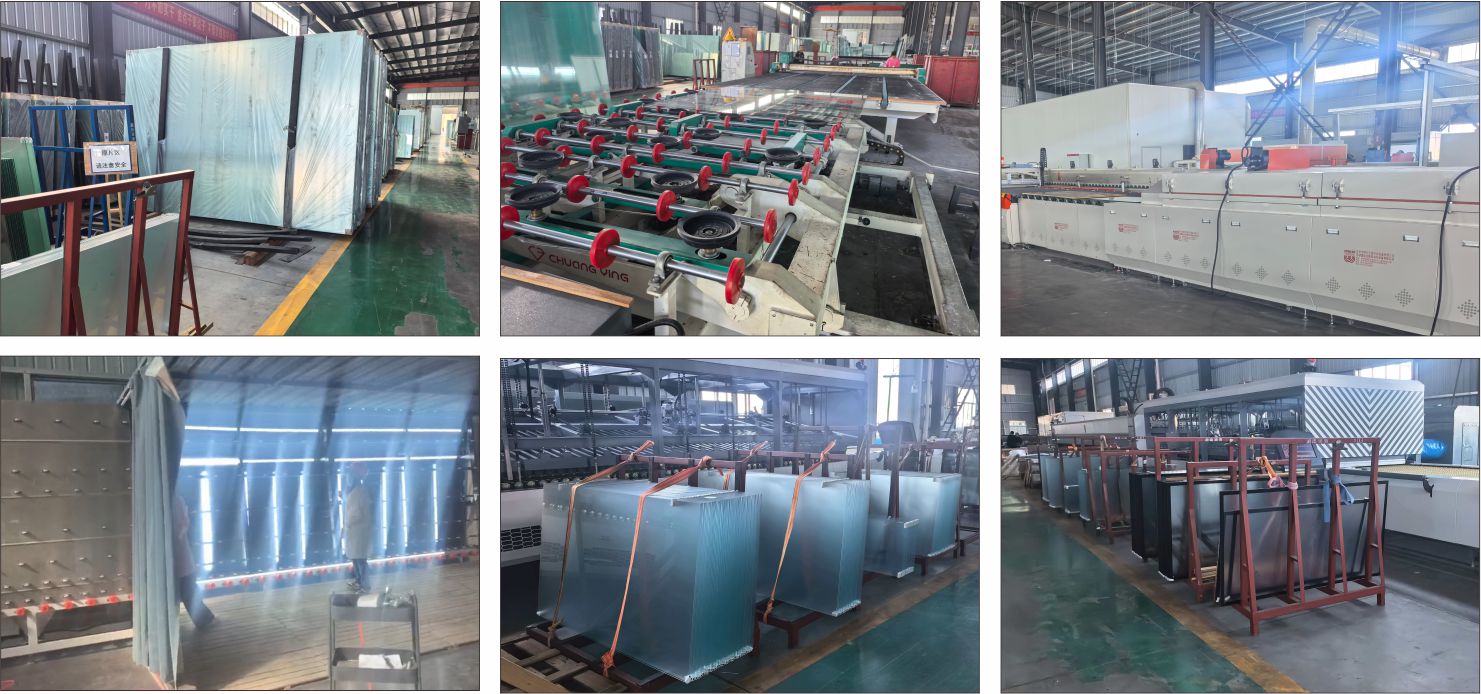
The performance of outdoor display glass is achieved through a strictly controlled production process:
Raw Glass → Cutting → Edge Grinding → Cleaning & Pretreatment → AG Treatment / Coating → Tempering → Laminating (Optional) → Final Inspection
Each stage ensures:
- Optical consistency
- Structural reliability
- Stable performance in outdoor environments
What This Means for Your Project
For outdoor digital signage, brightness alone is not enough.
👉 The quality of the protective glass for outdoor LCD displays and outdoor LED displays directly affects:
- Sunlight readability
- User viewing experience
- Long-term operational stability
Choosing the wrong glass solution can result in poor performance and increased maintenance costs.
How CNLC Ensures Outdoor Display Performance
At CNLC, we specialize in outdoor LCD displays, outdoor LED displays, and outdoor digital signage solutions.
We ensure high-quality outdoor display glass integration through:
- Controlled AG surface treatment
- Tempering and laminated structure design
- Optical performance validation
This ensures:
- Excellent sunlight readable display performance
- Strong weather resistance
- Long-term stability
Our solutions are widely used in:
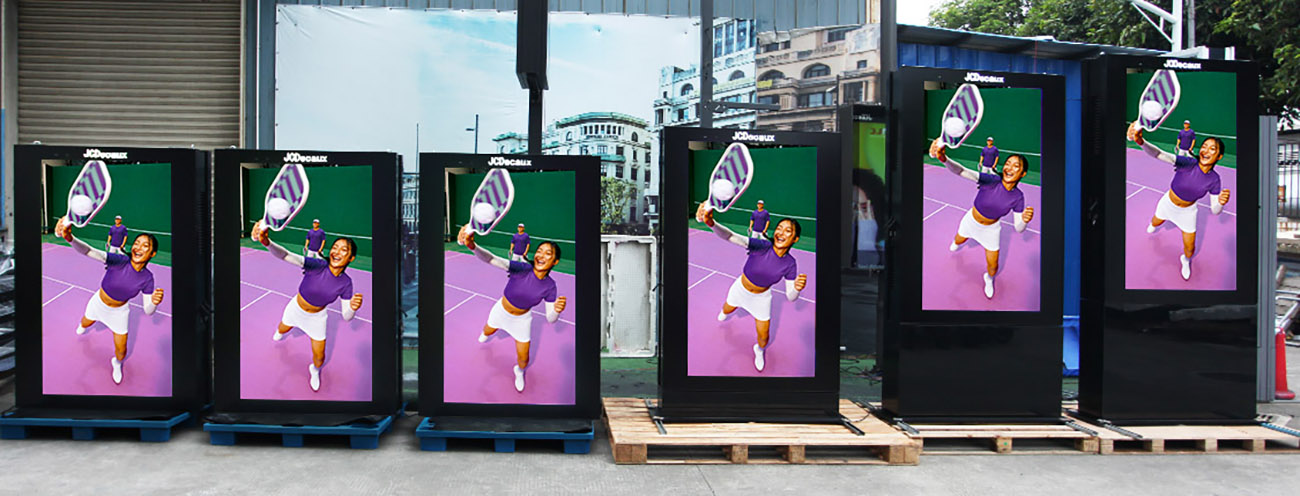
- Outdoor kiosks
- Street furniture displays
- Bus stop displays
- Smart city digital signage projects
Conclusion
AG glass is more than just a surface treatment — it is a critical component of sunlight readable outdoor digital signage systems.
Understanding how outdoor display glass is designed and manufactured helps you:
- Make better sourcing decisions
- Avoid project risks
- Improve outdoor display performance and durability