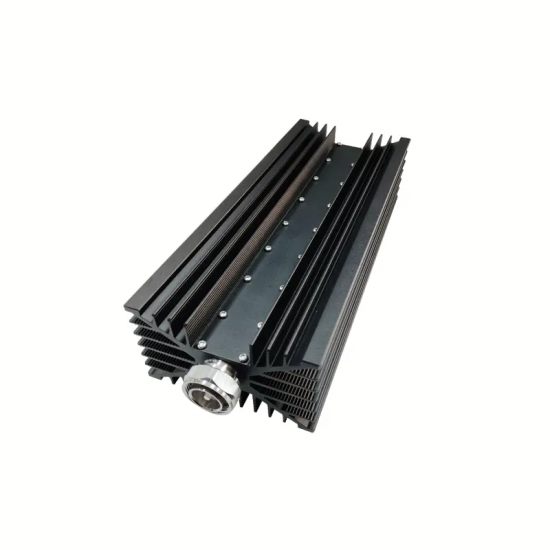
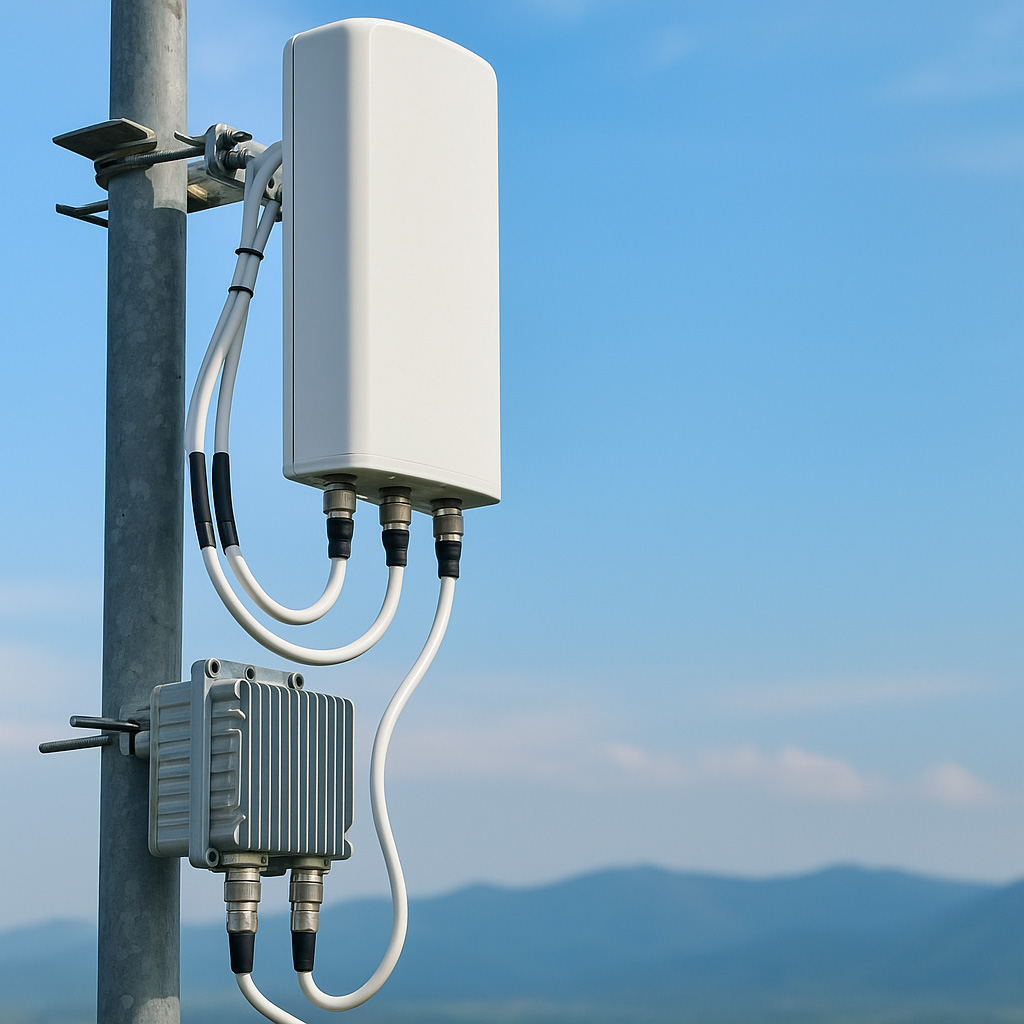
As 5G-Advanced (5G-A) technology emerges, it brings higher speeds, lower latency, and smarter network capabilities, reshaping expectations for in-building wireless systems. Modern facilities—such as offices, airports, and hospitals—now require more advanced Distributed Antenna Systems (DAS) capable of supporting higher frequency bands and broader bandwidths.

Traditional infrastructure must evolve. Key components such as antennas, directional couplers, power splitters, isolators, and step attenuators play a critical role in enabling seamless indoor coverage with minimal signal loss and high reliability.

At Maniron Electronics, we are dedicated to meeting these new demands. Our full range of RF solutions is engineered to optimize performance for 5G and 5G-A deployments, ensuring flexible system design and superior signal quality across multi-band networks. Our products are widely applied in both commercial and public safety projects, helping partners build future-ready communication systems.

With strong R&D capabilities and advanced manufacturing, Maniron offers customized RF solutions to adapt to diverse in-building scenarios. Whether supporting high-density IoT environments or mission-critical networks, we are committed to delivering quality, innovation, and service excellence.

What common products and technical equipment are used in radio systems?


Radio systems are widely used in communication, broadcasting, radar, navigation and other fields. Their core components include transmission, reception, signal processing and antenna equipment. The following are the key products and technical equipment commonly used in radio systems:


1. RF transmission equipment


(1) Radio transmitter


Function: modulate the baseband signal onto the RF carrier and amplify it, and transmit it through the antenna.


Key components:


Oscillator: Generates a stable RF signal (such as a crystal oscillator, VCO).


Modulator: Loads information onto the carrier (AM/FM/PM/QAM).


Power amplifier (PA): Increases signal strength (such as LDMOS, GaN PA).


(2) Broadcast transmitter


Used for AM/FM broadcasting and TV signal transmission (such as DTV transmitter).


2. RF receiving equipment


(1) Radio receiver


Function: Receive RF signals and demodulate them back to baseband signals.

Key components:

Low noise amplifier (LNA): Enhance weak signals.

Mixer: Down-convert to intermediate frequency (IF).

Demodulator: Extract original information (such as FM demodulation chip).

(2) Software-defined radio (SDR): Flexible signal processing through software (such as HackRF, USRP).

3. Antenna and feeder system


(1) Antenna
Type:

Omnidirectional antenna: Wi-Fi router, FM radio.

Directional antenna: Satellite communication, radar (such as parabolic antenna).

Smart antenna: MIMO technology (5G Massive MIMO).

(2) RF connectors and cables
Coaxial cable: such as RG-58 (50Ω), LMR series.

Connectors: SMA, N-type, BNC (for instruments and base stations).

4. RF front-end components


(1) Filter
Function: filter out-of-band interference.

Type:
Bandpass filter (BPF): only allows specific frequency bands to pass.

SAW/BAW filter: used for 5G high-frequency signal processing.

(2) RF switch
Switch signal path (such as SPDT switch).

(3) Duplexer/Multiplexer
Realize the shared antenna for transmission and reception (such as FDD-LTE duplexer).

5. Wireless communication system equipment


(1) Base station equipment
Macro base station: 4G/5G cellular network.

Small cell: enhance indoor coverage.

(2) Satellite communication equipment
VSAT terminal: satellite Internet access.

GNSS receiver: GPS/Beidou positioning.

(3) Internet of Things (IoT) equipment
LoRa module: long-distance low-power communication.

NB-IoT terminal: cellular Internet of Things.

The products of radio systems range from basic components (such as filters and amplifiers) to complex systems (such as 5G base stations and satellite communication terminals). With the development of 5G, IoT and AI technologies, RF equipment is evolving towards higher frequencies, lower power consumption and greater intelligence.

In RF and microwave systems, a directional coupler is an essential passive component that enables signal sampling, monitoring, and routing without disturbing the main transmission line. This article explains what a directional coupler is, how it works, and why it's a critical element in modern wireless communication systems.


What is a Directional Coupler?

A directional coupler is a four-port RF device designed to split or combine signals with controlled coupling in a specific direction. It allows a small portion of the input signal to be "coupled" from the main line to a secondary port, typically for monitoring or testing purposes.

Key Ports in a Directional Coupler:

  • Input Port – Where the main RF signal is fed into the coupler.

  • Output (Through) Port – The main signal continues through this port with minimal insertion loss.

  • Coupled Port – Receives a small fraction of the input signal.

  • Isolated Port – Ideally has no signal in the direction opposite to the coupled port (terminated to prevent reflection).


How Does a Directional Coupler Work?

Directional couplers operate on the principle of electromagnetic coupling between transmission lines. They are designed to couple energy traveling in one direction while isolating energy in the reverse direction. This makes them useful for:

  • Signal monitoring

  • Power measurement

  • Feedback loops

  • System protection

The coupling factor, typically expressed in dB (e.g., 6 dB, 10 dB, 20 dB), determines how much signal is coupled out. A 20 dB directional coupler, for example, will extract 1% of the input power to the coupled port.


Applications of Directional Couplers

Directional couplers are widely used in RF and microwave systems, including:

  • Base stations and DAS systems

  • 5G and LTE networks

  • Satellite communication

  • Test and measurement setups

  • Public safety and military communication

  • RFID and IoT systems

In all these applications, directional couplers enable signal sampling, reflected power detection, and system diagnostics without interrupting the main transmission path.


Types of Directional Couplers

Depending on your application, you may need different types of directional couplers, including:

  • Single-directional couplers

  • Bi-directional couplers

  • Hybrid couplers (90° or 180°)

  • Stripline or waveguide couplers

Choosing the right RF directional coupler depends on factors like frequency range, power handling, coupling level, and physical size.


Why Choose Maniron Electronic as Your Directional Coupler Supplier?

At Maniron Electronic, we’ve specialized in the design and manufacturing of RF passive components since 2002. Our directional couplers are built for performance, low insertion loss, and excellent isolation. Whether you need standard models or custom specifications, we support OEM and ODM projects worldwide.

Our advantages:

  • Wide frequency range support (VHF to 6GHz and beyond)

  • Coupling options: 6 dB, 10 dB, 20 dB, etc.

  • Customizable connectors and enclosures

  • Precision-engineered and factory-tested

In RF and microwave systems, power distribution is a critical aspect that directly impacts system performance, reliability, and design flexibility. Two of the most commonly used passive components for signal splitting and power monitoring are directional couplers and tappers. While they serve similar purposes in many systems, they differ significantly in structure, application, and performance. Understanding the differences between them is essential for choosing the right component based on specific use cases.

What Is a Directional Coupler?

A directional coupler is a passive device used to sample a signal without interrupting the main power flow. It consists of four ports: input, output, coupled, and isolated. The key feature of a directional coupler is its ability to isolate and extract a small amount of power in a specific direction, making it ideal for monitoring, measurement, and feedback control applications.

Key Characteristics:

  • High directivity (typically >20 dB)

  • Tight coupling ratios (e.g., 3 dB, 6 dB, 10 dB, 20 dB)

  • Excellent isolation between ports

  • Frequency-sensitive design, often used in narrowband systems

  • Typical applications: test setups, VSWR monitoring, power leveling, signal sampling

What Is a Tapper?

A tapper, also known as a signal tap or power tap, is another type of RF passive component designed to divide power in a predefined ratio. Unlike a directional coupler, a tapper does not exhibit strong directionality and typically provides a less frequency-sensitive power split. Tappers are widely used in distributed antenna systems (DAS), where wideband operation and simple power distribution are required.

Key Characteristics:

  • Wideband performance (often covering 698–2700 MHz or more)

  • Fixed coupling ratios (e.g., 3 dB, 6 dB, 10 dB, up to 30 dB)

  • Bi-directional operation

  • Lower isolation compared to directional couplers

  • Typical applications: in-building signal distribution, DAS, BTS power splitting

Comparison: Directional Coupler vs. Tapper

Feature Directional Coupler Tapper
Coupling Direction Uni-directional Bi-directional
Isolation High (20–30 dB typical) Low
Frequency Response Narrowband (or design-specific) Wideband (broadband coverage)
Applications Measurement, sampling, feedback loops Power distribution in DAS or BTS
Size & Cost Generally smaller, more expensive Typically larger for higher power, cost-effective
Insertion Loss Lower for mainline path Slightly higher depending on model


Which Is Better?

There is no absolute “better” between a directional coupler and a tapper—the right choice depends on the specific application and system requirements.

  • Choose a directional coupler when you need accurate signal sampling, high isolation, or controlled directional behavior. Ideal for lab environments, monitoring, or systems where return loss and signal integrity are tightly controlled.

  • Choose a tapper when you are distributing RF power across multiple nodes in a wideband system, such as in-building coverage or DAS. Tappers provide cost-effective and robust performance in real-world RF distribution scenarios.

Conclusion

When comparing directional couplers and tappers, it’s essential to align the choice with the end-use environment. While couplers offer precision and control, tappers deliver simplicity and broadband robustness. For engineers designing base station antennas, repeater networks, or indoor RF coverage systems, understanding these distinctions can lead to more reliable and optimized designs.

In RF and microwave systems, signal routing, splitting, and combining require high-precision components that minimize losses and distortion. One such essential component is the hybrid coupler. But why use a hybrid coupler instead of standard power dividers or directional couplers? This article explores the purpose, benefits, and applications of hybrid couplers—especially in systems where signal phase balance, isolation, and power handling are critical.


What Is a Hybrid Coupler?

A hybrid coupler is a passive, four-port RF device used to either combine or split signals with specific amplitude and phase characteristics. The most common types include the 90-degree hybrid (quadrature coupler) and the 180-degree hybrid (rat-race coupler). These devices provide:

  • Equal power split between two output ports.

  • A defined phase difference (typically 90° or 180°).

  • Excellent isolation between ports.

Unlike traditional power dividers, hybrid couplers offer precise phase control and port-to-port isolation, making them ideal for more demanding RF applications.


Key Reasons to Use a Hybrid Coupler

Phase-Sensitive Signal Splitting

Hybrid couplers allow you to split a signal into two paths with an exact 90° or 180° phase difference. This is essential in applications like balanced mixers, quadrature modulators, or phased array antennas.

High Isolation Between Output Ports

In setups where reflected signals or mutual interference between outputs can degrade performance, hybrid couplers maintain excellent port isolation—often better than -20 dB.

Efficient Power Combining

When combining signals from two sources (e.g., amplifiers), hybrid couplers ensure minimal power loss and protect each source from interaction.

Impedance Matching and Low VSWR

Well-designed hybrid couplers, such as those manufactured by Maniron Electronic, offer low insertion loss and outstanding impedance matching across wide frequency bands.

Broadband Operation

Wideband hybrid couplers are suitable for modern applications including 5G, public safety networks (TETRA), satellite communications, and test instrumentation.


Applications of Hybrid Couplers

Hybrid couplers are widely used in:

  • RF Power Amplifier Combining – Combine signals from two amplifiers with high isolation.

  • Antenna Feeds in Phased Arrays – Control the phase relationship between elements.

  • IQ Modulators and Demodulators – Enable generation or detection of in-phase and quadrature signals.

  • RF Test Systems – Split signals with minimal reflection for accurate measurements.

  • Microwave Systems – Particularly in satellite, radar, and base station systems.


Choosing the Right Hybrid Coupler

When selecting a hybrid coupler, consider the following factors:

  • Frequency Range – Match the operating band (e.g., 800–2500 MHz).

  • Power Rating – Ensure the device handles your expected input power.

  • Phase Balance and Amplitude Balance – Critical for modulation accuracy.

  • Port Isolation & VSWR – Key metrics for system efficiency.

At Maniron Electronic, our hybrid couplers are engineered with tight specifications to meet professional-grade performance requirements. We offer both standard and custom-designed models, supporting frequencies from VHF to millimeter wave.


Final Thoughts: Why Use a Hybrid Coupler?

To summarize, hybrid couplers offer unique advantages that traditional splitters and directional couplers cannot provide—particularly in phase-critical, high-isolation, and high-frequency RF systems. Whether you're designing a high-power amplifier, building a test rig, or working on a communication base station, a hybrid coupler is often the best solution for optimal signal control.

Maniron Electronic provides durable, high-precision hybrid couplers trusted by engineers in telecom, defense, and industrial wireless sectors. Contact us for custom designs or view our RF passive components product range to learn more.

In the telecommunications industry, antennas are a type of product that "look similar but vary greatly in performance." Specification tables often fill an entire page, but people from different industry backgrounds interpret these indicators completely differently. Many engineers and purchasing personnel often encounter a dilemma: suppliers explain things convincingly, but on-site testing reveals performance that is completely different. The problem is often not "not understanding the specifications," but rather failing to grasp the truly critical indicators.

rf antenna


As a company with a long history of expertise in antennas and passive RF components, we have witnessed far too many reworks in actual projects due to misjudgments of specifications. Understanding specifications and identifying risks are essential to avoiding these pitfalls.

I. Why are antenna parameters easily misleading?

1. Suppliers only provide "impressive parameters"

For example, they only emphasize:

Gain: High

VSWR: Low

PIM: Excellent

But they don't emphasize:

Front-to-back ratio

Beam lobe control

Port isolation

Effective bandwidth of the frequency band

These are the key factors determining whether an antenna can perform stably in real-world scenarios.

2. Using "theoretical values" instead of idealized test values

For example, some manufacturers' VSWR is good at one point, but significantly high at both ends of the frequency band; or the gain value is impressive, but beam lobe quality is sacrificed.

3. Parameters are not comparable

For example, two 698–2700MHz antennas may have one that is truly effective in one frequency band, while the other completely deviates in the low or high frequency bands.


II. Five Easily Overlooked but Significantly Impactful Parameters

The following five are core indicators that frequently lead to project failures in engineering:

1. **Effectiveness of Frequency Band Coverage**

Simply stating 698–2700MHz doesn't guarantee complete coverage.

You must examine the VSWR curve, gain stability, and whether there are performance drops in each sub-band.

2. **Gain Cannot Be Judged Solely by Numerical Values**

Higher gain generally results in a narrower beamwidth, which is often detrimental to indoor environments and densely populated urban areas.

Especially for indoor distributed systems, excessively high gain can create voids and coverage blind spots.

3. **VSWR Must Be Examined Throughout the Curve**

VSWR of 1.3 vs. 1.5 is not crucial; the key is whether the frequency band increases at both ends.

The smaller the VSWR fluctuation, the more stable the system.

4. **Polarization Matching of the System**

Polarization mismatch can cause a loss of 3–20dB, one of the most easily overlooked but also most fatal errors.

5. Isolation is crucial for multi-port antennas.

Insufficient isolation can lead to:

Channel interference

Decreased capacity

Increased interference

Increased PIM

This is the dividing line between a high-quality antenna and a "civilian-grade antenna".

III. How to Avoid Being Misled by Suppliers?

1. Request Complete Measured Data, Not Just Promotional Material

Include:

VSWR/S11 Full-Band Curves

Gain and Radiation Pattern

Polarization Description

Port Isolation

PIM Measured Screenshot

Structure Diagram or Internal Schematic

2. Ask the Supplier to Explain "How the Parameters Applicable to Real-World Scenarios"

For example:

"Is this gain, lobe, and isolation suitable for indoor, outdoor, or backhaul links?"

If they can't explain the logic, it indicates a lack of understanding of electromagnetics and application scenarios.

3. Compare Structures, Not Numbers

If the gain is high but the volume is extremely small, the reflector is insufficient, and sidelobe control is lacking, then the parameters are likely just "numerical numbers."
I. Five Easily Overlooked but Significantly Impactful Parameters

IV. How Do We Ensure the Authenticity of Our Product Parameters?

As a manufacturing factory, we have accumulated a valuable lesson from years of project experience:

Only with transparent parameters can engineering be stable.

Therefore, our antennas have the following characteristics:

Complete Parameter Dimensions, Actual Measurability

Whether it's a base station antenna, DAS antenna, or MIMO series, we will provide:

Complete VSWR Curve (Not a Single Point)

Measured Gain Radiation Pattern

Isolation Curve

Polarization Method

PIM Test Screenshot

Environmental Testing (Temperature, Humidity / Salt Spray)

In RF passive networks, a power splitter may look simple, but choosing the wrong type can directly impact system stability, coverage balance, and long-term reliability.

Below, we take three representative models as engineering cases—a 350–2700 MHz 50W Wilkinson splitter, a 698–7125 MHz cavity splitter, and a 450–512 MHz UHF 4-way Wilkinson splitter—to break down how to select the correct product for your project.


1. What Defines a “Good” Power Splitter?

A high-quality splitter must do more than divide energy.
For engineering applications, the following indicators usually determine whether a splitter is suitable for long-term deployment:

  • Stable phase and amplitude balance across the operating band

  • Low insertion loss, which helps maximize system efficiency

  • Excellent port isolation, reducing intermodulation risks

  • High power endurance, especially for outdoor or base-station scenarios

  • Mechanical robustness, ensuring stable performance in harsh environments

Every application scenario places different emphasis on these indicators.
Below, we use real product cases to illustrate how to evaluate a splitter based on bandwidth, structure, and operation environment.


2. 350–2700 MHz 50W 2-Way Wilkinson Power Splitter — Broad-Band and Stable

50W 350-2700MHz RF 2way Wilkinson Power Splitter Divider

This model covers 350–2700 MHz, making it suitable for multi-system environments where a single device must handle several bands—such as public safety networks, trunking systems, 4G/5G co-siting, and repeaters.

Key Advantages

  • Ultra-wide bandwidth, compatible with multiple RATs in one network

  • Wilkinson architecture, delivering good phase consistency and low loss

  • 50W power rating, sufficient for most indoor/outdoor distributed systems

  • Compact metal housing, easy for wall-mounting or cabinet integration

Recommended Use Cases

  • Multi-band DAS

  • Emergency communication systems

  • Urban in-building coverage

  • Multi-operator shared sites

3. 698–7125 MHz 2-Way Cavity Power Splitter — Best for High-Frequency 5G

698-7125MHz 2 Way RF Cavity Power Splitter with NF

When entering higher-frequency 5G deployment (3.5 GHz, 4.8 GHz, up to 7 GHz), Wilkinson structures become limited.
For this range, cavity splitters offer significantly better linearity, stability, and power handling.

Why Engineers Choose Cavity Splitters

  • Superior heat dissipation and high power endurance

  • Very low passive intermodulation (PIM)

  • High mechanical stability, suitable for rooftop and tower-top use

  • Excellent isolation even across wide high-band frequencies

Typical Applications

  • 3.3–4.9 GHz 5G private networks

  • High-band 5G small cell systems

  • Large venues requiring stable high-capacity coverage

  • High-power outdoor base stations

For any system involving 3.5 GHz and above, cavity structures offer the most dependable long-term performance.

4. 450–512 MHz UHF 4-Way 50W Wilkinson Power Splitter — Optimized for Narrowband Public Safety

UHF 50W 450-512MHz RF 4 way wilkinson power splitter

This model focuses on the UHF band (450–512 MHz), often used in:

  • Police and fire communication systems

  • Trunking networks

  • Industrial wireless networks

  • Mining and power-grid communication

Product Highlights

  • Classic Wilkinson circuit, maintaining excellent balance

  • 4-way equal power distribution, suitable for multi-sector coverage

  • High reliability, supporting continuous 24/7 operation in security systems

  • 50W power handling, meeting typical UHF repeater requirements

Engineering Scenarios

  • Distributed UHF repeater systems

  • Public safety base-station coverage extension

  • Industrial campuses and tunnels

  • Harsh outdoor environments

5. How to Choose Between Wilkinson, Cavity, and High-Power UHF Splitters

Scenario / Requirement Recommended Type Reason
Multi-band 350–2700 MHz Wilkinson Wideband, cost-effective, excellent performance
High-frequency 698–7125 MHz (5G) Cavity Better linearity, stability, power handling
UHF 450–512 MHz public safety Wilkinson Strong isolation + high reliability
High-power outdoor environments Cavity Superior thermal / mechanical advantages
Low-PIM systems Cavity or High-grade Wilkinson Depends on frequency band

6. Final Engineer’s Notes

When selecting an RF power splitter, price should not be the first parameter—system reliability, frequency match, and long-term performance matter far more.

  • Wilkinson = wideband, stable, cost-efficient

  • Cavity = high power, high stability, low PIM, best for high bands

  • UHF specialized splitters = optimized for narrowband and mission-critical communication

If you are building a DAS, upgrading a base station, or integrating multiple systems into one network, choosing the correct structure helps you avoid repeated maintenance and signal imbalance issues later.

If you need help selecting a model based on your project specs, I can generate a full engineering matching guide for you.

In the process of mobile network construction, RF loss is one of the most common and overlooked factors affecting signal quality. From base stations to antennas, every connection, cable, and passive device introduces varying degrees of attenuation. For operators aiming to improve coverage efficiency and maintain network stability, understanding and minimizing these losses is crucial.

1. Types of RF Losses in Network Construction

RF losses are typically divided into inherent component losses and system-level losses:

  • Cable and Connector Losses:
    Coaxial cables and connectors are essential components in RF transmission chains. The longer the cable and the higher the frequency, the greater the loss. Even small mismatches in connectors can lead to reflected power and reduced system efficiency.

  • Passive Device Insertion Losses:
    Components such as splitters, couplers, filters, and combiners each contribute a specific insertion loss, typically between 0.2 to 1 dB. When multiple devices are cascaded, these losses accumulate and can significantly affect the final output power.

  • VSWR and Mismatch Losses:
    Imperfect impedance matching between devices can cause part of the transmitted power to be reflected back to the source, resulting in both power loss and potential interference.

  • Environmental and Aging Effects:
    Long-term exposure to temperature variations, humidity, and mechanical stress can degrade RF performance, leading to higher losses over time.

2. Key Methods for RF Loss Compensation

To ensure network reliability and optimal signal transmission, operators commonly use several strategies to compensate and minimize RF loss:

  • Use of Low-Loss Cables and Connectors:
    Selecting high-quality cables with low attenuation (such as low-density foam dielectric or corrugated copper cables) can reduce signal loss, especially in long-distance feeder systems.

  • Integration of Low-Loss Passive Components:
    Choosing precision-engineered passive components with optimized internal structures can effectively reduce insertion loss. Maniron’s range of RF splitters, couplers, and filters are designed to achieve minimal loss while maintaining superior electrical performance across wide frequency bands.

  • Optimizing System Layout:
    Rational planning of cable routing and minimizing unnecessary joints can significantly reduce cumulative loss. Using a hybrid fiber–RF transmission scheme is another trend in modern network design.

  • Active Compensation Techniques:
    Some advanced systems incorporate power amplifiers or active antenna units (AAU) to offset passive losses, maintaining uniform coverage and consistent signal levels across cells.

3. Practical Considerations for Operators

In real-world deployment, operators should perform comprehensive link-budget analysis during the early design stage. This involves measuring total transmission loss, antenna gain, and system noise figure to ensure coverage targets are achieved. Additionally, regular maintenance and periodic testing of cables and passive devices are essential to prevent hidden losses caused by corrosion or connector wear.

4. Maniron’s Role in RF Loss Management

As a professional manufacturer specializing in RF passive components, Maniron Electronic provides a complete portfolio of low-loss solutions including power splitters, hybrid couplers, and combiners for 4G, 5G, and DAS network deployments. Through rigorous testing and advanced design optimization, Maniron ensures that every component delivers consistent performance, helping operators enhance signal quality and reduce maintenance costs.

Understanding RF Passive Components: Core Differences Between RF Dual Band Combiner, RF Duplexer, and RF Diplexer
In the complex ecosystem of radio frequency (RF) systems, RF passive components serve as the unsung heroes that enable seamless signal transmission, distribution, and management. Unlike active components (such as amplifiers or oscillators) that require external power to operate, passive components work by shaping, filtering, or combining signals without adding energy—making them critical for maintaining signal integrity in applications ranging from 5G base stations and satellite communications to Wi-Fi routers and automotive radar. Among the most widely used RF passive components are the RF dual band combiner, RF duplexer, and RF diplexer. While these three devices may seem similar at first glance (all handle multiple RF signals), their operating principles, use cases, and core functions are distinctly different. This blog will break down each component, clarify their unique roles, and highlight key differences to help you select the right device for your RF system.
1. First, Let’s Clarify: What Are RF Passive Components?
Before diving into the specifics of combiners, duplexers, and diplexers, it’s essential to define RF passive components—the category these devices belong to. RF passive components are electronic components designed to operate at radio frequencies (typically 3 kHz to 300 GHz) that do not require an external power source to function. Instead, they manipulate RF signals through processes like attenuation, reflection, filtering, or combining. Common examples include resistors, capacitors, inductors, filters, antennas, and the three devices we’ll focus on today: dual band combiners, duplexers, and diplexers. The performance of RF systems—such as signal quality, bandwidth efficiency, and interference resistance—often depends heavily on the quality and proper selection of these passive components.
2. RF Dual Band Combiner: Merging Two Signals into One Path
Definition and Working Principle
An RF dual band combiner (also known as a dual-band signal combiner) is a specialized RF passive component designed to combine two RF signals of different frequency bands into a single shared transmission line or antenna. Its core function is to eliminate interference between the two input signals while ensuring minimal signal loss (insertion loss) for each band.
To achieve this, RF dual band combiners use a design based on filters (often band-pass filters for each input band). Each input port is paired with a filter that only allows its specific frequency band to pass through, while blocking signals from the other band. For example, a dual band combiner might be designed to combine a 2.4 GHz Wi-Fi signal and a 5 GHz Wi-Fi signal: the 2.4 GHz input port uses a filter that blocks 5 GHz signals, and the 5 GHz input port uses a filter that blocks 2.4 GHz signals. The combined signal (containing both 2.4 GHz and 5 GHz) then exits through a single output port, which can be connected to a dual-band antenna.
Key Features and Use Cases
  • Directionality: RF dual band combiners are typically "unidirectional"—they only combine signals from input ports to the output port. Reversing the signal flow (e.g., using the output port as an input) will not split the signal back into two bands.
  • Band Isolation: A critical performance metric is "isolation"—the degree to which the two input bands are separated. High isolation (usually >20 dB) prevents one signal from leaking into the other input port, which would cause interference.
  • Common Applications: Wi-Fi routers (combining 2.4 GHz and 5 GHz signals for a single dual-band antenna), cellular base stations (merging low-band and mid-band signals), and satellite receivers (combining L-band and Ku-band signals).
3. RF Duplexer: Enabling Simultaneous Transmit and Receive on One Antenna
Definition and Working Principle
An RF duplexer is another vital RF passive component, but its purpose is fundamentally different from a dual band combiner. A duplexer allows a single antenna to simultaneously transmit (TX) and receive (RX) RF signals—even if the TX and RX signals operate at different frequencies. This eliminates the need for separate antennas for transmission and reception, saving space and reducing system complexity.
The working principle of an RF duplexer relies on two key filters: a transmit filter (TX filter) and a receive filter (RX filter). The TX filter is a band-pass filter that only allows the transmitter’s frequency to pass to the antenna, while blocking any incoming RX signals from reaching the transmitter (which could damage the TX circuitry). Conversely, the RX filter is a band-pass filter that only allows the receiver’s frequency to pass to the RX circuitry, while blocking the high-power TX signal from interfering with the sensitive RX components.
For example, in a 4G LTE smartphone, the duplexer enables the device to send signals (TX) at 1.8 GHz and receive signals (RX) at 2.1 GHz using the same antenna—all without TX/RX interference.
Key Features and Use Cases
  • Bidirectional Operation: Unlike dual band combiners, duplexers support bidirectional signal flow: TX signals go from the transmitter to the antenna, and RX signals go from the antenna to the receiver—simultaneously.
  • High Power Handling: Duplexers must handle high-power TX signals (often up to several watts) without signal degradation, making them suitable for transmit-receive systems.
  • Common Applications: Cellular devices (smartphones, tablets), two-way radios (walkie-talkies), radar systems, and satellite transceivers.
4. RF Diplexer: Splitting or Combining Signals for Transmit/Receive
Definition and Working Principle
An RF diplexer is often confused with both dual band combiners and duplexers, but it serves a unique niche. At its core, a diplexer is an RF passive component that can either split a single input signal into two output signals of different frequency bands (splitting mode) or combine two input signals into a single output signal (combining mode).
The design is similar to a dual band combiner: it uses band-pass or band-stop filters to separate or merge frequencies. For example, in a cable TV system, a diplexer might split a coaxial cable’s signal into two bands: one for TV channels (e.g., 50-860 MHz) and one for internet data (e.g., 900-1700 MHz). In reverse, it could combine these two signals into a single cable to reduce wiring.
Key Features and Use Cases
  • Dual-Mode Functionality: Unlike dual band combiners (which only combine) or duplexers (which focus on TX/RX), diplexers are versatile—they can split or combine signals, depending on the system’s needs.
  • Band Separation: Like combiners, diplexers require high isolation between the two bands to avoid crosstalk.
  • Common Applications: Cable TV (CATV) systems, satellite receivers (splitting L-band and Ka-band signals), and automotive infotainment systems (combining AM/FM radio and GPS signals).
5. Core Differences: RF Dual Band Combiner vs. RF Duplexer vs. RF Diplexer
To avoid confusion, let’s summarize the key distinctions between these three RF passive components in a clear comparison:
Criteria
RF Dual Band Combiner
RF Duplexer
RF Diplexer
Primary Function
Combines 2 signals (different bands) into 1 output.
Enables simultaneous TX/RX on 1 antenna.
Splits 1 signal into 2 bands or combines 2 into 1.
Signal Flow
Unidirectional (inputs → output).
Bidirectional (TX → antenna; antenna → RX).
Bidirectional (split: input → outputs; combine: inputs → output).
Use Case Focus
Sharing a single antenna/line for 2 bands.
Transmit-receive systems (no separate TX/RX antennas).
Signal splitting/combining for non-TX/RX applications.
Power Handling
Low to moderate (no high-power TX signals).
High (must handle high-power TX signals).
Low to moderate (varies by application).
Critical Metric
Isolation between input bands.
Isolation between TX and RX ports; power tolerance.
Isolation between split/combined bands.
6. How to Choose the Right RF Passive Component?
Selecting between a dual band combiner, duplexer, or diplexer depends on your system’s specific needs:
  • Choose an RF dual band combiner if you need to merge two different frequency bands into a single antenna or transmission line (e.g., 2.4 GHz + 5 GHz Wi-Fi).
  • Choose an RF duplexer if your system requires simultaneous transmission and reception using one antenna (e.g., smartphones, two-way radios).
  • Choose an RF diplexer if you need to split a signal into two bands or combine two bands (e.g., cable TV, satellite receivers).
Always prioritize key performance metrics like isolation, insertion loss (lower is better), and power handling to ensure compatibility with your RF system.
Conclusion
RF passive components like the RF dual band combiner, RF duplexer, and RF diplexer are foundational to modern RF systems, but their unique functions make them non-interchangeable. By understanding their working principles, use cases, and core differences, you can make informed decisions that optimize signal quality, reduce interference, and simplify system design. Whether you’re building a Wi-Fi router, a smartphone, or a cable TV network, choosing the right passive component is the first step toward a reliable RF system.

In modern communication networks, DAS (Distributed Antenna System) plays a critical role in ensuring high-quality indoor and outdoor signal coverage. The performance of a DAS network not only depends on antenna placement but also heavily relies on core RF components such as power splitters, directional couplers, and combiners. Proper design, selection, and installation of these components directly affect signal quality, system capacity, and reliability. This article provides an in-depth analysis of key design considerations for these RF components in DAS systems.


1. Power Splitters in DAS Systems

The primary function of a power splitter is to evenly distribute an input signal to multiple output ports, making it a vital element in DAS branch networks.

Design Considerations:

  • Splitting Ratio and Port Isolation: Choose an appropriate splitting ratio (e.g., 2:1, 4:1, 8:1) based on coverage requirements. Ensure high port-to-port isolation (typically ≥20dB) to prevent signal leakage and blind spots.

  • Low Insertion Loss: High-quality splitters minimize insertion loss, improving signal transmission efficiency and reducing overall system power loss.

  • Wideband Compatibility: DAS networks often require multi-band coverage (e.g., 698–3800MHz). Wideband splitters support coexistence of multiple standards, including LTE and 5G NR.

In high-density environments such as shopping malls or office complexes, proper splitter deployment ensures uniform signal distribution, reducing dead zones and enhancing user experience.


2. Directional Couplers in DAS Systems

Directional couplers are primarily used for signal branching and monitoring in DAS networks. Their accuracy directly impacts system commissioning and maintenance efficiency.

Design Considerations:

  • Stable Coupling Factor: High-quality couplers maintain a coupling accuracy within ±1dB to ensure precise signal monitoring and network assessment.

  • High Directivity: Higher directivity reduces the influence of reflected signals on the main link. A directivity of ≥20dB is typically required in engineering applications.

  • Low VSWR: A low Voltage Standing Wave Ratio ensures good impedance matching and stable signal transmission, with VSWR ≤ 1.5 being a common requirement.

In multi-operator DAS networks, couplers can serve as branch feeds or monitoring points, supporting remote management and troubleshooting.


3. Combiners in DAS Systems

Combiners merge multiple signal sources into a single output port, making them essential for multi-band and multi-operator signal integration.

Design Considerations:

  • Low Intermodulation (PIM): In multi-operator networks, low-PIM combiners (typically ≤ -150dBc) prevent intermodulation interference when high-power signals are combined, ensuring stable voice and data services.

  • Frequency Coverage: Combiners should support full frequency coverage to accommodate 4G/5G coexistence and future upgrades.

  • Port Matching and Isolation: Proper impedance matching and high port isolation minimize signal reflection and power loss, enhancing system reliability.

In large indoor venues such as airports or stadiums, combiners integrate signals from different operators and bands, efficiently distributing them through the DAS network.


4. RF Component Selection and Optimization for DAS

  1. Low Loss, High Reliability: In hotspot areas, prioritize high-performance components with low insertion loss and low PIM to ensure stable high-power signal transmission.

  2. Multi-Band and Future-Proofing: Select components that support full frequency bands to accommodate future 5G or 6G upgrades without replacements.

  3. Flexible Branching and Monitoring: Combining splitters and couplers allows flexible branch layout and real-time signal monitoring, facilitating ongoing maintenance.

  4. Engineering Practices: Follow RF link design best practices during cabling and installation, avoiding unnecessary bends and connector losses to maintain signal integrity.