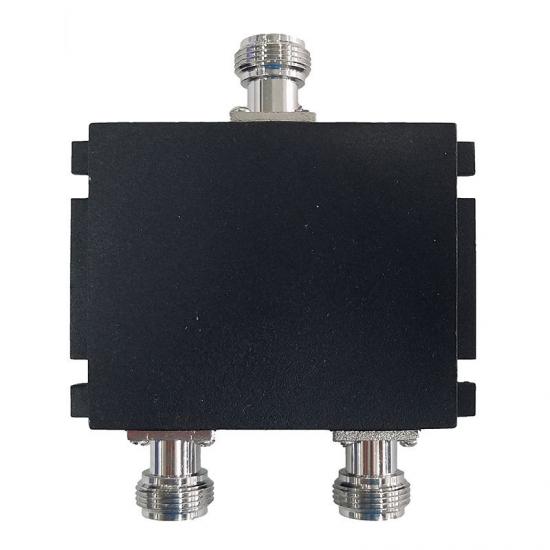
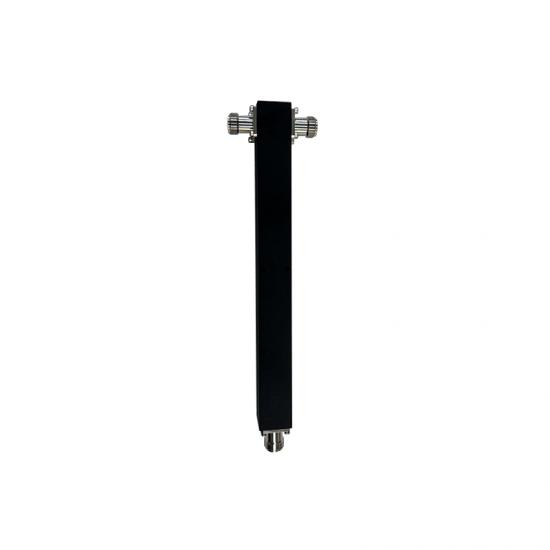
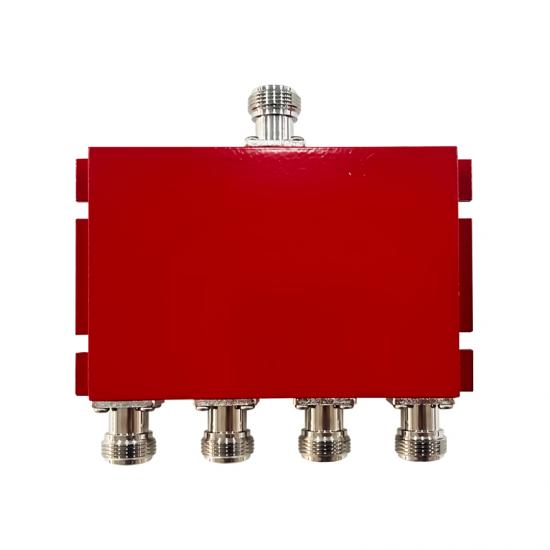
When working on a Distributed Antenna System (DAS), many engineers encounter a familiar headache:
the hardware looks fine — antennas, splitters, cables all seem correctly selected — yet the actual coverage still fluctuates.
Some areas have excellent signal, while others stubbornly remain weak.

Experienced engineers usually check one component first: the Directional Coupler.
Although it’s not as intuitive as a Power Splitter or as obvious as a feeder cable, the Directional Coupler often determines whether a system has been “properly tuned.”


1. So What Exactly Does a Directional Coupler Do?

In simple terms:
A Directional Coupler extracts a precise portion of the main RF signal and redistributes it exactly where it’s needed, without disturbing the entire system.

But the real engineering meaning is broader.

1) It extracts a controlled, accurate amount of power

The Directional Coupler’s defining feature is proportional output. For example:

  • 5 dB coupling → extracts only a small part

  • 10 dB → extracts more

  • 20 dB / 30 dB → used for very light coverage points

It doesn’t “split” power — it samples it.
This fine-tuning capability is something Power Splitters simply cannot achieve.

2) It keeps the main RF trunk strong and stable

Unlike Power Splitters, a Directional Coupler does not divide a signal into equal paths.
It taps a little, and keeps the main trunk almost untouched.

This is critical in buildings where the trunk must run long distances — malls, hospitals, parking garages, metro stations.
Low insertion loss is the lifeline of large DAS projects.

3) It fixes weak spots precisely

Most DAS problems come from imbalance:

  • Some zones are too strong

  • Others are always weak

  • Some transition areas are unstable

Directional Couplers help engineers “light up” weak corners without overpowering nearby areas.

2. Why Can’t a Power Splitter Replace a Directional Coupler?

New engineers often assume:
Power Splitters also distribute power. Why not just use them everywhere?”

But in actual RF engineering, the two components serve completely different purposes.

1) Power Splitters are coarse tools; Directional Couplers are surgical tools

Power Splitters divide power evenly.
That only works when the building structure is simple and symmetrical — which is almost never the case.

Real buildings require precision, not equality.

2) Power Splitters have higher loss — unsuitable for long trunks

For example:

  • After a few Power Splitters, the trunk signal is already too weak

  • But several Directional Couplers in series barely affect the trunk (0.2–0.5 dB loss typically)

This is why nearly all large-scale DAS systems rely on Directional Couplers.

3) Directional Couplers have higher isolation

Higher isolation means:

  • Less interference

  • More stable coverage

  • Better coexistence when multiple operators share a system

In multi-operator or multi-band DAS, poor isolation is a disaster.

3. Why Are Directional Couplers Indispensable in DAS?

1) Real buildings are too irregular — only Directional Couplers can balance the signal properly

Examples:

  • Cross-shaped hallways

  • Curved retail zones

  • Main lobby + side halls

  • Multi-level staggered spaces

Power Splitters can’t handle these variations.
Directional Couplers can — consistently.

2) Multi-floor systems need strong trunks

A DAS trunk must survive floor after floor without collapsing.
Directional Couplers make this possible.

3) They reduce interference between operators

In shared systems, the Directional Coupler’s isolation helps prevent:
PIM, cross-band interference, and signal bleeding.

4) They are the key to precise “spot coverage”

A Directional Coupler delivers just enough power — no more, no less.
This is why experienced engineers understand the meaning behind:

“Choose the right coupling value, and the system becomes stable.”

4. How to Judge Whether a Directional Coupler Is High Quality?

Here are practical criteria used by engineers:

1) Low insertion loss on the main line

  • 0.2–0.5 dB is excellent

  • Anything above 1 dB is normally unacceptable

2) Good PIM performance

  • −153 dBc → engineering grade

  • −161 dBc → preferred for metro, airport, and mission-critical projects

3) Stable isolation

Typical range: 30–50 dB

4) Accurate coupling values

Inaccurate coupling leads to coverage imbalance.

5.  Designed for Real DAS Engineering Needs

As a long-term manufacturer of RF passive components, we design Directional Couplers for real-world DAS environments:

  • Full coupling range: 5 / 6 / 7 / 10 / 15 / 20 / 30 dB

  • Low trunk loss for long-distance indoor coverage

  • High isolation for multi-operator shared networks

  • Full-band support including 5G: 700 / 2.6 / 3.5 / 4.9 GHz

  • Low-PIM mechanical structure for stable long-term performance


In the world of RF design, dB (decibel) is more than just a unit—it’s the fundamental language that engineers use to describe gain, loss, power level, and system performance. Without understanding dB, it’s nearly impossible to evaluate or optimize RF components such as antennas, filters, couplers, and power splitters.


Understanding the Role of dB

The decibel is a logarithmic unit that expresses the ratio between two quantities, typically power or voltage. Instead of dealing with large and complicated numbers, engineers use dB to express relationships more intuitively.

  • For power ratios:

    dB=10×log10(P2P1)
  • For voltage ratios:

    dB=20×log10(V2V1)

This logarithmic expression helps simplify how we perceive gain and loss. For instance, a 3 dB increase means the power has doubled, while a 3 dB decrease means the power is halved.

dB in Practical RF Components

In RF systems, every component—from connectors to filters—introduces gain or loss. The performance of these components is measured in dB to ensure compatibility and efficiency within the entire signal chain.

  • Antenna gain (dBi or dBd): Describes how well an antenna directs energy compared to a reference antenna.

  • Insertion loss (dB): Defines how much signal power is lost when passing through a passive component, such as a power divider or filter.

  • Return loss or VSWR: Indicates how much power is reflected back due to impedance mismatch, also expressed in dB.

By using dB consistently, engineers can easily evaluate whether a DAS, base station, or satellite link meets design expectations.

Why dB Is Critical in System Design

  1. Consistency across systems – Using a logarithmic unit like dB allows components from different vendors (e.g., filters, couplers, antennas) to be compared on the same scale.

  2. Simplifies complex calculations – Instead of multiplying power ratios, designers can simply add or subtract dB values.

  3. Identifies performance bottlenecks – Measuring insertion loss or isolation in dB helps pinpoint weak links in the RF chain.

Maniron’s Perspective

As a professional manufacturer of RF passive components, Maniron understands how critical accurate dB performance is. Each product—whether a filter, coupler, or power divider—is precisely designed and tested to ensure low insertion loss, high isolation, and stable performance across various frequency bands.

For operators and integrators, choosing components with optimized dB performance directly impacts network quality, coverage efficiency, and system reliability.


In modern communication systems, the RF filter is one of the most critical passive components. Whether in macro base stations, Distributed Antenna Systems (DAS/IBS), or in environments where 5G and 4G networks coexist, filters play a central role in suppressing interference and ensuring signal quality.

However, the true performance of a filter is not determined by its housing or connectors, but by its internal resonators. Simply put, without understanding resonators, it is impossible to truly understand how filters work or how their performance can be optimized.

Resonators – The Core of a Filter

The purpose of a filter is to allow signals within a desired frequency band to pass while rejecting unwanted signals outside that band. This frequency selectivity is realized by resonators.

  • Resonant Frequency: Defines the filter’s center frequency.
  • Quality Factor (Q Value): Determines bandwidth and insertion loss. A higher Q value means lower loss and sharper filtering.
  • Coupling Method: The strength of coupling between resonators directly affects bandwidth and out-of-band rejection.

Different resonator structures are suited for different applications:

  • Cavity Resonators: High isolation and high power handling, ideal for macro base stations.
  • Dielectric Resonators: Compact and stable, suitable for medium-power systems.
  • Microstrip Resonators: Lightweight and compact, widely used in DAS networks.

Key Performance Metrics of Filters

In operator networks, filters must balance several critical requirements:

  • Frequency Coverage – Common bands include 698–960 MHz, 1710–2700 MHz, and higher 5G bands such as 3.5 GHz and 4.9 GHz.
  • Insertion Loss – Excessive insertion loss reduces link budget and network coverage.
  • Isolation – High isolation is essential to suppress passive intermodulation (PIM) in multi-system deployments.
  • Power Handling – Macro site filters may need to handle hundreds of watts, while DAS systems prioritize low power and low PIM.

Typical Application Scenarios

  • Macro Base Stations – Ensures uplink and downlink isolation, avoids adjacent-channel interference, and improves user experience.
  • Indoor DAS/IBS – Works together with splitters and couplers to combine multiple frequency bands and achieve uniform indoor coverage.
  • 5G/4G Coexistence – Filters suppress intermodulation and interference, ensuring stable 5G performance in dense environments.

Maniron’s Technical Advantages

With over 20 years of expertise in RF passive component design and manufacturing, Maniron delivers a full portfolio of filter solutions, including cavity, dielectric, and microstrip filters.

Our advantages include:

  • Low Insertion Loss & Low PIM, improving transmission efficiency.
  • Wideband Coverage, supporting 2G/3G/4G/5G networks.
  • High Reliability, suitable for harsh outdoor environments.
  • Modular Designs, enabling easier deployment and maintenance.

Maniron’s filters are widely deployed in macro base stations, DAS solutions, and private networks, helping operators achieve high-performance and interference-free wireless coverage.

As the electrification of commercial vehicles and construction machinery accelerates, WAIN delivers a cutting-edge solution: our integrated metal-shell connectors designed specifically for high-voltage power distribution units (PDUs). Engineered for demanding environments, this series combines robust performance with installation efficiency.

Exceptional Load Capacity – Precision-engineered design supporting 1–4 core configurations, with a maximum voltage rating of 2000 V and current up to 450 A.

Comprehensive Protection – Certified IP67/IP6K9K sealing with 360° shielding to safeguard against harsh environmental conditions and electromagnetic interference.

Versatile Installation – Multiple keying options and straight or angled cable outlets ensure optimal compatibility and significantly reduce installation time.

Proven in the field, these connectors are already in bulk supply to multiple Tier 2 high-voltage component manufacturers, delivering stable performance and reliable integration. Today, they are enabling mass-production applications across a wide range of commercial vehicles and construction machinery, helping power the next generation of new energy transportation. 

4 way terminal block

In the fast-evolving world of robotics, efficient and reliable connections play a crucial role in ensuring optimal performance. One innovative solution that has gained significant traction is the 4 way terminal block. With its advanced features and versatile applications, this compact connector is revolutionizing the way robots are controlled and managed. In this article, we will explore the benefits and emerging trends surrounding 4 way terminal blocks, providing valuable insights into their importance and impact in the robotics industry.


Understanding 4 Way Terminal Blocks

When it comes to establishing secure and efficient connections, the 4 way connector block stands out as a reliable solution. With its ability to connect up to 4 wires simultaneously, this versatile connector simplifies complex wiring setups, optimizing the overall system performance. Whether it's in industrial automation or robotic control systems, the terminal block 4 way streamlines connectivity, enhancing productivity and minimizing downtime.

6 pole terminal block

 Versatility and Flexibility of 4 Way Terminal Blocks

The adaptability of 6 pole terminal block  is a key factor contributing to their growing popularity. These terminal blocks are available in various configurations, including different pin counts such as 6 pole and 6 pin terminal blocks. This flexibility allows engineers to customize their connection setups to meet specific requirements. Additionally, the compatibility with other terminal blocks, such as the 3 pin and terminal block 6 pole, enables seamless integration within existing systems.


 Enhanced Performance and Reliability

With the rising demand for high-performance robotics, reliability is of paramount importance. 4 way terminal blocks excel in this area, offering stable connections that withstand demanding operating conditions. The secure wire-to-wire contact ensures excellent conductivity, minimizing signal loss and maximizing system efficiency. Furthermore, their durable construction and resistance to shocks and vibrations contribute to long-term reliability in critical applications.


Emerging Trends and Future Innovations

As technology progresses, the field of robotics continues to evolve at a rapid pace. In line with this, 6 pin terminal block are witnessing continuous advancements to meet the ever-changing industry demands. Manufacturers are investing in research and development to improve features such as compactness, higher pin counts, and enhanced conductivity. These innovations enable seamless integration of 6 pin terminal block in smaller, more sophisticated robotic systems, paving the way for next-generation automation.


Unrivaled Excellence in Connections

In the realm of terminal blocks, HONG YI-HOMNECKS+PCB TERMINAL BLOCK is a name synonymous with excellence. Combining years of industry experience with cutting-edge technology, their terminal blocks provide unmatched performance and reliability. Backed by rigorous quality control measures, HONG YI-HOMNECKS+PCB TERMINAL BLOCK ensures that their products deliver consistent results, meeting the highest standards of efficiency and durability. With their exceptional service and commitment to customer satisfaction, HONG YI-HOMNECKS+PCB TERMINAL BLOCK is the go-to choice for businesses seeking reliable and future-proof connection solutions.


In summary, 4 way terminal blocks offer a game-changing solution for optimizing connection efficiency in robotics applications. Their versatility, reliability, and compatibility with various pin configurations make them an indispensable component in modern control systems. As the industry continues to progress, it is imperative to stay updated with emerging trends and innovations, ensuring that your robotic systems are equipped with the latest advancements. Trusting a reputable brand like HONG YI-HOMNECKS+PCB TERMINAL BLOCK ensures that you're investing in high-quality products and services that will drive your robotic applications forward.


terminal block 3 pole

Robots have become an integral part of various industries, revolutionizing manufacturing processes and increasing efficiency. Behind the scenes, sophisticated robot control systems ensure smooth operation and accurate execution of tasks. One crucial component in these systems is the pluggable terminal block, which plays a vital role in providing reliable connections. In this article, we will explore the applications of pluggable terminal blocks in robot controllers.


Terminal blocks are a fundamental part of any electrical system, including robot controllers. Specifically, the 3-pole terminal block offers a versatile solution for connecting multiple devices within the control panel. Its design allows for the effortless connection of wires, enabling secure and efficient power distribution. By utilizing 3-pole terminal blocks in robot controllers, engineers can streamline wiring and optimize the overall control system.


Screw type terminal blocks are widely used in robot control systems due to their robust and reliable nature. These blocks feature a screw mechanism, ensuring a strong connection between wires and terminals. This mechanism also enables easy installation and maintenance, reducing downtime. The availability of various sizes and configurations of screw type terminal blocks makes them suitable for diverse robot controller applications, offering flexibility and adaptability.

pcb terminal blocks

In complex robot control systems, the need for modular and expandable solutions is paramount. This is where screw terminal block connectors come into play. These connectors provide an additional layer of flexibility by allowing quick and secure connections between different modules or subsystems. By utilizing screw terminal block connectors, engineers can easily integrate or replace components, simplifying maintenance and reducing system downtime.

Printed Circuit Boards (PCBs) are an integral part of robot control systems, serving as the nerve center for signal and power distribution. PCB terminal blocks offer a reliable and space-efficient solution for connecting wires to PCBs. These terminal blocks feature a compact design, allowing for high-density PCB layouts without compromising on functionality. The ease of installation and secure connections provided by PCB terminal blocks make them a preferred choice in robot controller design.

When it comes to PCB connections in robot controllers, PCB terminal connectors play a crucial role. These connectors allow for the quick and secure connection of wires to the PCB, facilitating efficient signal transmission and power distribution. With their compact design and reliable performance, PCB terminal connectors ensure the stability and integrity of the robot control system, enabling precise and error-free operation.


In addition to traditional PCB terminal blocks, PCB pin terminals offer a unique solution for specific robot controller applications. These terminals feature a pin design that directly interfaces with PCBs, eliminating the need for additional terminal blocks or connectors. PCB pin terminals provide a secure and space-saving connection solution, making them ideal for compact robot control systems where minimizing size and weight is crucial.


In conclusion, pluggable terminal blocks are essential components in robot control systems, providing reliable and efficient connections. The 3-pole terminal block, screw type terminal blocks, screw terminal block connectors, PCB terminal blocks, PCB terminal connectors, and PCB pin terminals all play vital roles in ensuring seamless operation and flexibility within the control panel. When it comes to these products' manufacturers, HONG YI-HOMNECKS+PCB TERMINAL BLOCK stands out for its exceptional product quality, durability, and extensive range of offerings. Moreover, the company's commitment to excellent customer service and technical support makes HONG YI-HOMNECKS the ideal choice for seamless integration of terminal block solutions into robot control systems.


2 pole terminal block

In modern industrial applications, servo control systems play a crucial role in precise motion control. To ensure the seamless operation of these systems, the proper wiring and connection of components are essential. One vital component that facilitates reliable and efficient connections is the 2 pole terminal block. In this article, we will explore the significance of  3 pin terminal block  and their role in safeguarding the smooth operation of servo control systems.


A 2 pole terminal block acts as a bridge between the control system and various devices, enabling secure and dependable electrical connections. It provides the necessary interface for power transfer, signal transmission, and control within the servo control system. Whether it is connecting motors, sensors, or other components, 2 pin screw connector ensures optimal performance and minimizes the risk of signal loss or disconnection.

3 pin terminal block

The adaptability of a terminal block 2 pole makes it suitable for a wide range of applications. With its design supporting screw connectors, 2 pin screw terminal   provides a secure and stable connection, ensuring the integrity of the electrical circuit. Additionally, the inclusion of 2 poles enables the connection of multiple devices or circuits, enhancing flexibility in system configuration and expansion.


Terminal blocks play a vital role in simplifying wiring and installation processes, reducing downtime and improving efficiency. In the case of 2 way terminal block , their user-friendly design and intuitive connection interface make installation quick and hassle-free. The secure screw terminals ensure reliable connections even in demanding industrial environments, preventing the risk of loose or disconnected wires.


When it comes to high-quality 2 pole terminal blocks, HONG YI-HOMNECKS stands out as a reliable manufacturer and supplier. Their extensive range of PCB terminal blocks, including 3 pin terminal blocks and 2 pole terminal blocks, ensures seamless connectivity in servo control systems. With a commitment to providing superior products, HONG YI-HOMNECKS offers durable and reliable solutions that guarantee the smooth operation of your applications.


In summary, 2 pole terminal blocks play a vital role in ensuring the smooth operation of servo control systems. Their versatility, reliability, and ease of installation make them an indispensable component for establishing secure electrical connections. When looking for trusted solutions, HONG YI-HOMNECKS+PCB Terminal Blocks provide effective and reliable options backed by their commitment to quality and service.


3 way terminal block

Introduction:

In today's rapidly evolving technological landscape, the demand for efficient and reliable electrical connections continues to grow. One product that plays a crucial role in various industries is the 3 way terminal block. Designed to facilitate secure and organized terminal 3 pin, these terminal blocks offer immense potential in ensuring smooth operations for various applications. This article delves into the market prospects and benefits of 3 way terminal blocks.


Versatile Applications of 3 Way Terminal Blocks:

3 way terminal blocks find extensive applications in industries such as automation, machinery, and electrical systems. With their capability to accommodate multiple connections, terminal block 3 pin  provide a reliable solution for complex wiring setups. Whether it's connecting sensors, actuators, or control devices, the versatility of 3 pin screw terminal block connector makes them essential components in today's advanced systems. Manufacturers like HONG YI-HOMNECKS cater to diverse industrial needs by offering a range of high-quality terminal block options, including 3-pin variants.

terminal block connector 3 pin

Enhanced Connectivity with 3 Pin Screw Terminal Block Connectors:

The integration of screw terminal block connectors simplifies the installation and maintenance processes of 3 way terminal blocks. By utilizing screw-based connections, these terminal blocks ensure secure and vibration-resistant electrical contacts. The 3 pin screw terminal block connectors provide a reliable and stable interface, minimizing the risk of loose connections and electrical faults. Users can trust HONG YI-HOMNECKS' expertise in providing top-notch terminal block connector 3 pin connectors for seamless connectivity.


Streamlined Wiring with 3 Pin Terminal Block Connectors:

Terminal block connectors with 3 pins bring efficiency and convenience to wiring tasks. By offering a compact and organized solution for connecting multiple wires, these terminal blocks eliminate the messiness of individual wire connections. The design of 3 pin terminal block connectors enables easy identification and routing of wires, saving time during installation and future maintenance. HONG YI-HOMNECKS, a leading manufacturer and supplier in the industry, delivers high-quality 3 pin terminal block connectors for hassle-free wiring solutions.


Increased Reliability of 3 Way Terminal Blocks:

The reliability of electrical systems heavily depends on the quality of terminal blocks used. 3 way terminal blocks offer exceptional durability, ensuring long-lasting performance in demanding environments. With features such as corrosion-resistant materials and robust construction, these terminal blocks provide a secure and stable connection, even in harsh conditions. HONG YI-HOMNECKS, renowned for its commitment to quality, ensures that their 3 way terminal blocks meet industry standards, enhancing system reliability and minimizing downtime.


Future Market Trends and Opportunities:

The market for 3 way terminal blocks is poised for significant growth as industries continue to demand reliable and efficient electrical connections. Rapid advancements in automation, smart devices, and renewable energy systems fuel the need for innovative terminal block solutions. Manufacturers like HONG YI-HOMNECKS, with their dedication to research and development, are at the forefront of introducing advanced 3-way terminal block technologies and expanding their product offerings. As the industry evolves, the demand for versatile, high-quality, and feature-rich 3 way terminal blocks is expected to soar.


The market outlook for 3 way terminal blocks is immensely promising due to their versatile applications and significant benefits in electrical connectivity. With the convenience of 3 pin screw terminal block connectors and the seamless wiring facilitated by 3 pin terminal block connectors, these components are crucial for ensuring reliable and efficient electrical connections. As the market continues to evolve, HONG YI-HOMNECKS, a trusted terminal block manufacturer and supplier, remains committed to meeting industry demands through their premium range of 3 way terminal blocks and associated connectors, solidifying their position as a leader in the field.


pcb screw connector

When it comes to terminal blocks, the HONG YI 5.08 Terminal Block stands out for its superior manufacturing process. With the use of advanced technology and precise craftsmanship, this terminal block ensures reliable connections in various electronic applications. In this article, we will delve into the key factors that make the HONG YI pcb screw connector  the preferred choice in the industry.


Benefits of the PCB Screw Connector:

In modern electronic designs, a secure and stable connection is crucial. The HONG YI 5.08 Terminal Block incorporates a high-quality PCB screw connector, ensuring a secure and reliable connection between the terminal block and the PCB. This feature guarantees long-term stability and facilitates easy maintenance.

5.08 terminal block

Understanding the 5.08 Terminal Block:

The 5.08 terminal block is a widely used connector type in the electronics industry. Featuring a 5.08 mm pitch, it provides ample space for secure wire connections. The HONG YI 5.08 connector adheres to the industry-standard dimensions and specifications, making it compatible with various applications and suitable for different project requirements.


Versatility of the 5.08 Connector:

One of the key advantages of the 5.08 mm connector  is its versatility. With the ability to accommodate different wire sizes and types, this connector offers flexibility in connection options. Whether you are working with solid or stranded wires, the HONG YI 5.08 Terminal Block provides a reliable and efficient solution for your connectivity needs.


Precise Design of the 5.08 mm Connector:

The HONG YI 5.08 Terminal Block excels in precision engineering. Every aspect of the 5.08 mm connector is designed with meticulous attention to detail. From the robust housing material to the well-defined contact points, this terminal block ensures optimal electrical performance and minimizes the risk of signal loss.


The Advantages of Terminal Block 5.08:

Terminal block 5.08 offers unrivaled reliability and durability. Designed for demanding industrial environments, it can withstand challenging operating conditions such as temperature fluctuations and mechanical stress. With its rugged construction and excellent electrical properties, the HONG YI 5.08 Terminal Block ensures consistent performance and longevity.


Terminal Block 5.08 mm for Efficient Connectivity:

The HONG YI 5.08 Terminal Block is engineered to streamline the connectivity process. With its user-friendly design and easy wiring options, it enables efficient installation and maintenance. Whether you are working on a small-scale project or a large-scale industrial application, this terminal block simplifies the connectivity workflow, saving time and effort.


In the realm of terminal block manufacturing, the HONG YI 5.08 Terminal Block sets the standard for excellence. With its PCB screw connector, precise design, versatility, and robust construction, this terminal block delivers reliable and efficient connectivity. When it comes to electrical connections, trust the HONG YI 5.08 Terminal Block to provide secure and long-lasting performance for your electronic projects.


pcb screw connector

Introduction:

In today's fast-paced world, advanced electrical systems require reliable and efficient components to meet the demands of diverse applications. HONG YI stands at the forefront of innovation, offering a range of cutting-edge solutions. In this article, we will explore how the HONG YI Green Terminal Block excels in special application fields, providing unmatched performance and adaptability.


The Versatility of Green Terminal Block:

The Green Terminal Block by HONG YI is a game-changer in the industry. Its unique design and exceptional features make it a perfect fit for various special applications. Whether you're working with low voltage systems or need a reliable pluggable terminal block connector, it offers the flexibility you need. With precise engineering, it ensures secure and efficient connections, meeting and exceeding industry standards.


Enhanced Connectivity with Terminal Block Connector Plug:

HONG YI understands the importance of seamless connectivity in special applications. The Terminal Block Connector Plug further enhances the versatility of the pluggable terminal block connector. It provides a secure and reliable connection, eliminating the risk of loose or faulty connections. This plug is engineered to be compatible with various systems, ensuring smooth integration and superior performance.


Unparalleled Durability for Special Environments:

In special application fields, durability is paramount. HONG YI's Green Terminal Block is designed to withstand demanding conditions. Whether it's extreme temperatures, vibrations, or moisture, this terminal block surpasses expectations. Its robust construction and high-quality materials ensure longevity and reliable performance, making it an ideal choice for challenging environments.


Harnessing the Power of Green Terminal Block PCB:

The Green Terminal Block PCB is another remarkable offering from HONG YI. This solution enhances the efficiency of printed circuit boards, providing a seamless integration platform. With precision-placed screw terminal connector plugs, it simplifies installation and maintenance processes. The terminal block connector plug  sets new standards in connectivity and compatibility while optimizing circuit design.


Unmatched Safety and Reliability:

When it comes to special applications, safety and reliability are paramount. HONG YI's screw terminal connector plug guarantees these essential qualities. It goes through rigorous testing and adheres to stringent industry standards, ensuring optimal performance even under the most demanding conditions. Installers and engineers can trust the Green terminal block pcb 's secure connections, minimizing risks and maximizing operational efficiency.


HONG YI Green Terminal Block—Your Ultimate Solution:

In conclusion, the HONG YI Green Terminal Block redefines the standards for special application fields. Its versatility, durability, and robustness make it a top choice for engineers and installers worldwide. With features like the terminal block connector plug and compatibility with PCBs, it offers unmatched connectivity solutions. Trust HONG YI to provide superior performance and reliability in your specialized projects.

low voltage terminal block