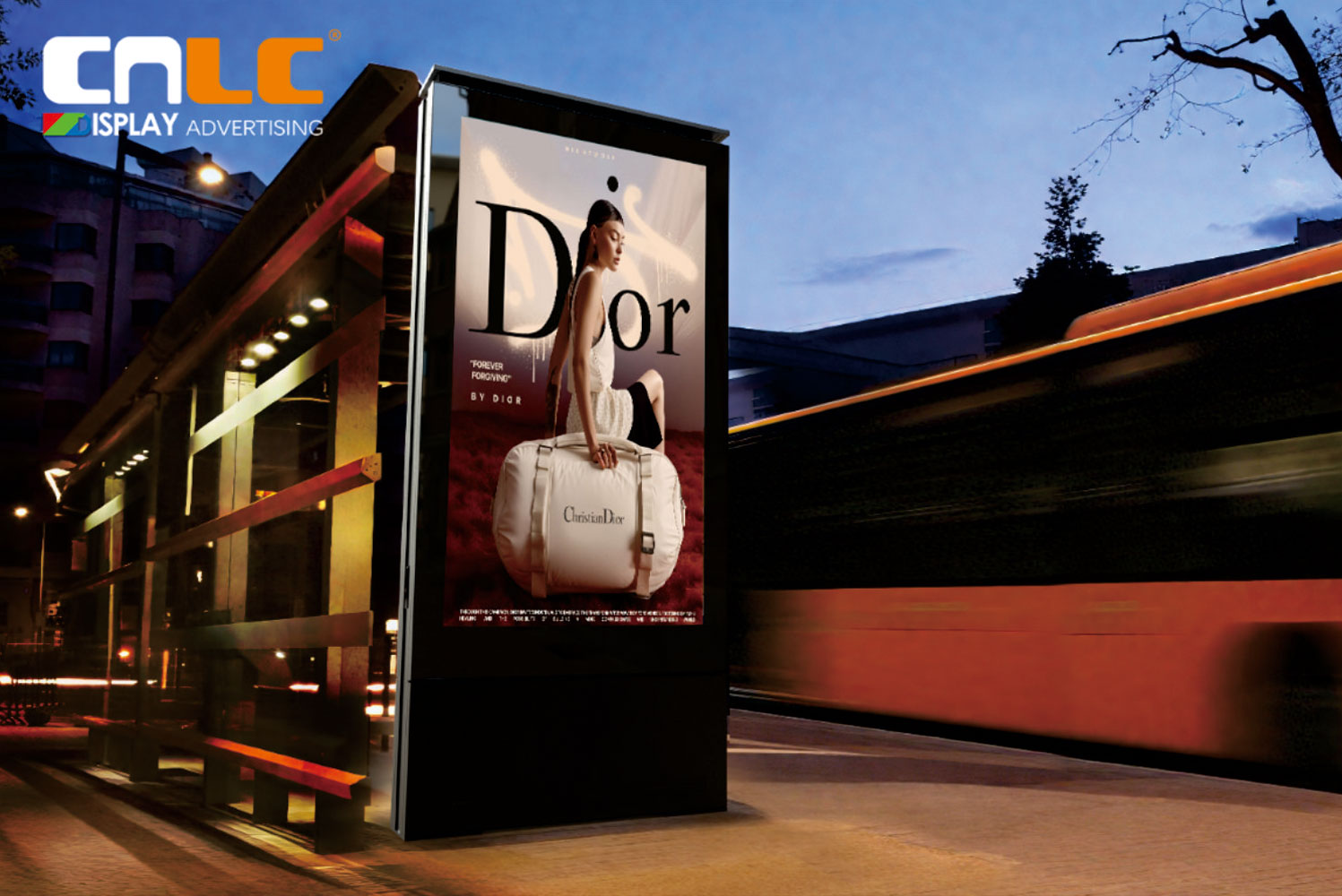
Outdoor digital signage, bus shelter displays, and other public-facing display systems are now exposed to increasingly demanding environments: intense sunlight, continuous high temperatures, 24/7 operation, and strict public safety requirements.
Under these conditions, traditional glass can no longer meet the needs of brightness transmission, heat management, safety, and long-term stability.
To address these real-world challenges, CNLC has developed a high-performance optical laminated glass solution specifically engineered for Outdoor Digital Signage and Bus Shelter Displays. By enhancing light transmission, reducing heat ingress, and improving safety performance, this optical glass provides a more reliable protective layer for any high-brightness outdoor LCD or LED display.
1.Why Outdoor Displays Increasingly Depend on Optical-Grade Laminated Glass
①. Higher Brightness Requires Higher Light Transmission
Outdoor displays typically reach 3000–7000 nits.
If the cover glass has low transmittance, the actual perceived brightness will drop dramatically, reducing daylight visibility—a critical factor for high-brightness outdoor screens.
②. More Extreme Thermal Conditions Demand Better Heat Control
Infrared radiation accelerates internal heat buildup, causing:
-
brightness degradation
-
component aging
-
reduced operational stability
IR-cut laminated glass helps block external heat, enabling the display system to operate within a safer temperature range.
③. Public Safety Standards Continue to Rise
Bus shelters, transportation hubs, and roadside digital signage require:
-
anti-shatter performance
-
explosion-proof structure
-
safety glass certified for public environments
High-strength laminated safety glass has therefore become the industry standard.
2. CNLC High-Performance Optical Laminated Glass: Structure & Functional Layers
Ultra-white Glass / AG / AR + PVB + IR + PVB + Ultra-white Glass / AG / AR
• Ultra-white Glass
Provides extremely high visible light transmittance, offering a clean and accurate visual base for outdoor LCD and LED displays.
• AG (Anti-Glare) Coating
Reduces surface reflections and improves display readability under strong sunlight.
• AR (Anti-Reflective) Coating
Further boosts light transmission, delivering clearer, brighter, and more vibrant images.
• PVB Interlayers
Adds impact resistance, anti-shatter performance, and acoustic damping—essential for public installations such as outdoor kiosks and Bus Shelter Displays.
• IR Thermal Insulation Layer (IR 15% Transmission)
Effectively blocks infrared heat, lowering internal temperature load and enhancing long-term display stability.
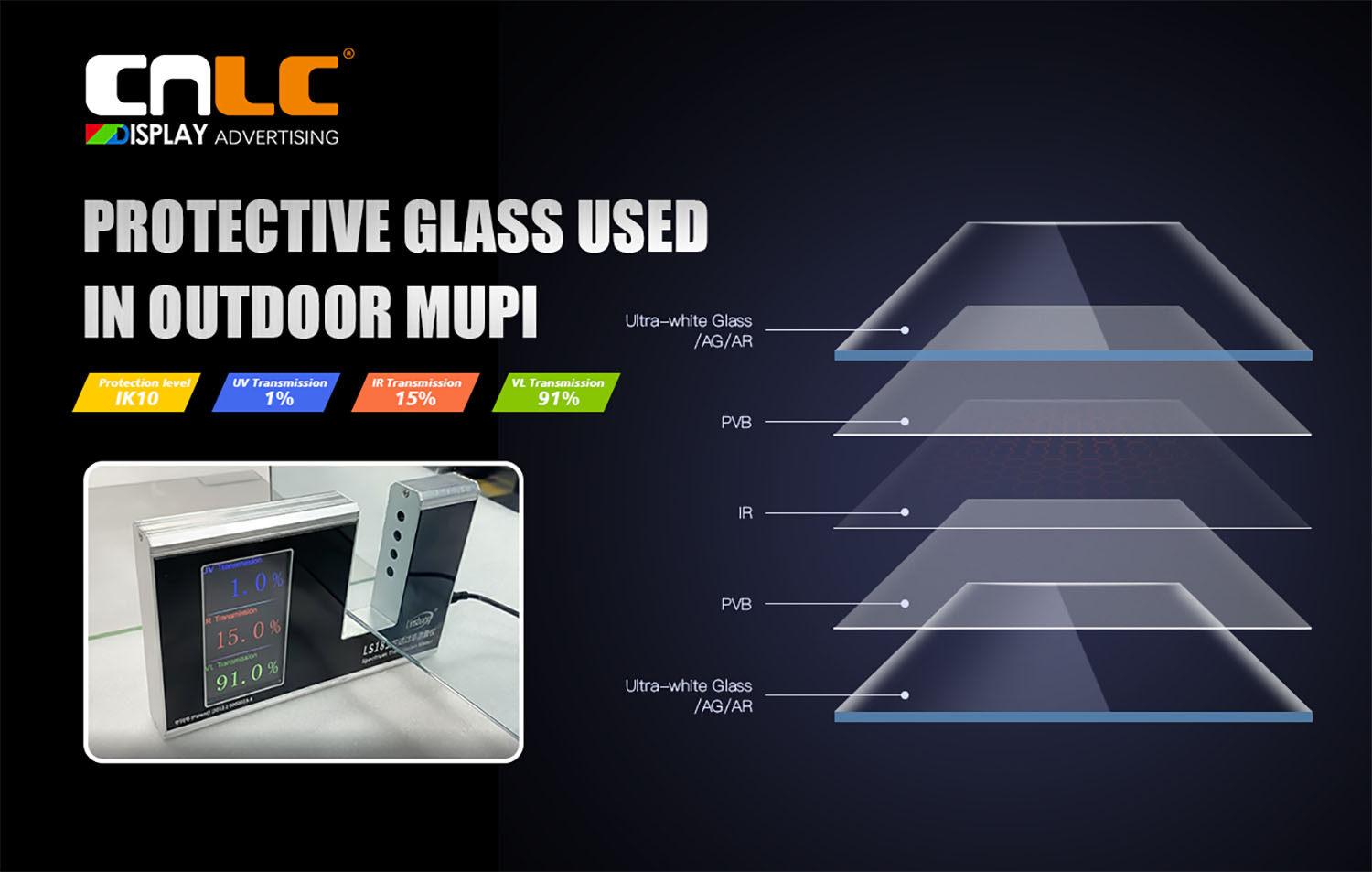
3. Core Performance Advantages (UV 1% / IR 15% / VLT 91%)
①. Higher Brightness Utilization (VLT 91%)
The high transmittance minimizes brightness loss, allowing the display to deliver:
-
higher visibility
-
optimized color performance
-
superior sunlight readability
②. Better Visibility in Direct Sunlight (AG + AR)
The dual anti-glare and anti-reflective system enhances visual contrast and reduces unwanted reflections—key to premium Outdoor Digital Signage.
③. Reduced Thermal Load (IR 15%)
The IR layer:
-
lowers external heat ingress
-
reduces internal temperature rise
-
supports more stable performance in hot climates
While optical laminated glass greatly assists in thermal control, overall thermal stability still depends on:
-
display module heat output
-
internal airflow design
-
cooling/ventilation system
-
enclosure structure
Thus, high-performance glass is a critical component, but it must work in synergy with the full system design.
④. Enhanced Safety & Durability (PVB Laminated Structure)
The laminated structure prevents glass fragments from scattering upon breakage, providing the safety level required for:
-
public transportation displays
-
roadside advertising
-
urban outdoor applications
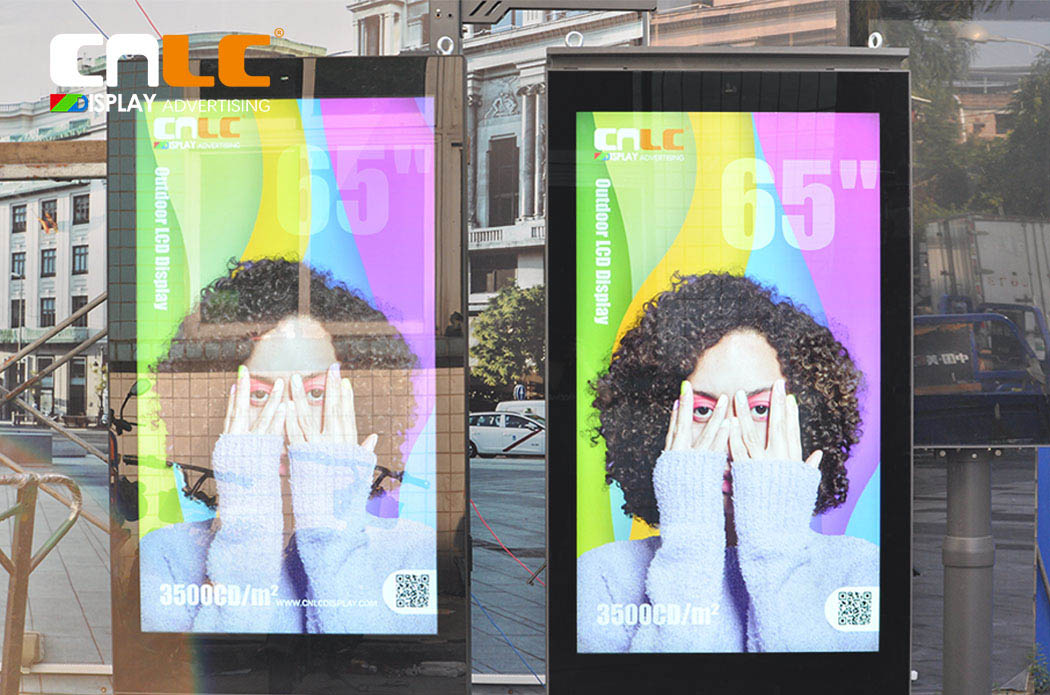
4. Ideal Application Scenarios: Outdoor Digital Signage & Bus Shelter Displays
①. Outdoor Digital Signage
High brightness + direct sunlight + 24/7 operation
→ Requires high-light-transmission and IR-cut laminated glass to maintain image clarity and long-term stability.
②. Bus Shelter Displays
High foot traffic + prolonged exposure to sunlight + strict safety requirements
→ Laminated safety glass becomes essential for durability and public protection.
Conclusion
High-performance optical laminated glass has become an essential component in premium outdoor display systems. It significantly enhances light transmission, improves image clarity, reduces thermal load, and ensures higher safety levels.
However, achieving true all-weather stability requires synergy between:
-
the optical glass
-
the display module
-
the cooling and ventilation system
-
the entire structural design of the outdoor enclosure
With its Ultra-white + AG/AR + PVB + IR + PVB structure, CNLC’s optical laminated glass is rapidly becoming the industry-standard choice for high-end Outdoor Digital Signage and Bus Shelter Display solutions.