Over the past few years, magnetic track lighting have moved from being a niche architectural product to becoming a standard solution in many modern interiors.
Designers value them for one simple reason: they offer flexibility without compromising aesthetics.
But as project requirements continue to evolve, a clear shift is happening within the category—more designers are moving toward curved magnetic track lighting .
What was once considered a special design feature is now becoming part of everyday project planning.
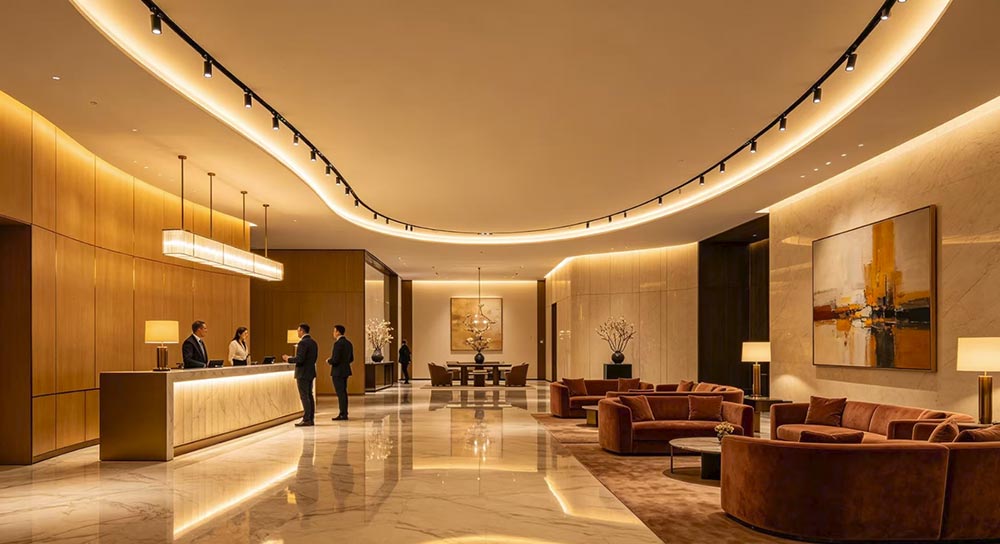
Interior design is moving away from rigid geometry
For many years, modern interiors were dominated by straight lines.
Linear ceilings, square layouts, and fixed lighting grids made sense because they were practical and easy to execute.
But design trends have changed.
Today’s interiors are becoming softer and more expressive.
Architects are introducing:
- curved ceilings
- rounded corners
- flowing corridors
- circular focal zones
- organic room layouts
As these design elements become more common, traditional straight lighting layouts can start to feel disconnected.
Designers need lighting systems that can follow the architecture—not interrupt it.
That is one of the biggest reasons curved magnetic track lighting is gaining popularity.
Lighting is no longer just functional
There was a time when lighting decisions were made late in the project.
The architecture was already finished, the ceiling was already designed, and lighting simply needed to “fit.”
That approach is becoming less common.
Today, lighting is often considered much earlier—sometimes even at concept stage—because it influences how a space is experienced.
It affects atmosphere, movement, and even how people emotionally respond to a room.
That is exactly why systems like curved magnetic track lighting are gaining attention.
Curved layouts create better spatial flow
Designers often talk about “flow,” but in practice that usually means something very simple: how naturally people move through a space.
Curves help with that.
Unlike straight lines, which tend to create structure and boundaries, curved forms feel softer and more intuitive.
When lighting follows those curves, the entire space can feel more connected.
That is why curved track layouts are often used in entrances, transition zones, and feature areas where movement matters.
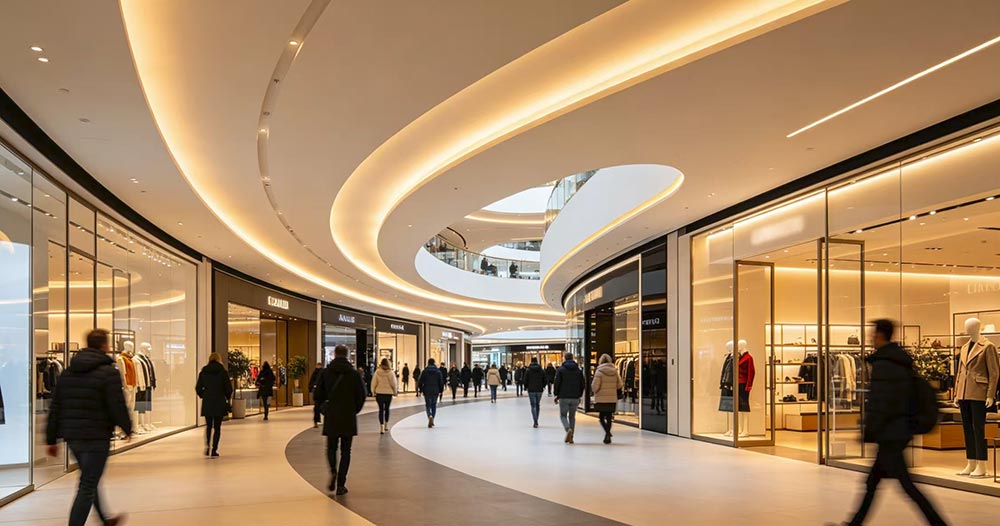
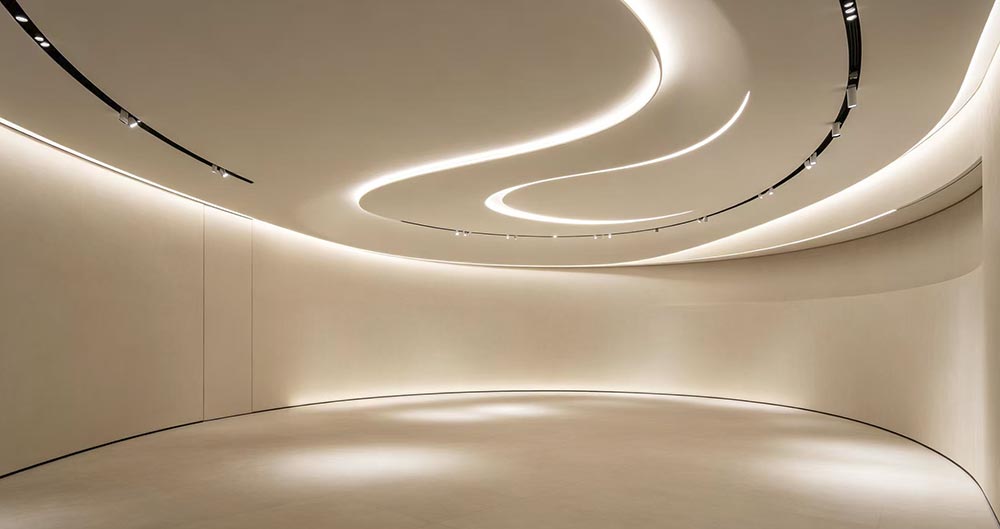
Behind this seamless architectural curve, the lighting system is not decorative—it is precisely engineered to follow the shape of the space.
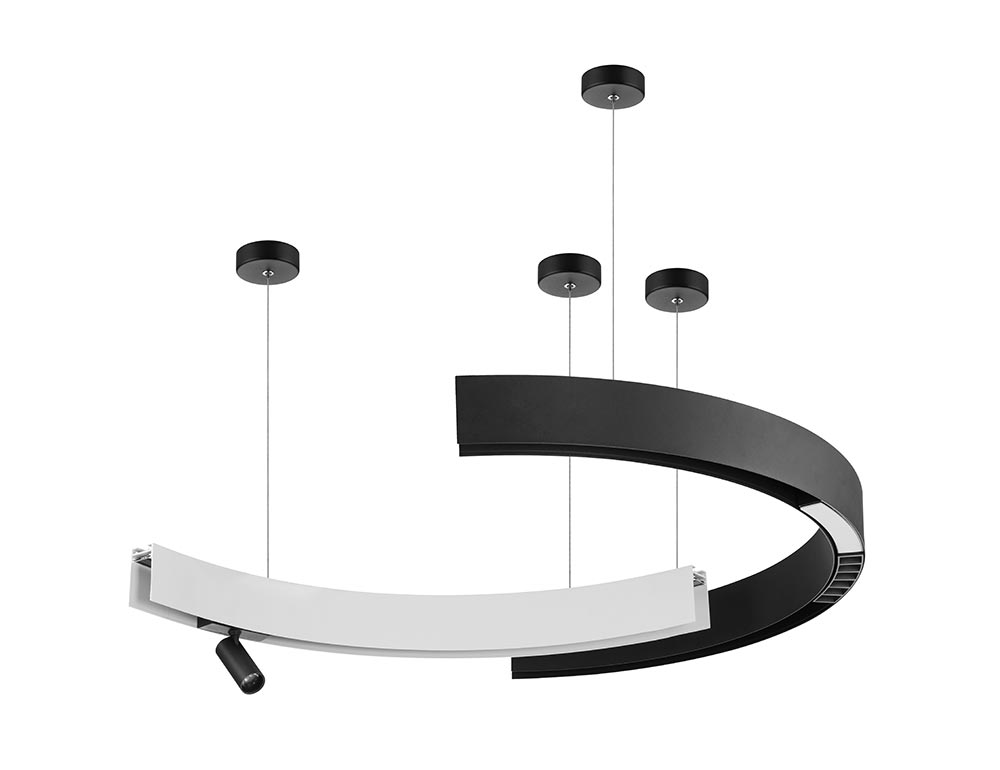
Designers want flexibility without sacrificing aesthetics
One of the biggest reasons magnetic track systems became popular in the first place is flexibility.
Fixtures can be:
- moved
- replaced
- adjusted
- upgraded later
Designers love that.
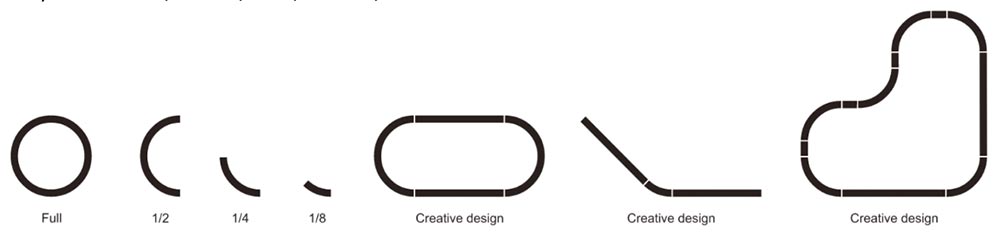
Curved systems keep all of those benefits—but add more design freedom.
Now they can create:
- arcs
- circles
- soft transitions
- custom ceiling compositions
without losing the modular advantages of a magnetic lighting system.
That balance between beauty and practicality is hard to ignore.
It supports more customized projects
Clients today want spaces that feel unique.
This is especially true in:
- luxury hospitality
- premium retail
- branded commercial spaces
- custom residential interiors
Many clients are no longer satisfied with “standard.”
They want something memorable.
Curved magnetic track lighting helps designers deliver that without needing completely custom lighting technology.
It offers customization—but within a scalable system.
That is a major advantage for project execution.
The ceiling has become a design feature
Ceilings used to be something people rarely noticed.
Now, in many premium projects, they have become one of the strongest visual elements in the room.
Layered ceiling details, recessed lines, indirect lighting, and exposed track systems are all being used intentionally—not just to hide technical elements, but to create character.
As ceilings become more expressive, lighting naturally becomes more visible as part of the design.
And once that happens, the shape of the lighting matters much more.
Curved does not mean complicated
Some people assume curved systems are difficult to install or maintain.
In reality, a well-designed curved magnetic track lighting system works much like a standard one.
The same modules can be used:
- magnetic spotlights
- linear lights
- pendant lights
- wall washers
The same flexibility remains.
The main difference is simply the layout.
That means designers can create more dynamic spaces without making the system harder to manage.
For many projects, that is exactly what makes curved systems attractive.
A reflection of where design is heading
The growing popularity of curved magnetic track lighting reflects a bigger industry shift.
Design is becoming:
more human-centered
more experiential
more architectural
more flexible
Lighting needs to evolve with that.
That is why more designers are choosing curved magnetic track lighting—not because it is trendy, but because it aligns with how modern spaces are being created.
And as interior design continues moving toward customized, experience-driven environments, this shift is likely to continue.