How UHF RFID Handhelds Are Redefining Apparel Inventory Control

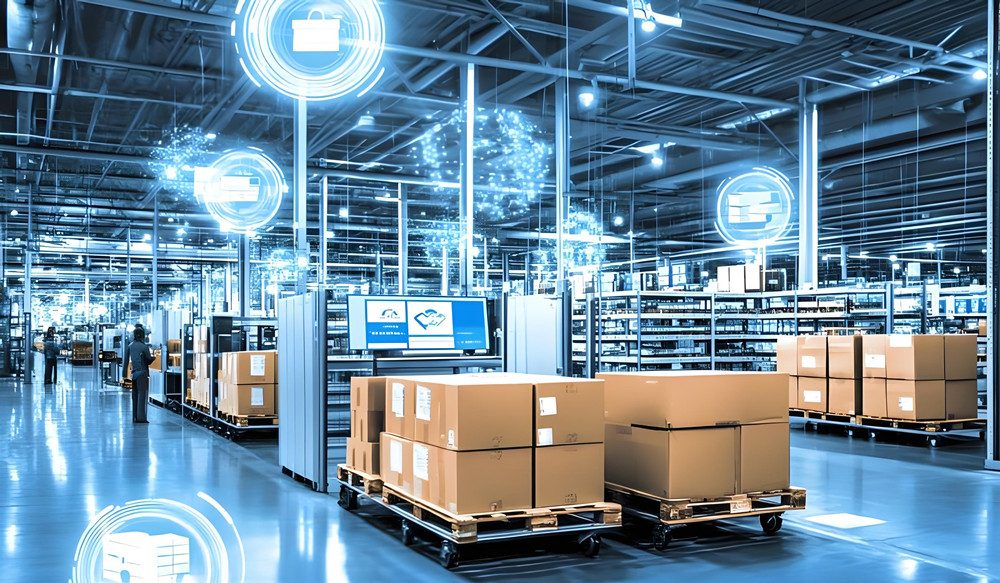
For apparel retailers, inventory management efficiency directly affects profitability and service quality. Traditional counting methods are inefficient and inaccurate, but UHF RFID handheld devices provide a seamless, automated alternative.

Bulk Scanning for Streamlined Receiving & Shipping

While barcodes require line-of-sight scanning, UHF RFID technology captures multiple garment tags instantly—accelerating operations and reducing human error in logistics and retail environments.

Smarter Stock Tracking to Prevent Loss & Misplacement

RFID handheld terminals enable instant item location checks, ensuring garments are stored correctly—reducing lost inventory and maximizing storage efficiency.

Transform Stocktakes from Chore to Checkmark

What traditionally required teams of staff counting for days can now be completed by one worker in minutes using RFID scanning, with near-perfect accuracy.

Prevent Lost Sales with Smart Stock Alerts

RFID readers automatically flag low inventory, triggering instant replenishment to keep bestsellers always available - turning browsers into buyers.

Conclusion

UHF RFID technology solves apparel inventory's biggest challenges:

• Eliminates time-consuming manual counts

• Prevents costly stock discrepancies

• Optimizes warehouse/store layouts

• Ensures optimal product availability

Ready to turn inventory management from a cost center to competitive advantage? Let's discuss your RFID implementation roadmap!

What is RFID Technology?


In simple terms, RFID is a technology that gives physical objects their own "electronic ID." Using a reader, information can be read from a distance and without any physical contact, enabling highly efficient management.


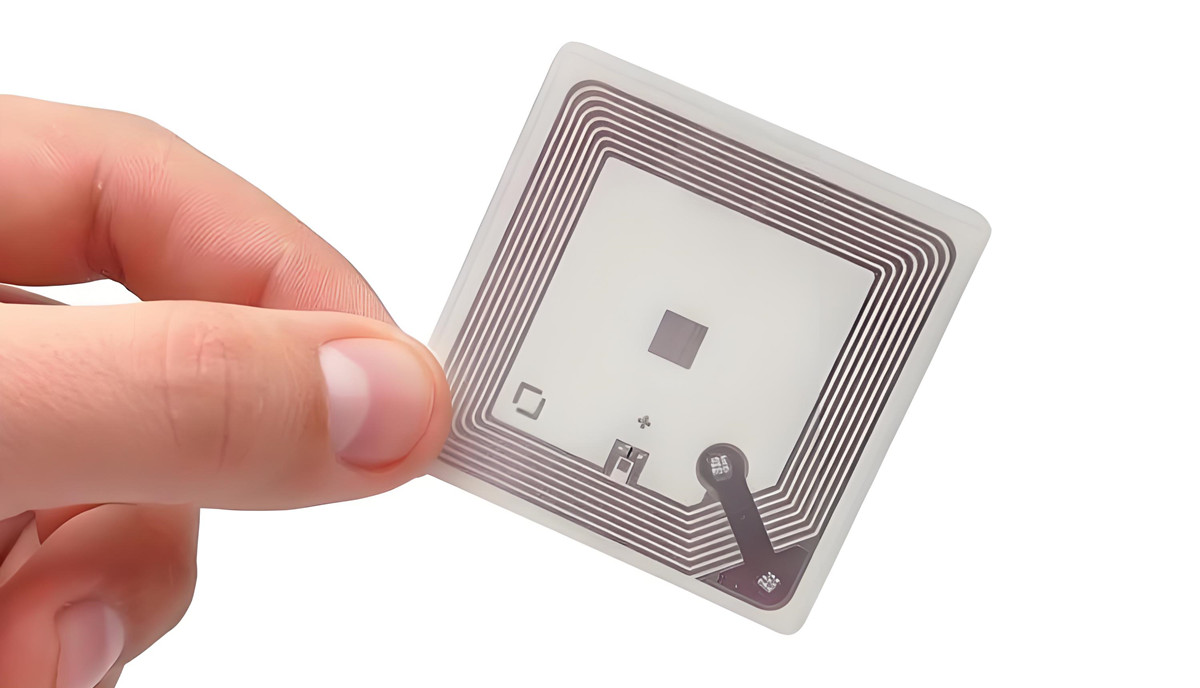
Components of RFID Technology


The composition of RFID is quite straightforward, primarily consisting of three key components:

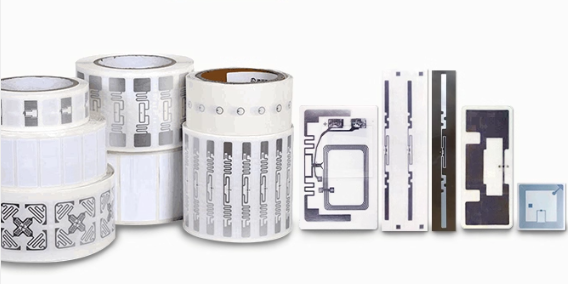
01 Electronic Tag

A miniature device that stores the target's information. It acts as a wireless ID card, receiving energy, parsing commands, and responding with data.

02 Antenna

The physical pathway for transferring energy and signals between the reader and the tag. It is responsible for transmitting and receiving these signals.

03 Reader/Writer

A digital transceiver that initiates communication, processes signals, and manages data exchange. It functions essentially as a "wireless card reader."


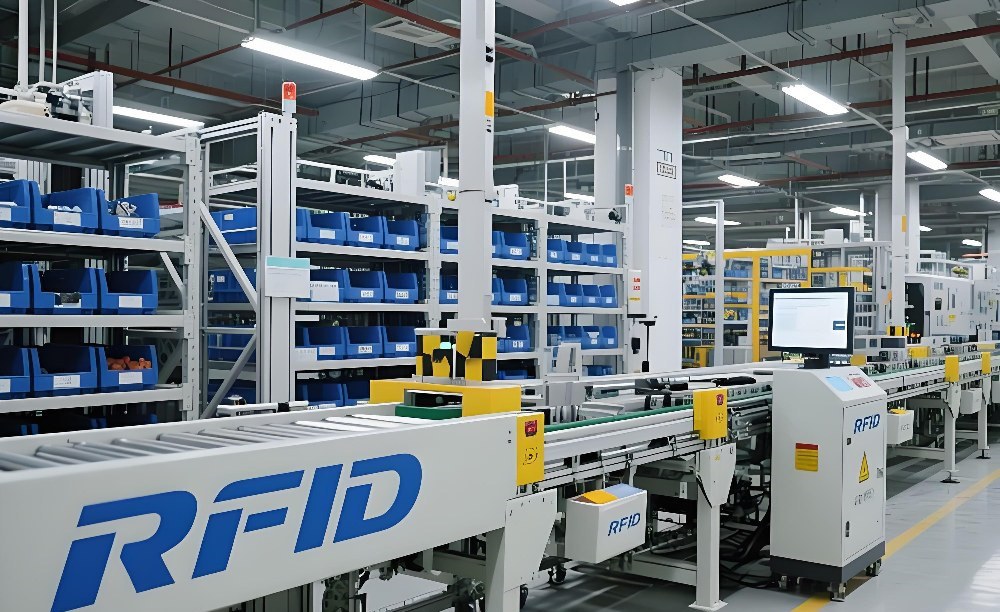
Common RFID devices we encounter include RFID handheld terminals, RFID printers, RFID gate antennas, and RFID fixed readers. These devices are not only capable of reading traditional barcodes but are also widely applied in scenarios such as logistics and warehousing, retail management, and asset tracking.


How It Differs from Barcode Technology


Compared to traditional identification methods like optical or barcode scanning, the simplest way to put it is: a barcode needs to be seen to be scanned, while RFID needs only to be sensed to be read.

The most fundamental differences are:

1.Method of Reading: Barcodes require a direct line of sight and must be precisely aligned with a scanner. In contrast, RFID tags are read via radio waves and do not need to be visually exposed or specifically oriented.

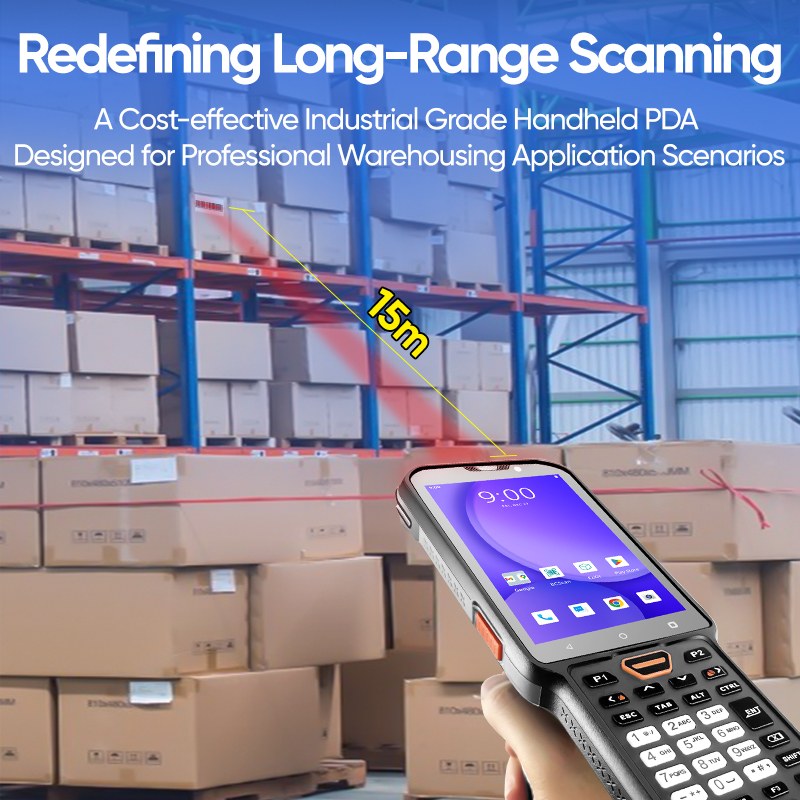
2.Efficiency: Barcode scanners can typically read only one item at a time. RFID readers, however, can identify and process multiple tags simultaneously in a single operation, enabling rapid batch reading.

3.Intelligence & Security: The information encoded in a traditional barcode is fixed and cannot be altered after printing. An RFID tag's stored data, however, can often be rewritten or updated electronically. Furthermore, RFID tags offer superior data security features, such as encryption and access controls.


Key Characteristics of RFID Technology


1.Contactless Identification: RFID technology requires no manual intervention and can operate effectively in various challenging environments.

2.High-Speed Reading: Capable of simultaneously identifying multiple tags and moving objects, ensuring quick and convenient operation.

3.Data Security: Data stored on RFID tags can be encrypted, providing robust protection for sensitive information.

4.Strong Environmental Resilience: RFID tags are designed to be waterproof, anti-magnetic, and heat-resistant, making them suitable for diverse application scenarios.

5.Long Service Life: RFID electronic tags can be used semi-permanently and support data updates and modifications.
 

Efficiency Comparison: Warehouse Inventory Scenario


RFID Inventory: Four personnel equipped with readers can complete the inventory by walking through the aisles once, finishing in half a day with an accuracy rate exceeding 99%. During inbound and outbound operations, RFID channels automatically register items, improving efficiency by 80%.

Barcode Inventory: Twenty-four personnel need to push ladders and use handheld scanners to scan items one by one. Accessing top shelves requires climbing ladders, while bottom shelves necessitate moving items aside. When barcodes are dirty or damaged, manual checks against records are required, resulting in longer processing times and an accuracy rate of approximately 90%.

Key Takeaways:

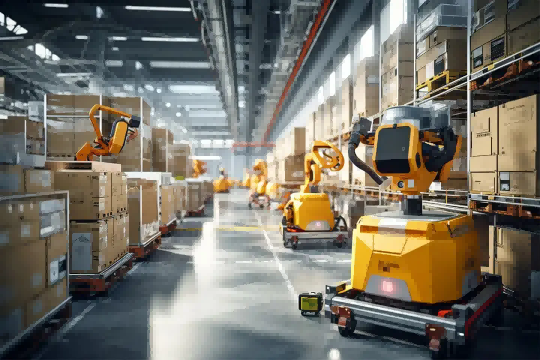
RFID enables “walk-and-scan” batch inventory and “touchless” automated inbound/outbound logging—essentially automated data capture. It frees staff from repetitive, manual aiming and positioning tasks, dramatically boosting speed and accuracy.

Barcode relies on “one-by-one” manual scanning—an inherently manual process. Efficiency is limited by personnel movement, item positioning, barcode quality, and the physical constraint of single-item scanning, making it time-consuming and error-prone.


Manufacturing Scenario


RFID Management: A quick scan with an RFID reader immediately identifies material models and quantities. Production lines do not require dedicated scanning points; semi-finished products automatically update their progress as they pass through each process step, reducing the rework rate from 8% to below 1%.

Barcode Management: When workers retrieve materials, barcodes often fail to scan due to misalignment or dirt, requiring manual reference to ledgers and increasing the risk of retrieving incorrect materials, which leads to defective products and rework. Production lines also require workers to stop and scan barcodes, which can easily cause bottlenecks in the workflow.

RFID transforms manufacturing into a continuous, data-driven flow, eliminating manual scanning bottlenecks and ensuring real-time traceability with minimal errors. Barcode systems, by contrast, remain prone to human error, scanning failures, and process interruptions, ultimately reducing overall production efficiency and quality.


Fixed Asset Management Scenario


RFID Management: A single scan with a handheld RFID reader can batch-read asset information, reducing the annual inventory cycle from 5 workdays to just half a day and increasing the asset record-to-reality match rate from 75% to over 99%.

Barcode Management: When QR code labels are worn, detached, or dirty, they become unscannable, often requiring manual checks against paper records or spreadsheets. This frequently leads to misidentified equipment or mismatches between records and actual assets, resulting in low inventory efficiency.

RFID enables rapid, accurate, and automated asset tracking, transforming inventory from a lengthy manual audit into a swift digital process. Barcode systems remain vulnerable to label degradation and manual lookup errors, resulting in slower operations and inconsistent record-keeping.


As a comprehensive RFID solution provider, our company possesses multiple proprietary core technologies and a rich software ecosystem. We offer a variety of RFID tools tailored to the needs of different industries and can provide customized, integrated hardware-software RFID solutions based on specific industry requirementsContact us for a free trial!


Underwater connectors are critical components in deep-sea engineering, where reliability directly determines the safety and success of marine operations. To ensure stable performance under extreme conditions, WAIN employs a comprehensive and systematic testing program.

Mechanical performance tests—including hydrostatic pressure tests, pressure cycling, and vibration testing—simulate real deep-ocean environments.

Durability tests, such as aging and temperature-rise evaluations, assess long-term stability.

Electrochemical and insulation tests ensure electrical safety under prolonged exposure to seawater.

Environmental adaptation tests—including seawater immersion, volume-change resistance, and compression deformation—validate corrosion resistance and structural integrity.

Through multi-dimensional verification, WAIN guarantees that its underwater connectors operate reliably in complex marine environments.

WAIN waterproof and subsea connectors are now widely used in deep-sea resource exploration, marine engineering equipment, underwater ROVs, subsea seismic systems, diving systems, underwater imaging devices, and deep-ocean lighting applications.


Merry Christmas!

As sparkling lights bring communities together, we hope your season is filled with warmth, joy, and meaningful moments with those you cherish.
We extend our heartfelt thanks for your trust and partnership throughout the past year. It is a privilege to collaborate with you, and we look forward to continuing our journey together in the year ahead.
From all of us at WAIN, we wish you a holiday season brimming with joy, peace, and warmth. May the coming year bring you renewed inspiration and continued success.


In STEM education, learning rarely follows a straight line. Experiments fail, assumptions are challenged, and results do not always match expectations. Yet these moments of error are often where the most meaningful learning begins.

In physics classrooms especially, abstract concepts such as electrical circuits, polarity, and current flow can be difficult to grasp through theory alone. Hands-on experimentation allows students to see cause and effect directly—but only when the learning process itself is visible, guided, and supported.

This is where interactive display solutions play an increasingly important role.


Why Mistakes Matter in STEM Learning

Traditional classroom experiments often focus on achieving the “correct” outcome. However, in real scientific practice, mistakes are part of discovery. A wire connected to the wrong terminal, an unexpected reaction, or a failed setup all provide opportunities for analysis and understanding.

When students are encouraged to observe what went wrong—and why—it strengthens problem-solving skills, critical thinking, and scientific reasoning. The challenge for educators is making these moments clear, safe, and instructive rather than confusing or discouraging.


Making the Learning Process Visible

Interactive displays help transform experiments from isolated actions into shared learning experiences.

By combining physical experiments with digital visualization, teachers can:

  • Highlight each step of an experiment in real time

  • Annotate circuit diagrams and results directly on screen

  • Pause, review, and correct setups together with students

  • Compare expected outcomes with actual results

This approach shifts the focus from simply “getting the right answer” to understanding the process behind it.


Interactive Displays as Teaching Tools, Not Just Screens

In a hands-on STEM classroom, the role of display technology extends beyond presentation.

Solutions such as PRIMA Smart Blackboard, used together with UboardMate CC, enable teachers to integrate live experimentation with digital instruction. Physical components—wires, bulbs, batteries, and switches—can be supported by on-screen explanations, annotations, and structured guidance.

When a mistake occurs, it becomes a teaching moment rather than a disruption. Students can clearly see what caused the issue, how it was corrected, and what principle was involved. Over time, this reinforces both conceptual understanding and practical skills.


Supporting Safer, More Engaging Experiments

STEM education often involves real equipment, which introduces both technical and safety considerations. Interactive display systems allow teachers to:

  • Demonstrate correct setups before hands-on work begins

  • Guide corrections immediately when issues arise

  • Reduce repeated trial-and-error risks

  • Maintain student engagement without unnecessary interruptions

By structuring experimentation through a shared visual platform, classrooms become more controlled, efficient, and effective learning environments.


What This Means for Schools and Education Providers

For schools, system integrators, and education decision-makers, the goal is not to add more technology—but to support better teaching outcomes.

Interactive displays, when applied thoughtfully, help:

  • Enhance STEM curriculum delivery

  • Improve classroom interaction and student participation

  • Support inquiry-based and project-based learning models

  • Align physical experimentation with digital instruction

Rather than replacing traditional teaching methods, these tools strengthen them.


From Errors to Understanding

In STEM education, mastery does not come from avoiding mistakes—it comes from understanding them.


By making experiments visible, interactive, and collaborative, display solutions help turn errors into insights and challenges into learning opportunities. As classrooms continue to evolve, the focus remains the same: supporting educators and students in learning not just what works, but why it works.


Commercial Display Manufacturer


In today’s fast-paced digital landscape, a hardware partner is no longer just a vendor in the supply chain—they are a pillar of your brand’s scalability. For businesses looking to deploy high-impact visual solutions, the choice between an OEM and an ODM model can dictate the trajectory of their market success.


Decoding the Strategic Value of OEM vs. ODM

Navigating the technical nuances of commercial displays requires more than just assembly.


  • OEM (Original Equipment Manufacturing): Ideal for those who bring a proprietary vision to life, requiring high-precision execution and strict adherence to unique specifications.

  • ODM (Original Design Manufacturing): Empowers brands to skip the lengthy R&D cycle by leveraging a manufacturer’s proven expertise, while maintaining deep customization in firmware, software integration, and aesthetics.


The Critical Pillars of Selection

To mitigate risks and ensure long-term ROI, project managers and brand owners should evaluate potential partners through three essential lenses:


  1. Engineering Agility: Can the partner solve complex thermal management or PCBA integration challenges? In the world of high-brightness displays and 24/7 operation, innovation must be proactive, not reactive.

  2. Global Compliance & Quality: Beyond basic certifications (CE, FCC, RoHS), a reliable partner ensures that the hardware meets the rigorous endurance standards required for professional environments.

  3. Supply Chain Resilience: In an era of component volatility, a manufacturer’s vertical integration and raw material stability are your best defenses against lead-time delays and price fluctuations.


Conclusion: Bridging Vision and Reality with PRIMA

At PRIMA, we believe that manufacturing excellence is the bridge between a conceptual design and market leadership. As we move into an era of smarter, more interactive displays, your choice of partner remains the most significant variable in your growth equation.


Established in 1985, PRIMA brings over 40 years of industrial excellence to the commercial display sector. As a premier Commercial Display Manufacturer, we provide comprehensive, end-to-end solutions that transform innovative concepts into global successes. Our track record speaks for itself: with a footprint spanning 23 countries and over 500,000 units deployed worldwide, PRIMA is the trusted engine behind numerous brands' international growth. When you choose PRIMA, you are partnering with four decades of manufacturing heritage and a global network of proven reliability.


If you would like to learn more, please visit our website:www.primatouchscreen.com

RISE Optoelectronics Co., Ltd located in Shenzhen city, China.This city has always been at the forefront of China's scientific and technological development.


As a national high-tech enterprise, RISE has always maintained its innovation and customization capabilities. Our main business is including:

*Design and produce LED Outdoor light, Especially LED fountain light, LED underwater light, LED marine light and LED IP68 piscina.

*Project designed installation guide.

*Customized Products or OEM for clients.

* Product operation software design, DMX512/RDM, DALI, 0-10V, ect.


From 2D graphic design to 3D model creation, making new mold, and finally, prototyping the finished product, we have 15 years of design and innovation experience.


Let's have a brainstorming session. Give us an idea, and we'll help you realize the product and solution you need.


When you turn on the tap, have you ever wondered if the magnesium ion content in the water meets standards? During farm irrigation, how can you determine if the water quality will cause soil compaction? In industrial production, how to prevent pipeline scaling caused by high-magnesium water? These seemingly trivial issues are closely linked to the accurate monitoring of magnesium ions in water. In the past, monitoring methods relying on manual sampling and laboratory analysis were not only time-consuming and labor-intensive but also struggled to capture real-time water quality fluctuations. Today, the emergence of LoRaWAN magnesium ion water quality sensors is redefining the efficiency and precision of water quality monitoring with their advantages of "low power consumption, wide coverage, and real-time data transmission."


Argument 1: Technological Integration Breaks Through, Solving Three Core Pain Points of Traditional Monitoring

Traditional magnesium ion monitoring has long been plagued by "data lag, heavy operation and maintenance (O&M) workload, and high costs." Data from third-party testing institutions shows that laboratory analysis of magnesium ions using atomic absorption spectrometry takes 7-10 working days to yield results, with a single test cost exceeding RMB 200. While analog sensors enable on-site monitoring, they require weekly calibration – a county-level water plant alone incurs annual calibration labor costs exceeding RMB 120,000, with a data error margin of ±5% FS, far exceeding the requirements of the National Sanitary Standards for Drinking Water (GB 5749-2022).


The LoRaWAN magnesium ion water quality sensor thoroughly addresses these challenges through the deep integration of "high-precision sensing" and "low-power IoT technology." Its core advantages stem from complementary technical features:

  • The LoRaWAN protocol achieves a transmission distance of 2-5 km in urban environments and extends to 5-15 km in open suburban areas – 10-150 times the coverage of WiFi.
  • With a sleep current of ≤1 μA and an 8500 mAh lithium thionyl chloride battery, the sensor can operate continuously for 5-10 years when uploading data once per minute, significantly reducing replacement costs.
  • The sensing module adopts a fluorescent carbon quantum dot "OFF-ON" detection mechanism combined with temperature compensation technology, covering a detection range of 0.1-50 mg/L with an accuracy of ±3% FS – fully complying with the requirements for industrial water magnesium ion determination in GB/T 14636-2021.
  • Additionally, the device supports Bluetooth remote configuration and OTA firmware updates, enabling plug-and-play on-site installation and extending the calibration cycle to 3 months. Field tests at a chlor-alkali plant show that equipment maintenance time has been reduced from 8 hours per session to 5 minutes, cutting labor costs by 60%.


Argument 2: Full-Scenario Coverage, Serving as a "Water Quality Sentinel" Across Industries

The value of magnesium ion monitoring spans agriculture, industry, and daily life. Leveraging LoRaWAN's wide coverage and strong adaptability, the sensor seamlessly adapts to complex environments – from urban water pipelines to remote farmlands – acting as an omnipresent "water quality sentinel."

In Agriculture

Magnesium is a key element for plant chlorophyll synthesis. An imbalance in the calcium-magnesium ratio (Ca²⁺/Mg²⁺ < 1) in irrigation water can cause soil compaction, while available magnesium levels below 50 mg/kg trigger crop nutrient deficiencies. A smart farm deployed 20 sensors in its irrigation system to real-time monitor magnesium concentration (controlling the threshold at ≤50 mg/L), with data transmitted to an agricultural cloud platform via LoRa gateways. When low magnesium levels are detected, the system automatically triggers a water-fertilizer integrated machine to supplement magnesium sulfate solution, precisely adjusting water quality. After six months of implementation, the farm achieved an 8% increase in wheat thousand-grain weight and a 15% improvement in irrigation water use efficiency, eliminating resource waste caused by traditional experience-based fertilization.

In Industry

High-magnesium water, when combined with calcium and silicon, tends to form insoluble scales that reduce the lifespan of boilers and cooling systems. A power plant introduced the sensor to monitor magnesium ion content in circulating cooling water, adjusting scale inhibitor dosage in real time in line with the 0.1-50 mg/L range specified in GB/T 14636-2021. This completely resolved heat exchange efficiency issues caused by scaling, saving over RMB 200,000 annually in maintenance costs per boiler while reducing chemical reagent usage – achieving a win-win for environmental protection and economic benefits. In water treatment plants, the sensor provides 24/7 monitoring of magnesium content in finished water, ensuring compliance with the WHO limit of ≤50 mg/L and safeguarding safe drinking water for residents.


Argument 3: Data-Driven Decision-Making, Empowering the Upgrade of Smart Water Quality Management

  • The value of the LoRaWAN magnesium ion water quality sensor extends beyond data collection – it drives a transformation from "reactive response" to "proactive prevention" in water quality management through a closed loop of "perception-transmission-analysis-decision-making." Real-time data uploaded by the sensor is analyzed by cloud platforms to generate trend reports, helping managers accurately identify water quality change patterns. For example, an industrial park analyzed six months of magnesium ion data and discovered that magnesium concentration peaks at chemical plant discharge outlets 2 hours after production peaks. Based on this insight, the park optimized the operation schedule of its sewage treatment system, improving treatment efficiency by 30% and increasing sewage discharge compliance from 92% to 100%.
  • In emergency scenarios, the sensor's real-time alarm function proves invaluable. When sudden water pollution causes abnormal fluctuations in magnesium ion concentration, the system immediately notifies managers via SMS and APP push, pinpointing the affected location. During a rainstorm in a scenic area, soil erosion led to a sudden surge in stream magnesium levels – the sensor triggered an alarm within 10 seconds, prompting management to shut down water intake points promptly and avoiding potential drinking water safety risks for tourists.


From cumbersome laboratory testing to real-time on-site sensing, the LoRaWAN magnesium ion water quality sensor has broken the temporal and spatial limitations of water quality monitoring through technological innovation. As IoT technology advances, such "small yet powerful" sensing devices will become increasingly prevalent, not only providing precise and efficient monitoring solutions for various industries but also serving as a critical force in safeguarding water resource security and promoting green development. In the future, as every drop of water flows past a "smart sentinel," our access to high-quality water resources will draw closer than ever.


As a crucial device for modern agriculture and environmental monitoring, the LoRaWAN solar-powered soil sensor requires special attention to the maintenance of key components such as the solar power supply system, soil probes, and data transmission modules. Below is a professional maintenance guide for this type of sensor:

1、 Key points of daily maintenance

      Sensor position check

  • Check the depth and Angle of the sensor inserted into the soil monthly to ensure good contact with the soil
  • Check whether the fixing device is firm to prevent displacement caused by wind, rain or animal activity
  • Ensure that there is no large plant root system around the sensor to avoid interference with the measurement

      Surface cleaning and maintenance

  • Use a soft brush to regularly remove dirt and debris from the sensor surface
  • For stubborn stains, use a soft cloth lightly and avoid using chemical cleaners
  • Pay special attention to the surface of the cleaning sensor in contact with the soil

2、 Maintenance of solar power supply system

       Solar panel maintenance

  • Check the surface of the solar panels every quarter to remove dust, bird droppings and other obstructions
  • Increase cleaning frequency to ensure charging efficiency before winter or rainy season
  • Check whether the solar panel bracket is stable to avoid angle deviation caused by strong wind
     Battery system maintenance
  • Check the battery health once every six months by measuring voltage and current output
  • Replacement should be considered when the battery capacity is less than 70% of the initial capacity
  • In extreme temperature environment, take insulation or heat dissipation measures to protect the battery

3. Professional maintenance of soil probes

     Probe cleaning method

  • The probe is removed from the soil every quarter and wiped clean with a soft cloth
  • Increase cleaning frequency for saline-alkali land or areas where fertilizer is used frequently
  • Use a special probe cleaner to treat stubborn stains and avoid using metal tools to scrape

     Probe calibration check

  • Probe calibration should be performed at least once a year to ensure measurement accuracy
  • Use a standard solution to check the response curve of the conductivity probe
  • The temperature probe should be compared with the standard thermometer regularly
4、 LoRaWAN communication module maintenance

     Radio system inspection

  • Check monthly whether the antenna connection is firm, no loosening or oxidation
  • Ensure that there is no metal object around the antenna to block the signal transmission
  • In areas prone to thunderstorms, check whether the lightning protection measures are perfect

     Network connection testing

  • Regularly check the connection quality between devices and gateways
  • Record the trend of signal strength (RSSI) and signal-to-noise ratio (SNR) changes
  • When communication abnormalities are detected, check the device ID and network settings
5、 Seasonal maintenance strategy


    Special maintenance during rainy season

  • Check if all seals and waterproof measures are intact
  • Ensure unobstructed drainage holes to prevent water accumulation
  • Check whether the equipment works normally after rainstorm
     Winter maintenance focus
  • Adding insulation layer to equipment in cold regions
  • Check the performance of the battery at low temperatures
  • Prevent snow from covering solar panels
     Summer maintenance points
  • Strengthen equipment heat dissipation inspection to prevent overheating
  • Increase probe cleaning frequency in high-temperature and arid areas
  • Check the working condition of solar panels at high temperatures

6、 Professional maintenance tools and spare parts

    Recommended maintenance toolkit

  • Digital multimeter (used to detect voltage and current)
  • Insulated screwdriver set
  • Anti static cleaning brush
  • Probe calibration toolkit
    List of commonly used spare parts
  • Same model battery (recommended to keep 1-2 spare)
  • Sealing ring and waterproof tape
  • Backup probes (quantity determined by usage environment)
  • Solar panel cleaning kit
Through the maintenance of the above system, the LoRaWAN solar soil sensor can ensure long-term stable operation and provide accurate soil monitoring data. It is recommended to develop a detailed maintenance calendar, recording the content of each maintenance and the problems discovered, and forming an equipment maintenance file. For key agricultural application scenarios, it is recommended to equip backup equipment to cope with sudden failures


Against the backdrop of the accelerated advancement of global agricultural modernization, precision agriculture has become the core path for enhancing agricultural production efficiency, ensuring food security, and achieving sustainable agricultural development. As a core device for obtaining key soil data in precision agriculture, the LoRaWAN soil sensor not only resolves many pain points of traditional agriculture, providing a scientific basis for management decisions such as precise irrigation and precise fertilization, but also promotes the deep integration of agriculture and advanced technologies with its excellent performance, becoming an important engine driving the modernization and upgrading of agriculture. as follows:


1.Solving the pain points of traditional agriculture, the LoRaWAN soil sensor is the core hub for data acquisition

  • Traditional agriculture relies on experience to judge key indicators such as soil moisture and nutrient content, which is lagging and subjective, and is prone to problems such as water resource waste and fertilizer abuse.
  • LoRaWAN soil sensor can collect data such as soil temperature, humidity, pH value, EC,and electrical conductivity (reflecting nutrient status) in real time and accurately, breaking the limitations of "planting by feeling", providing scientific and reliable data support for agricultural production, and solving the pain points of difficult data acquisition and low accuracy in traditional agriculture from the source.


2. Empowering precision agricultural management, LoRaWAN soil sensors are a key basis for decision-making

  • In the field of precision irrigation, the LoRaWAN soil sensor transmits soil moisture data in real time. Combined with the water requirement patterns of crops, it can enable the intelligent irrigation system to automatically adjust the duration and volume of water supply, avoiding overirrigation or water shortage and drought, and improving the utilization rate of water resources by more than 30% (the data can be adjusted according to actual cases).
  • In the precise fertilization process, the soil nutrient data monitored by LoRaWAN soil sensors can accurately determine the types and amounts of fertilizers needed by crops, formulate personalized fertilization plans, reduce fertilizer waste, lower the risk of soil pollution, and at the same time increase crop yields and quality, achieving refined management of "supply based on demand".


3.LoRaWAN soil sensors are an important engine for industrial transformation, promoting the modernization and upgrading of agriculture

  • In the process of global agricultural modernization, large-scale and intelligent planting has become a trend. LoRaWAN soil sensors can be integrated with technologies such as the Internet of Things, big data, and artificial intelligence to build a smart agricultural management platform, enabling remote monitoring and centralized management of soil conditions in large areas of farmland, reducing labor costs, and improving planting efficiency.
  • Compared with ordinary soil sensors, LoRaWAN soil sensors have advantages such as strong stability, outstanding anti-interference ability, and long service life. They can adapt to complex environments with different climates and soil types, and are widely used in precision agriculture projects in different regions around the world, accelerating the transformation of agriculture from "traditional extensive" to "modern precise".


Summary

In the future, as precision agriculture further develops, the significance of LoRaWAN soil sensors will become increasingly prominent, injecting stronger impetus into the high-quality development of global agriculture.